
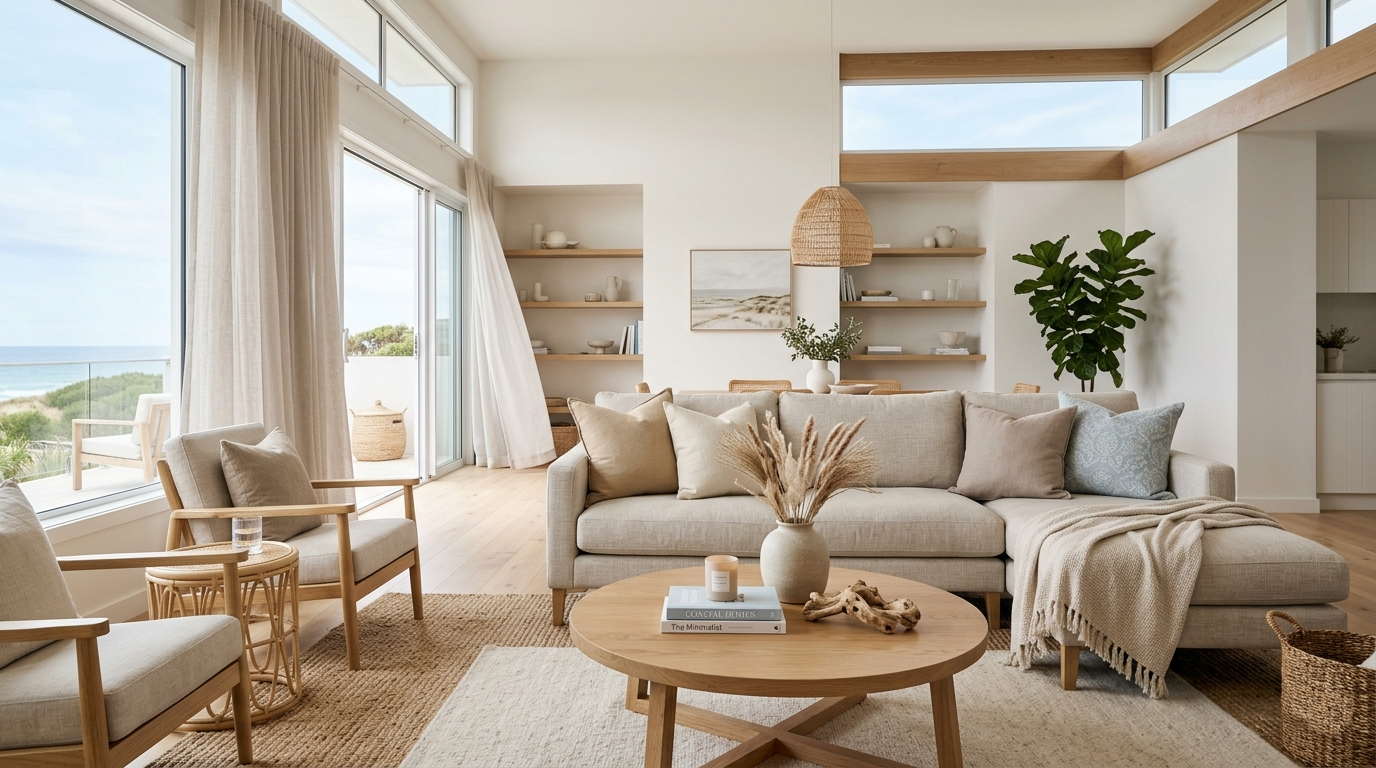
There was a point where every coastal living room online started looking exactly the same to me. White sofas, blue cushions, rope decor, giant windows with sunlight pouring in from every angle. Nice to look at for a few seconds, but not always realistic for everyday life.
What finally changed my mind about the style was seeing homes that treated coastal design in a quieter way. Less themed decor. Fewer obvious beach references. The rooms felt calmer and easier to live in.
A contemporary coastal living room works best when it feels relaxed without trying too hard. You notice the light, the textures, and the openness before you notice any specific decor item.
Some ideas worked immediately in my own space. Others looked much better online than they did in real life. That is probably true for most decorating trends honestly.
Start with softer whites :
Bright white walls can feel harsh depending on the lighting in your room. Softer shades usually work better for this style.
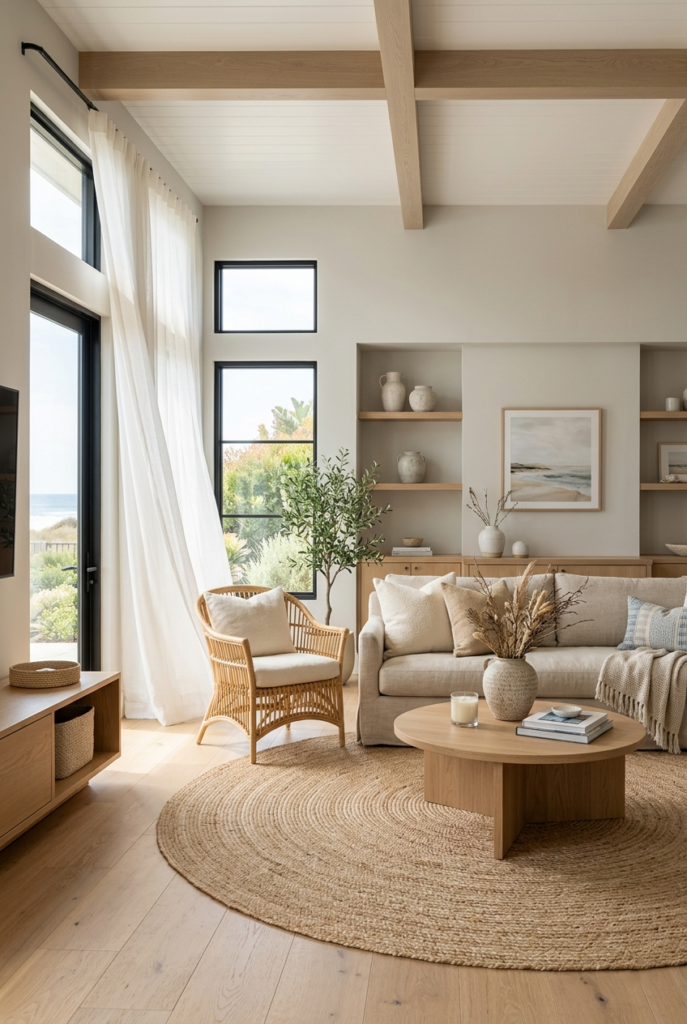
Warm white, sandy tones, or pale grey tend to look more natural during both daytime and evening. Pure white looked good in my living room for about two hours every afternoon. The rest of the day it felt strangely cold.
Keep blue in the background :
A contemporary coastal living room does not need to look completely ocean themed.
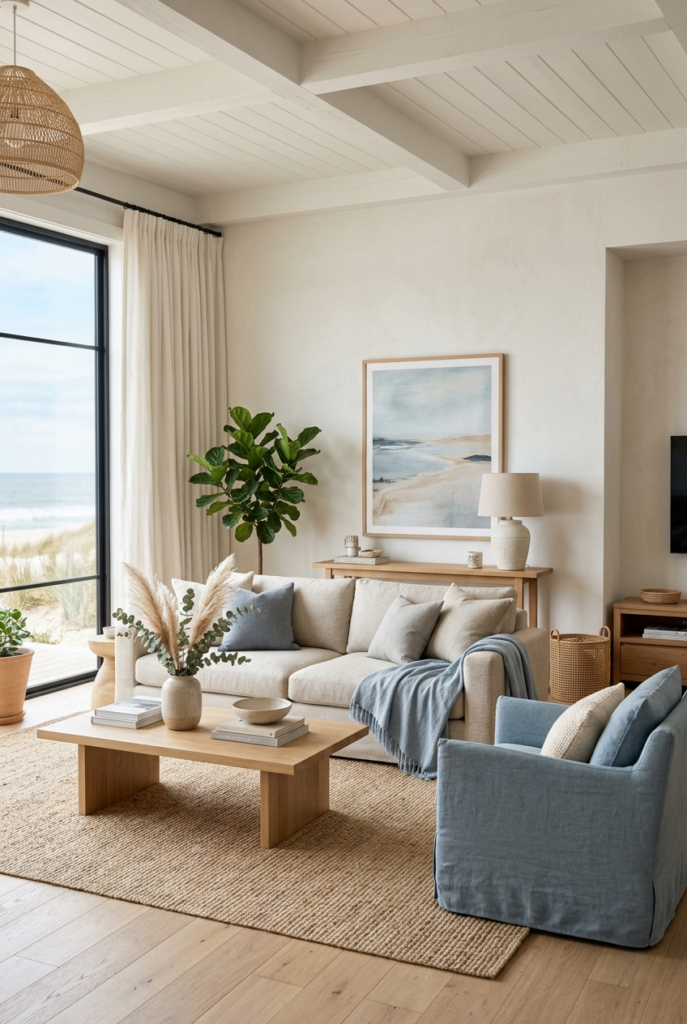
Small touches of muted blue usually work better than covering the room in navy cushions and striped decor. One soft blue chair or a faded blue throw is often enough.
Choose furniture that feels relaxed :
Furniture that is too sharp or stiff changes the whole mood.
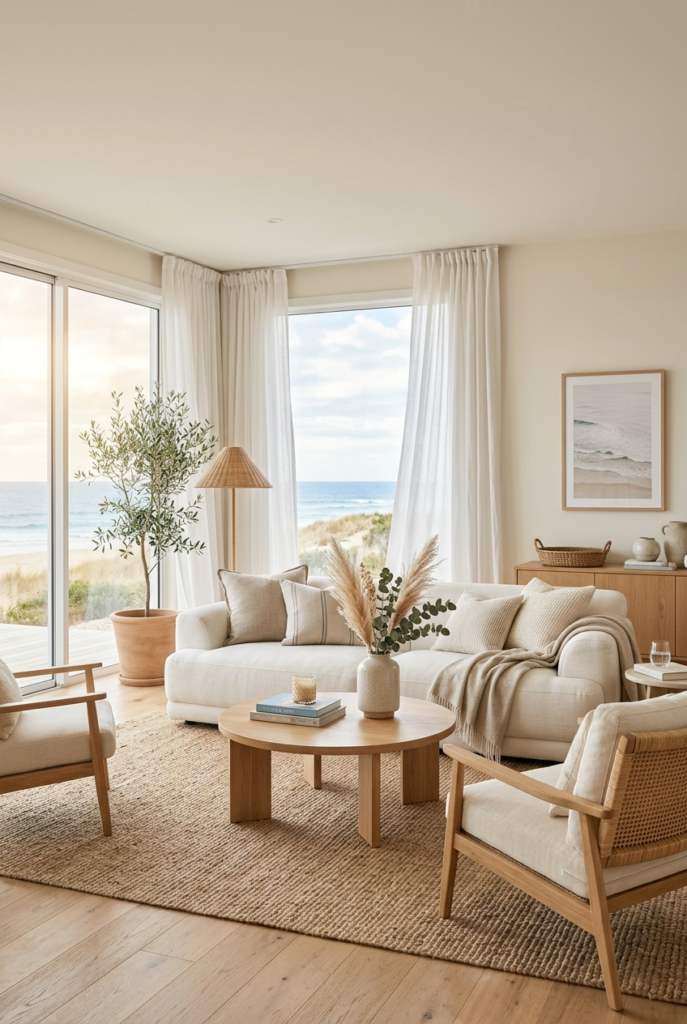
Low profile sofas with simple shapes fit better in coastal interiors than overly modern pieces with hard edges. Comfort matters more than making the room look expensive.
Let natural wood stay visible :
Light wood instantly changes the energy of a room.
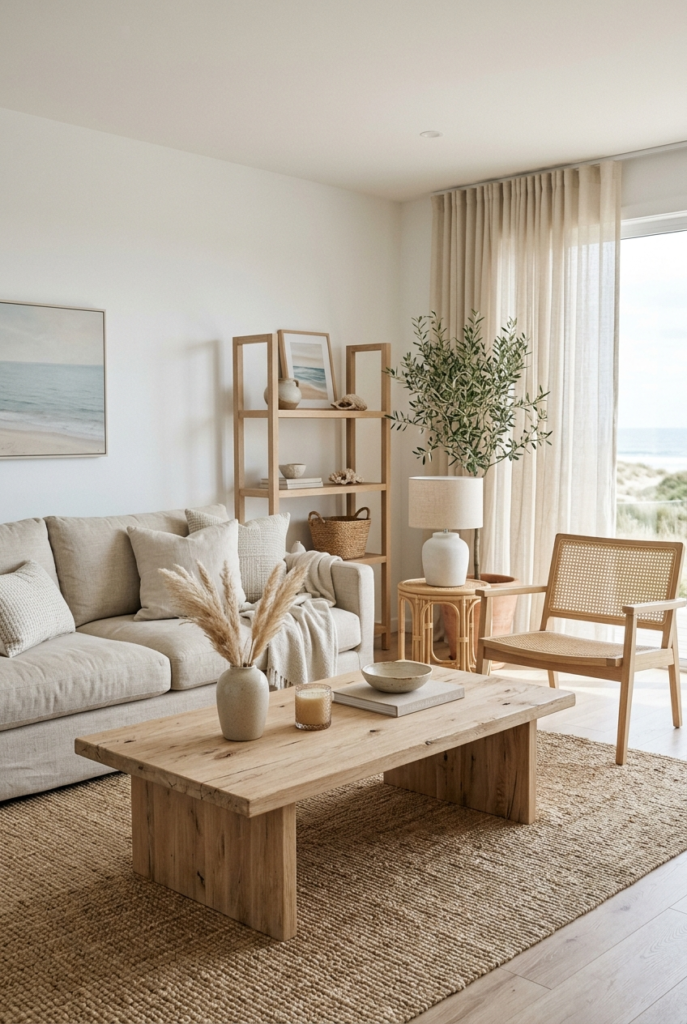
Coffee tables, shelves, or chairs with visible grain look far better than glossy finishes. I once bought a polished table thinking it looked modern. It ended up feeling more like hotel furniture.
Do not overload shelves :
Open shelves can start looking chaotic very quickly.
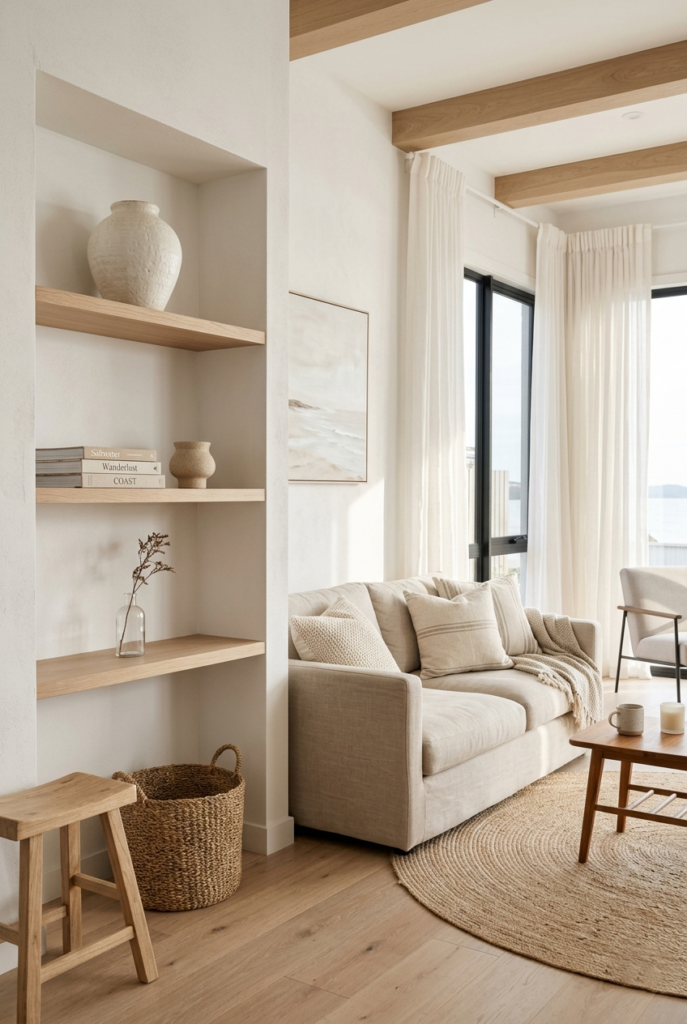
A few books, one ceramic piece, and some empty space usually look cleaner than trying to decorate every inch. Empty areas are not a bad thing.
Use curtains that move easily :
Heavy curtains can make coastal interiors feel smaller.
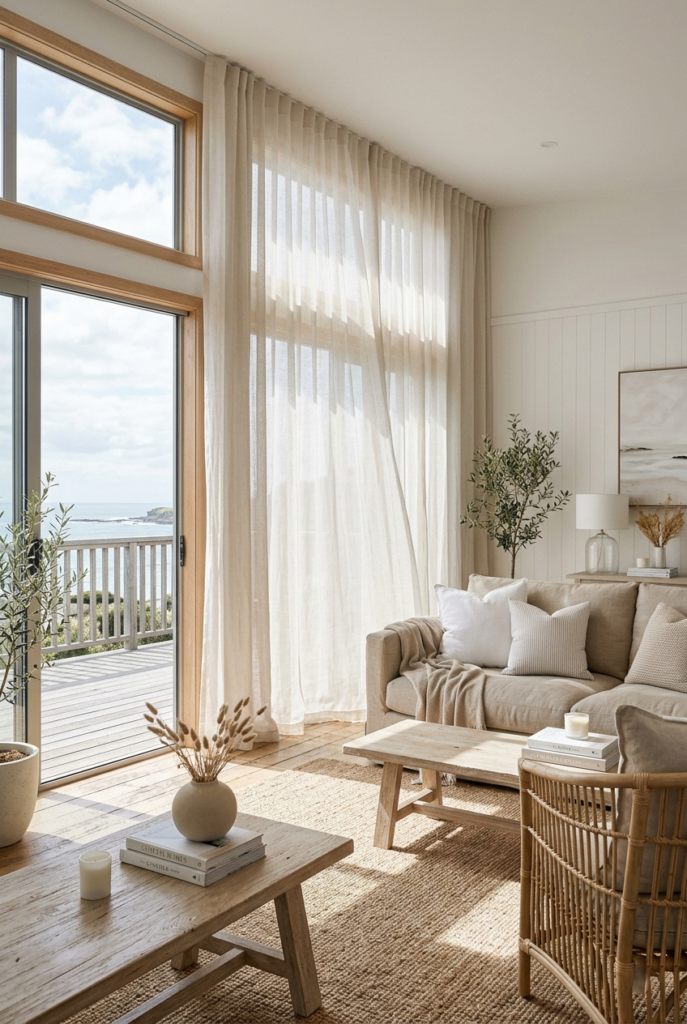
Lighter fabrics work better because they let the room stay bright even when the curtains are closed. Thick dark curtains completely changed the mood in my space once, and not in a good way.
Keep decorative objects simple :
The best coastal rooms often use fewer decorations than people expect.
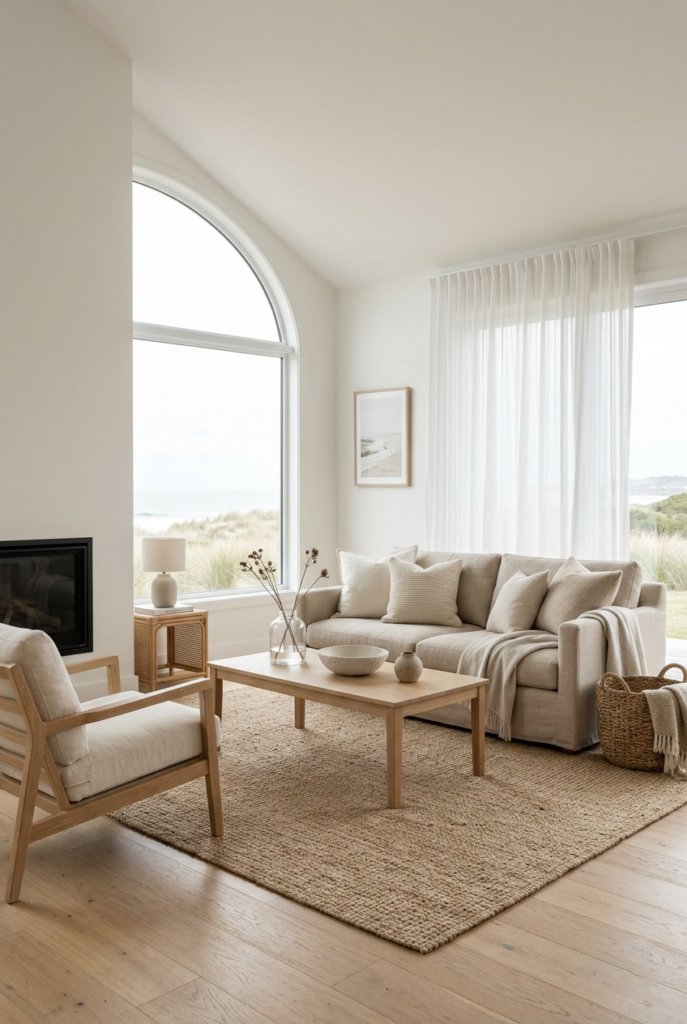
Glass vases, textured pottery, or woven baskets usually feel more natural than obvious beach themed items. Too many shells and signs start feeling forced after a while.
Mix textures instead of colors :
This style becomes more interesting when different materials are layered together.
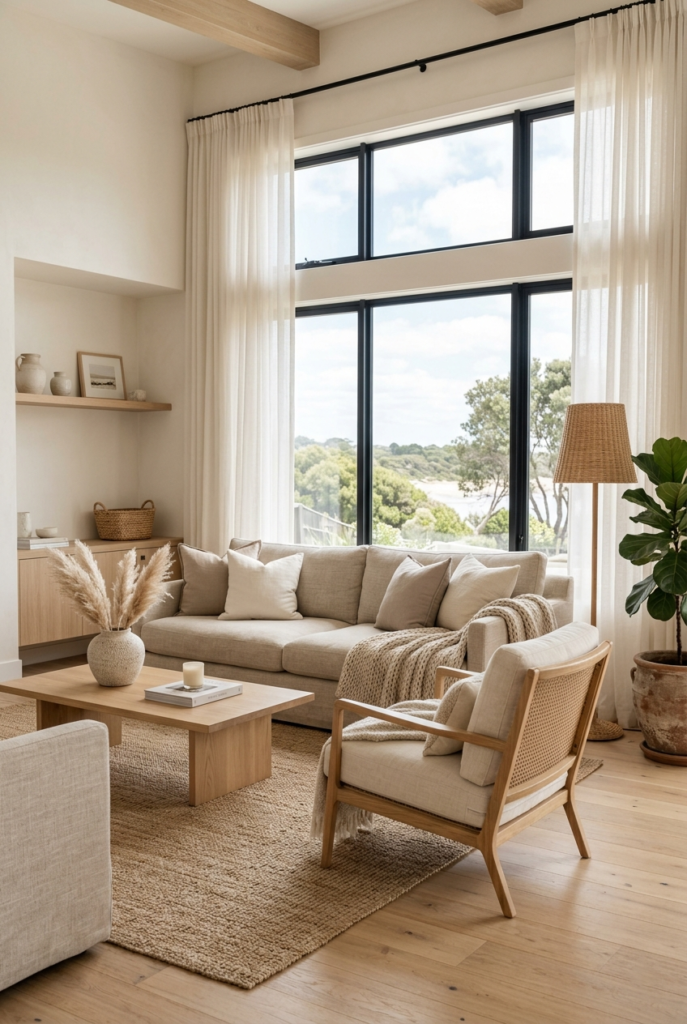
Linen, wood, cotton, woven textures, and soft rugs usually do enough on their own. Adding too many colors often makes the room feel busier than intended.
Avoid matching furniture sets :
Perfectly matching furniture can flatten the room visually.
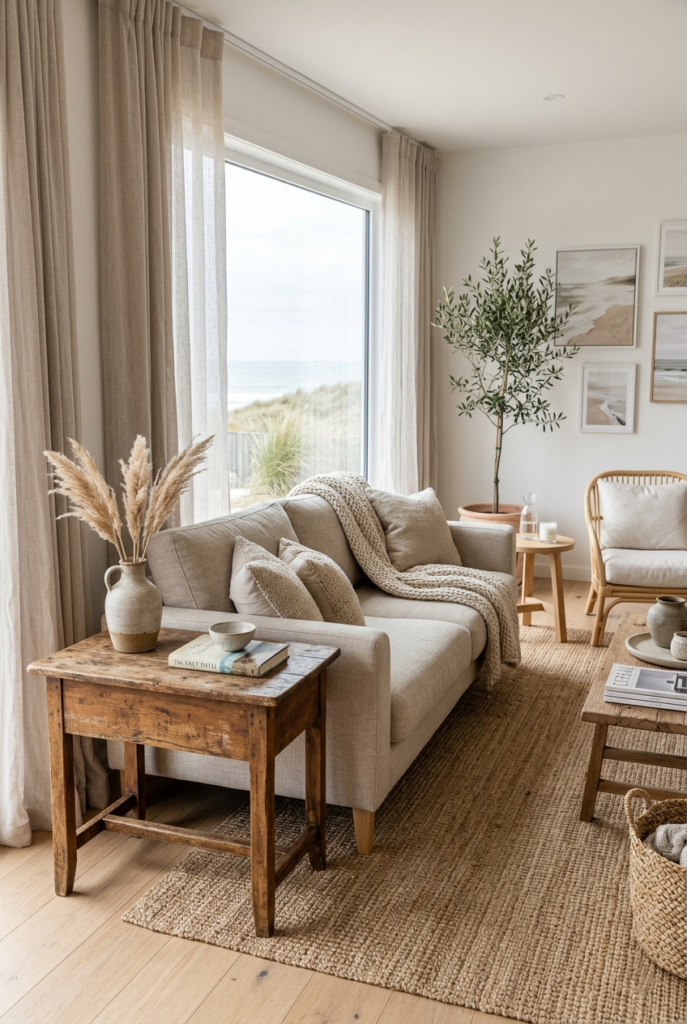
Some of the nicest spaces mix pieces slowly over time instead of buying everything together. A slightly older wooden side table beside a newer sofa often looks more natural anyway.
Leave some corners alone :
Not every corner needs a plant, basket, or floor lamp.
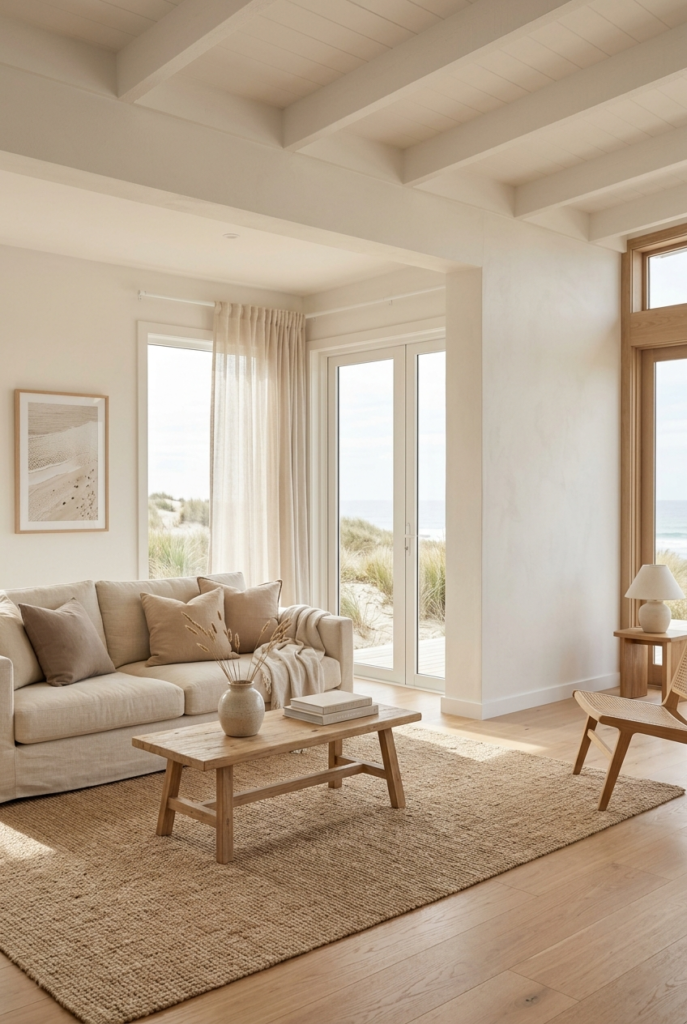
I used to think empty space meant the room was unfinished. Now I notice that rooms feel calmer when everything is not competing for attention.
Try softer lighting in the evening :
Lighting changes everything at night.
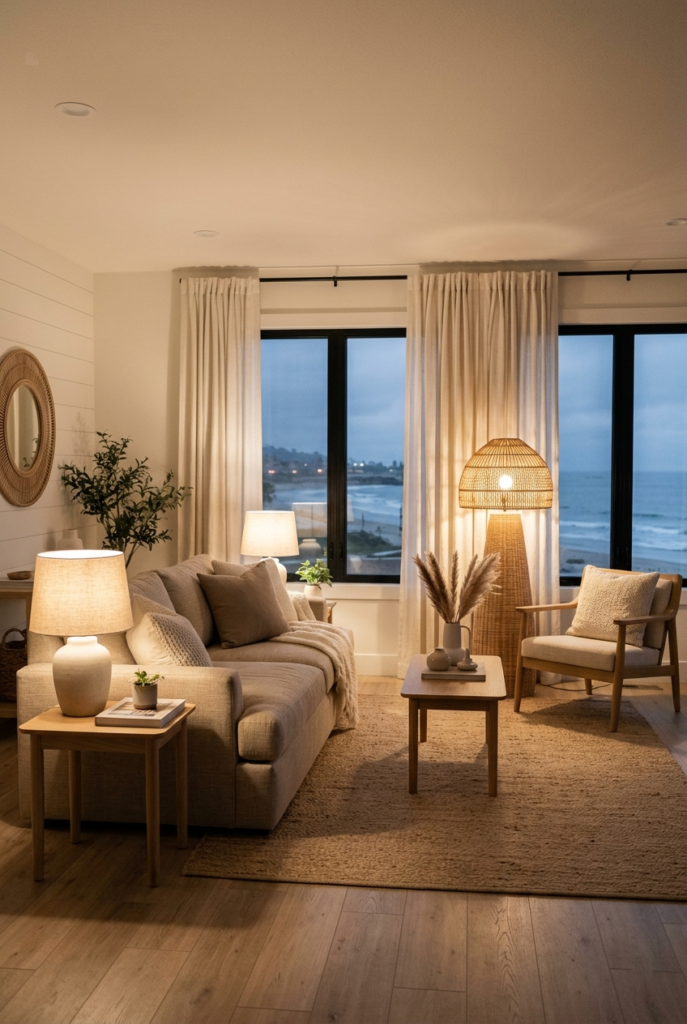
Bright ceiling lights can make even a well designed room feel flat. Table lamps and floor lamps create a much more relaxed feeling in the evenings. I barely use the overhead light anymore unless I need to clean something.
Keep rugs practical :
Some rugs look beautiful online but become frustrating in real life.
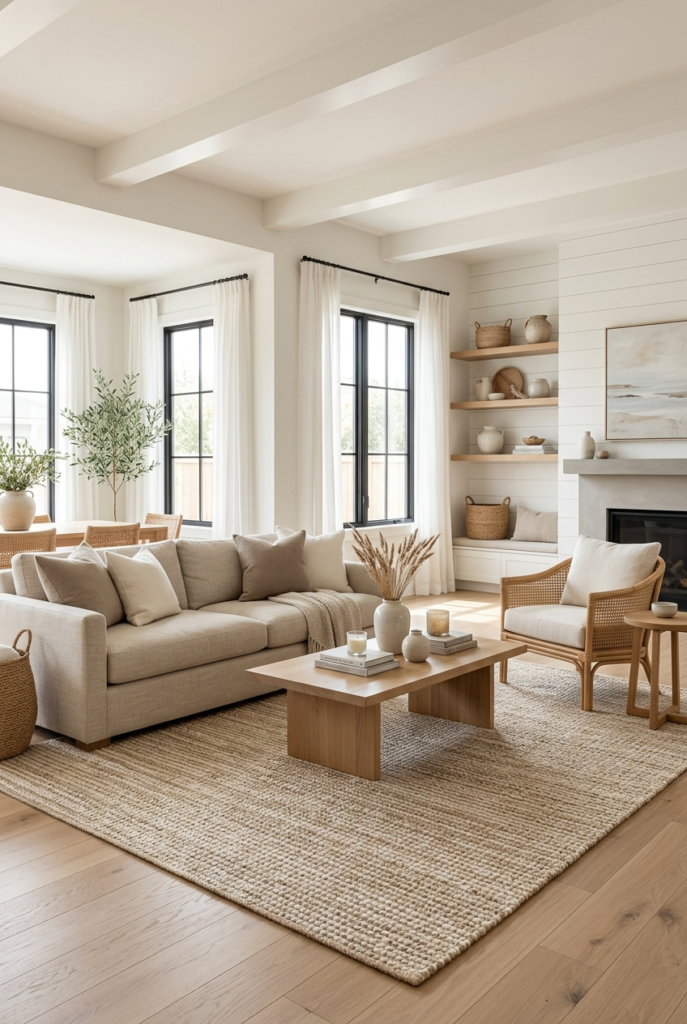
Very fluffy white rugs collect dust and stains faster than expected. Woven or lower pile rugs are easier to maintain and still fit the coastal style well.
Bring in plants carefully :
Plants soften the room naturally, but too many become difficult to manage.
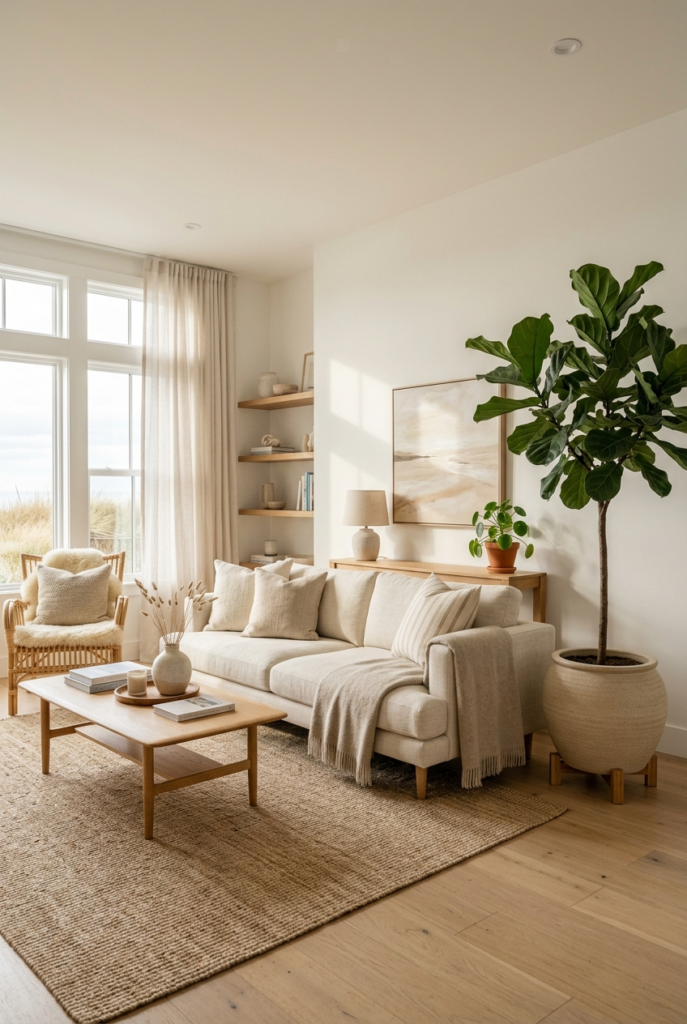
I once filled my living room with several different plants at the same time because I liked the look online. A month later, half of them were struggling because I kept forgetting what each one needed.
Let seating stay comfortable :
Some trendy furniture pieces are better for photos than actual sitting.
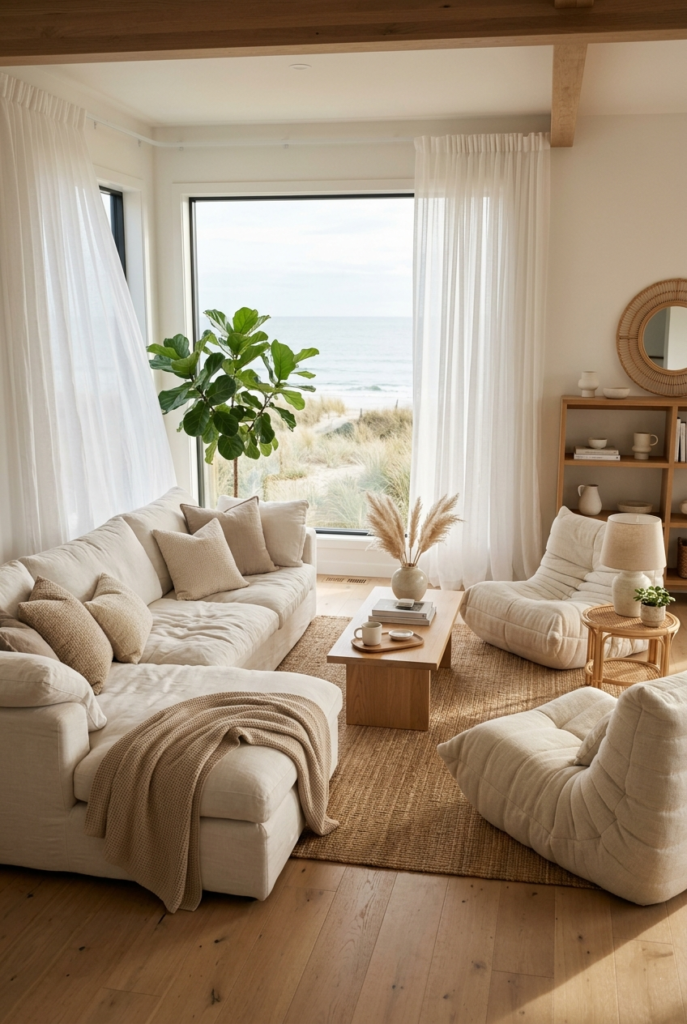
A contemporary coastal living room should still feel easy to relax in for hours. If guests avoid certain chairs completely, that usually says enough.
Use black accents lightly :
A little black helps balance lighter rooms.
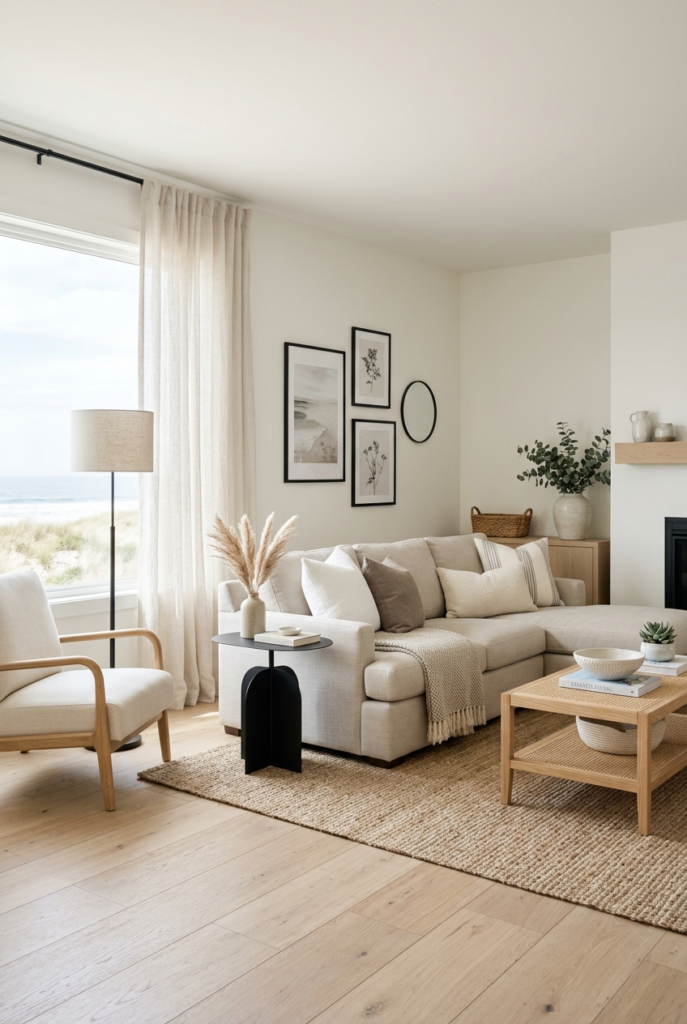
Thin black frames, lamp bases, or small side tables work nicely. Large black furniture pieces can quickly overpower softer coastal interiors though.
Keep patterns subtle :
Simple stripes or faded prints work better than loud tropical designs in most cases.
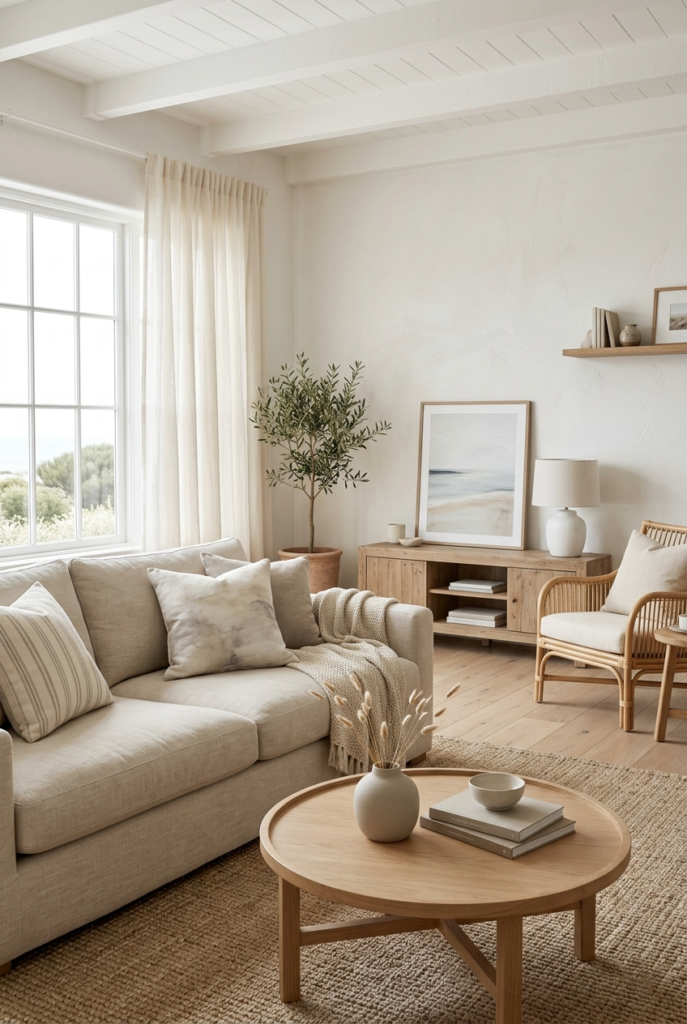
I tried large palm leaf cushions once because they looked fun online. After a few weeks they started feeling visually exhausting.
Make the coffee table usable :
Some styled coffee tables barely leave room for actual daily life.
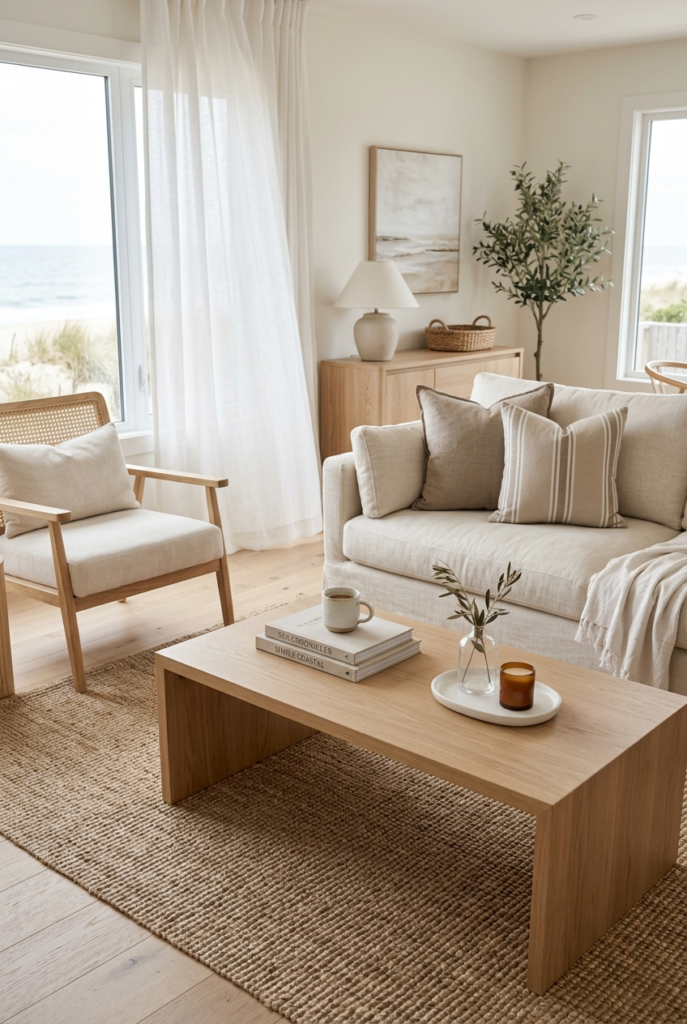
A candle, one book, and maybe a small bowl is usually enough. There should still be space for a drink or your feet at the end of the day.
Use artwork that feels quiet :
Large dramatic artwork can dominate coastal interiors very quickly.
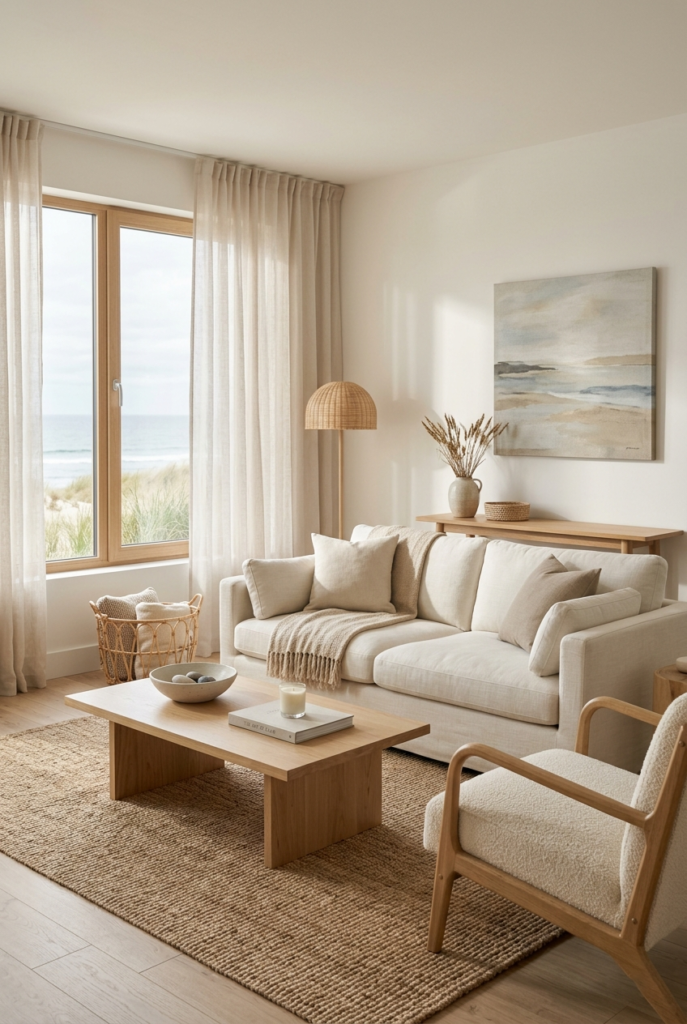
Softer landscapes, abstract prints, or simple photography often sit better in the room without demanding attention constantly.
Do not hide every everyday item :
A folded blanket or a stack of books can actually help the room feel more natural.
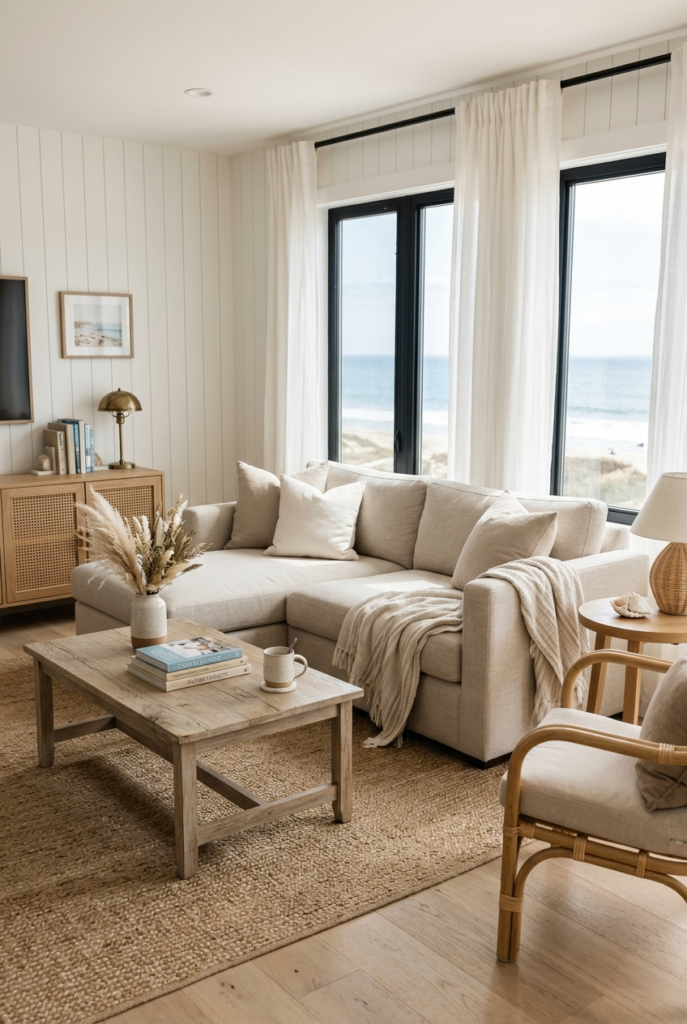
Spaces that look too untouched sometimes feel uncomfortable to sit in. Real homes usually look slightly lived in.
Let the room change slowly :
Trying to finish everything immediately usually leads to rushed decisions.
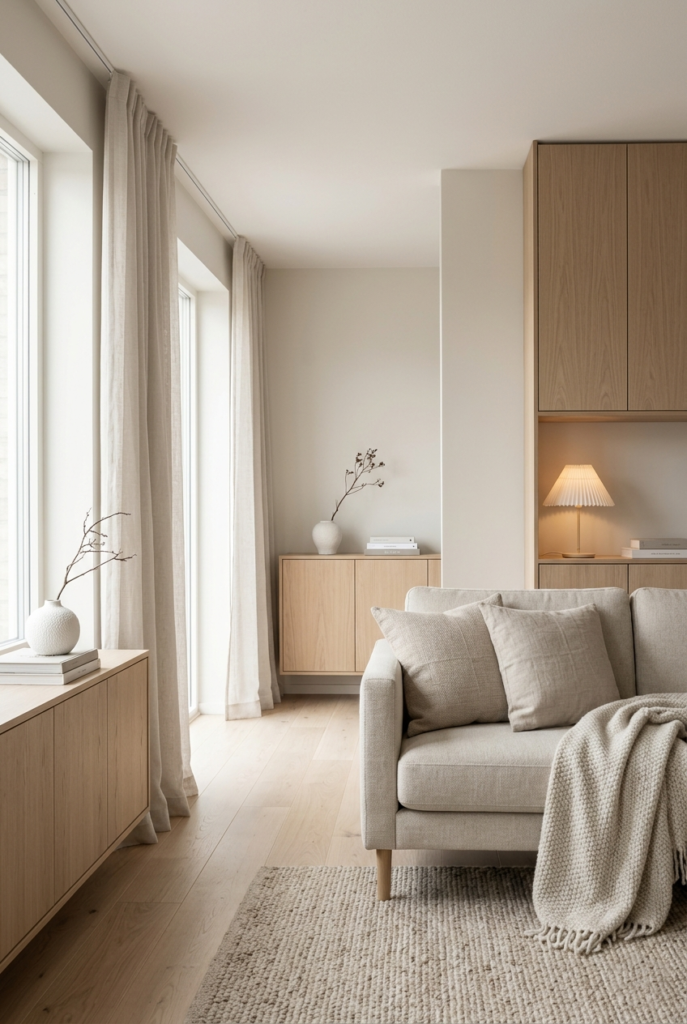
Some of the best pieces in my living room came months later after I understood what the room actually needed instead of buying random decor too early.
Keep storage closed when possible :
Open storage looks beautiful until normal clutter appears.
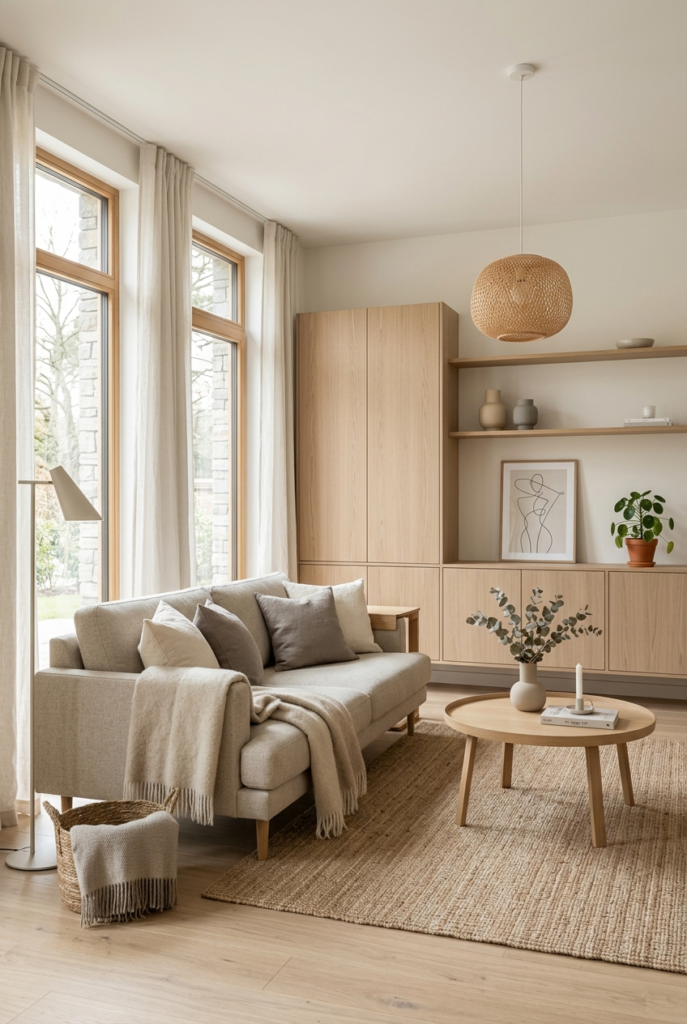
A few closed cabinets make the room easier to maintain and stop smaller items from constantly being visible.
Think about how the room feels during ordinary days :
A contemporary coastal living room should still work on regular evenings when laundry is waiting and somebody leaves a coffee mug on the table.
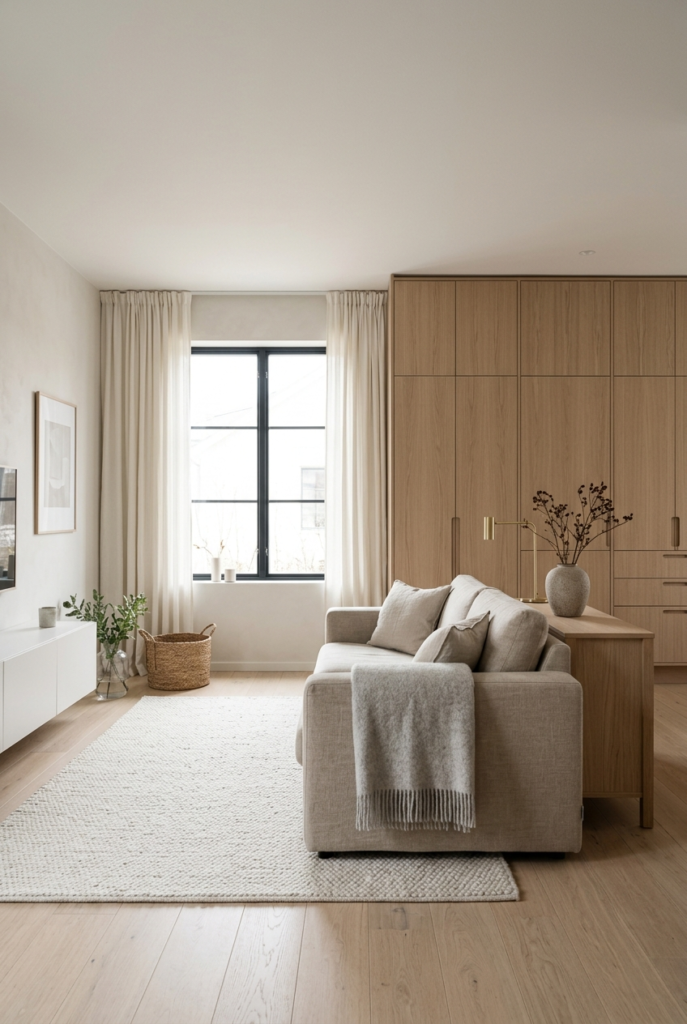
That balance matters more than making the room look perfect all the time.
Final Thoughts
What I like most about coastal interiors now is that they do not need dramatic decorating to work well. The rooms that stay enjoyable over time are usually the ones that feel simple, open, and comfortable without forcing a theme too hard.
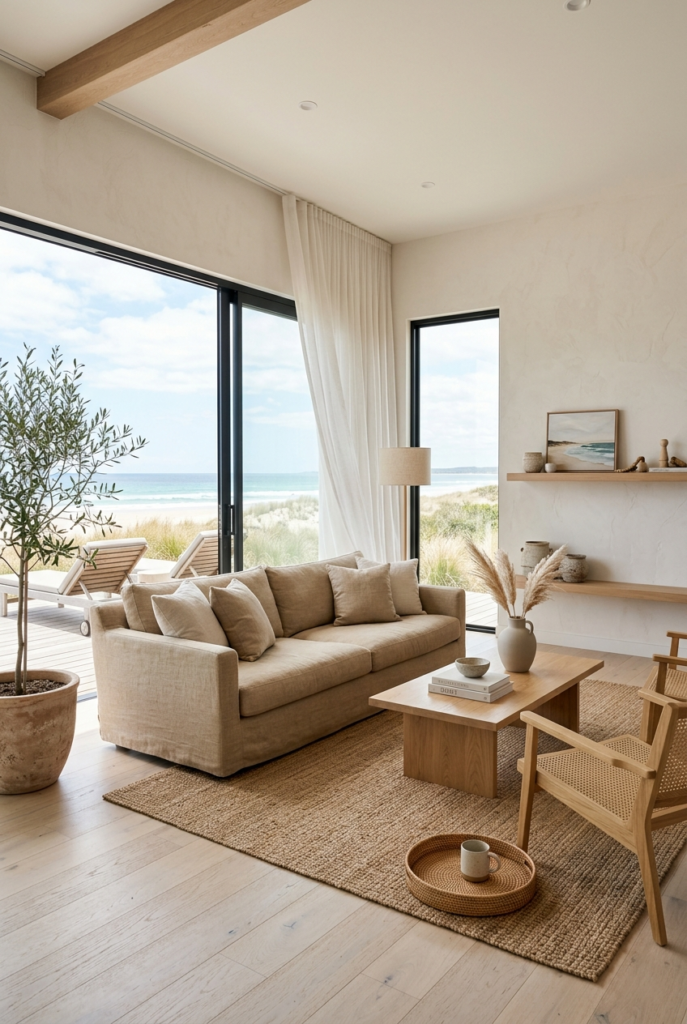
Most of these changes are fairly small anyway. Softer lighting, lighter fabrics, fewer decorations, better textures. The overall feeling shifts slowly rather than all at once.
And honestly, that slower process usually leads to a better room in the end.