
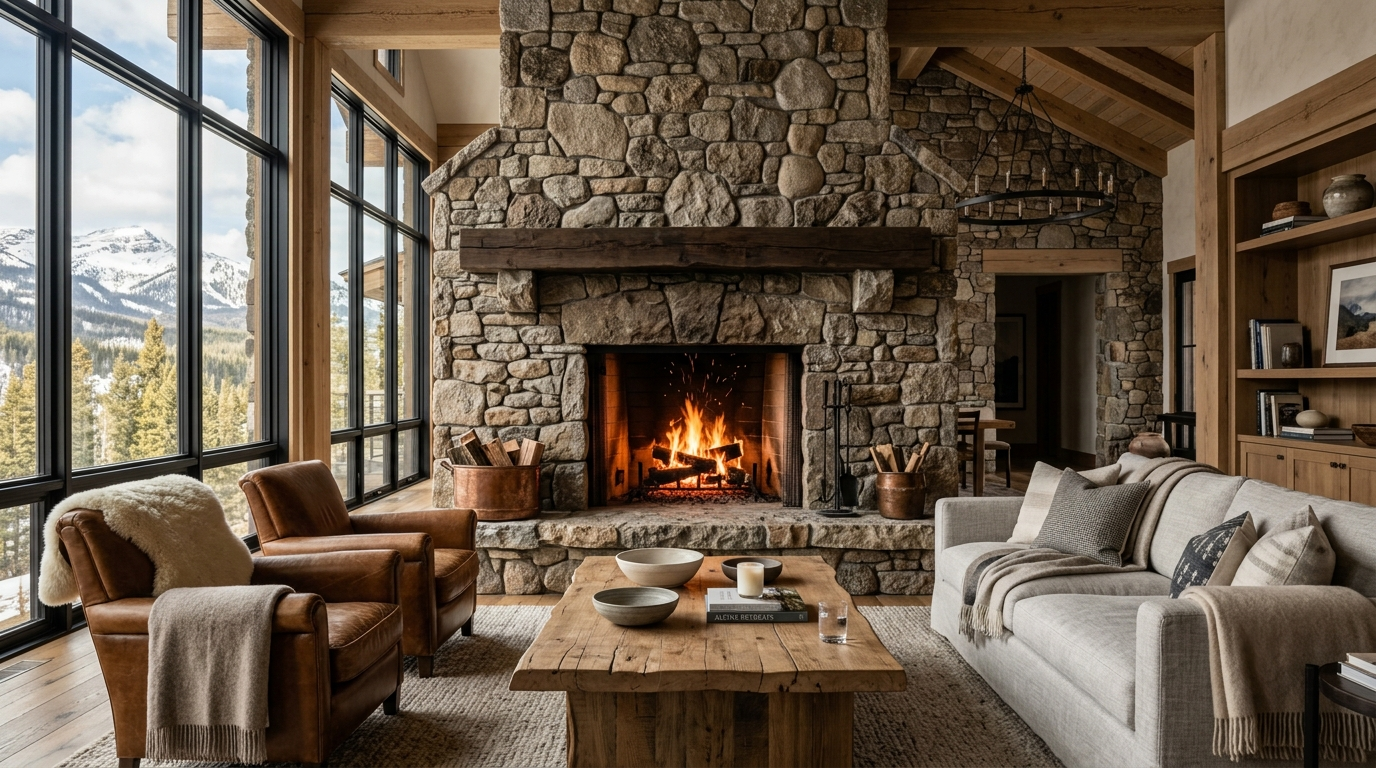
A stone fireplace has a way of becoming the center of a living room without trying too hard. Even when it’s not lit, it tends to draw attention naturally. I’ve lived with different fireplace styles over the years, and stone has always been the one that feels most connected to the room itself. It has texture, character, and enough variation that no two fireplaces look exactly the same.
What I like most about a stone fireplace is that it can work in very different homes. Some look rustic and relaxed, while others feel clean and modern. The trick is finding a style that fits how you actually live instead of choosing something that only looks good in photos.
If you’re planning a living room update or simply looking for inspiration, these stone fireplace ideas offer plenty of directions to explore.
1. Floor to Ceiling Stone Fireplace :
A floor to ceiling stone fireplace creates a strong focal point.
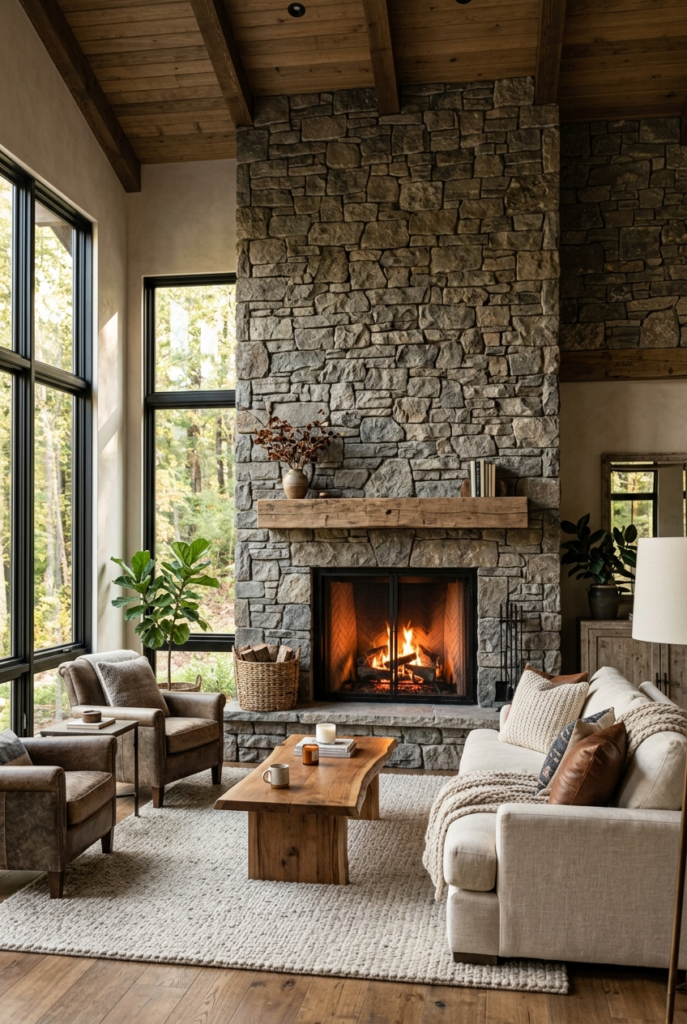
The first time I saw one in person, I was surprised by how much larger the room seemed. The vertical lines naturally draw your eyes upward. Large stone walls can feel overwhelming if the room is small, though, so balance matters.
2. Rustic Natural Stone Design :
Natural stone with uneven edges brings a relaxed look that feels timeless.
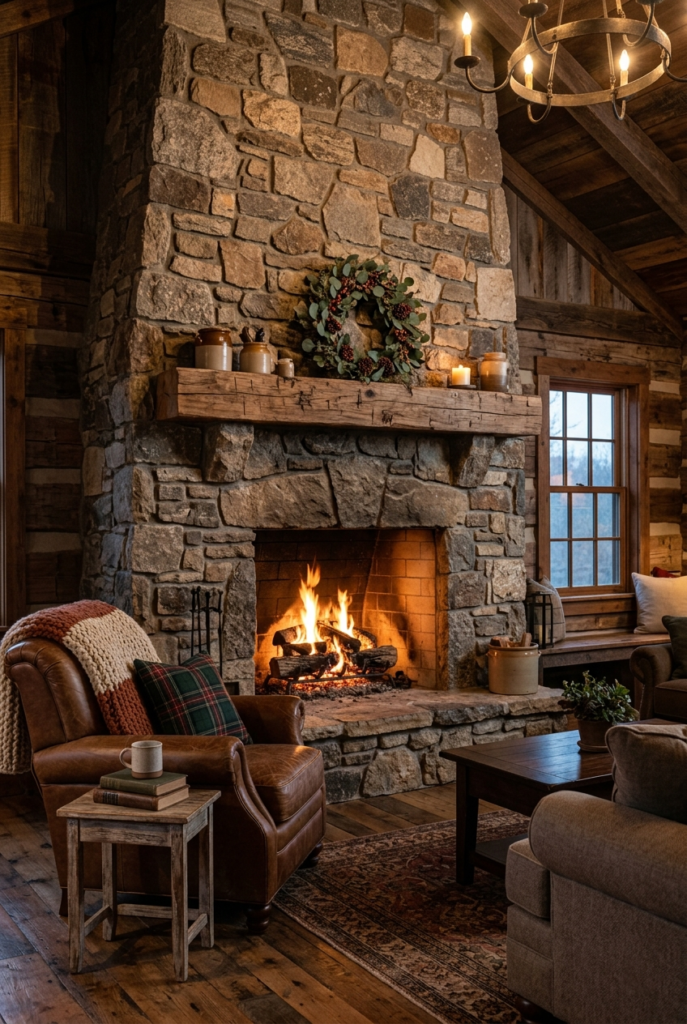
Small imperfections often make this style more appealing. Perfectly uniform stone sometimes feels too manufactured, while natural variations give the fireplace more personality.
3. Light Colored Stone Fireplace :
A light stone fireplace can brighten the entire room.
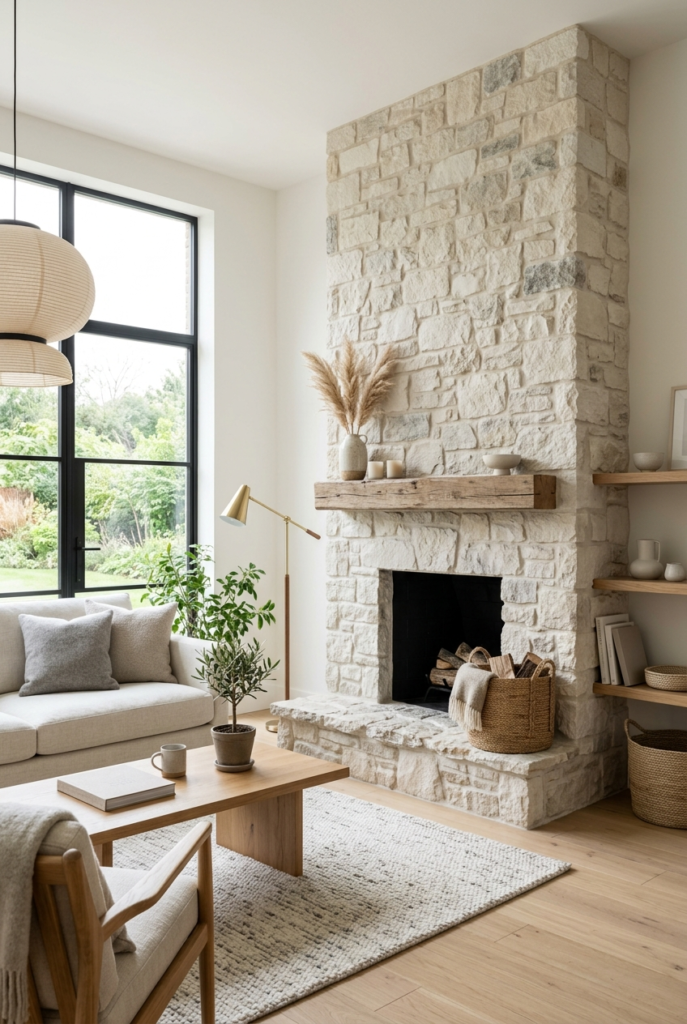
Cream, beige, and soft gray stones tend to reflect more natural light. I once considered using darker stone in a fairly small living room, but after seeing samples, it became clear the lighter option worked better for the space.
4. Modern Stacked Stone Fireplace :
Stacked stone creates clean lines and a more contemporary appearance.
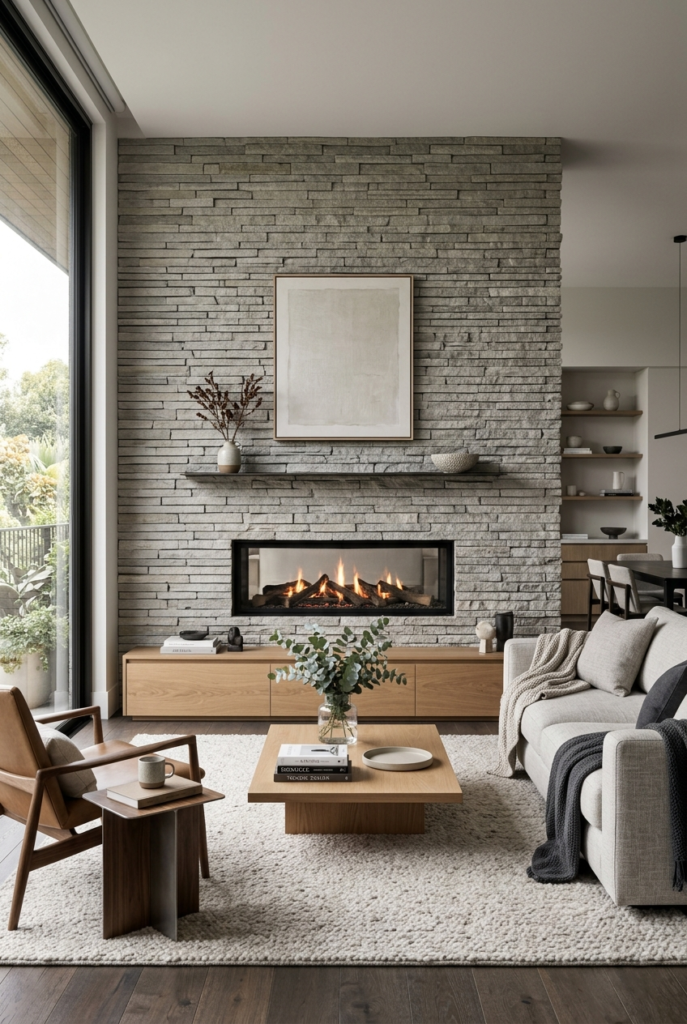
This style works especially well in modern homes because the stones are arranged neatly without looking overly polished. It feels structured without becoming cold.
5. Stone Fireplace With a Wood Mantel :
Wood and stone naturally complement each other.
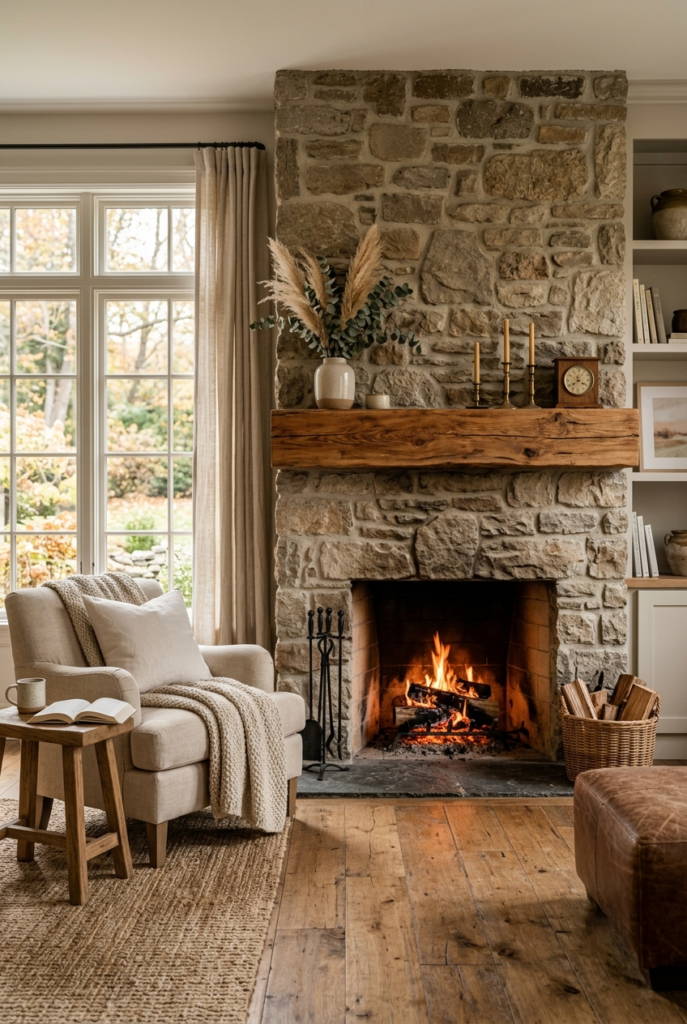
A simple wooden mantel softens the harder texture of the stone. Over time, I have noticed that even a basic mantel can completely change the look of a fireplace wall.
6. Whitewashed Stone Finish :
A whitewashed stone fireplace offers a lighter and slightly softer appearance.
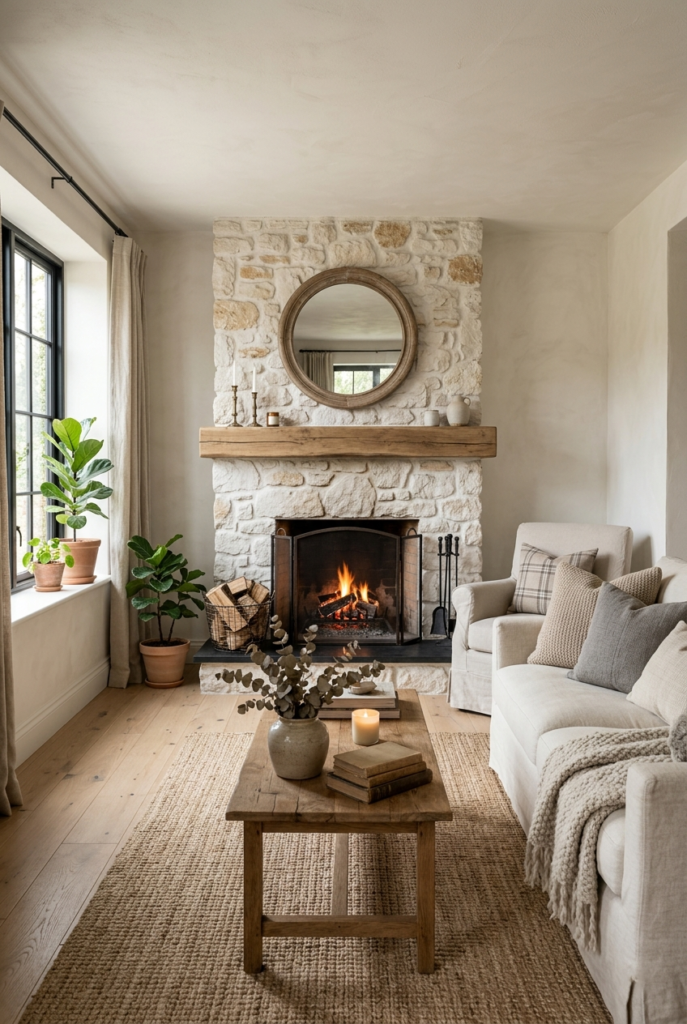
This can be a good option if the original stone feels too dark or heavy. The texture remains visible, but the overall look becomes more relaxed.
7. Large Hearth Seating Area :
A wide stone hearth can become useful beyond the fireplace itself.
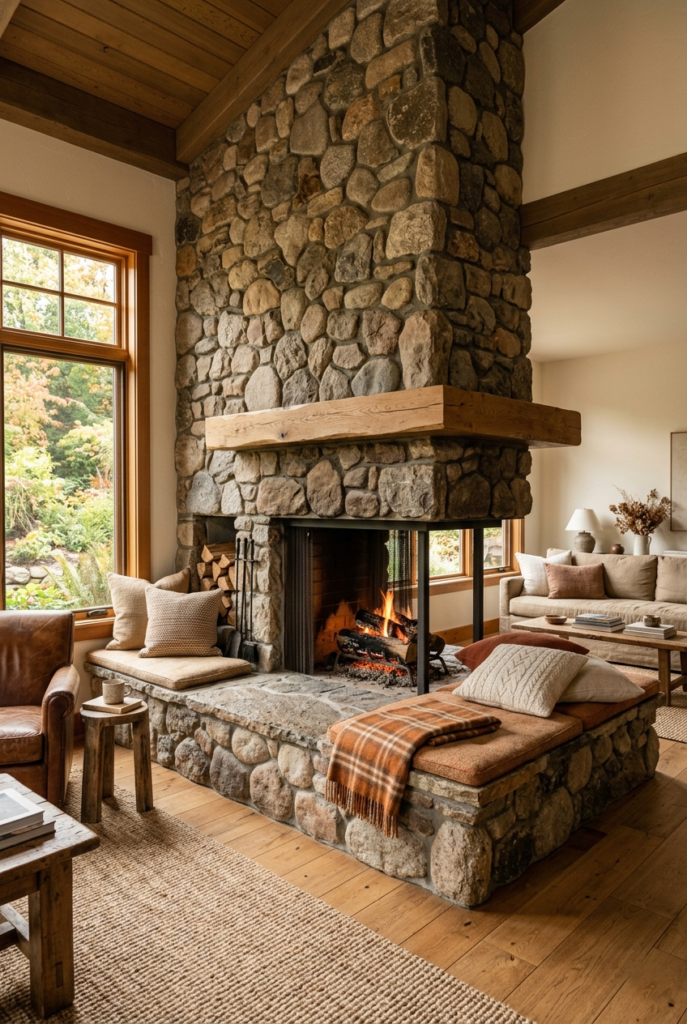
People naturally sit on it during gatherings, especially when extra seating is needed. I didn’t expect this when I first saw the idea, but it ends up being surprisingly practical.
8. Mixed Stone Tones :
Using several stone shades together creates a more natural appearance.
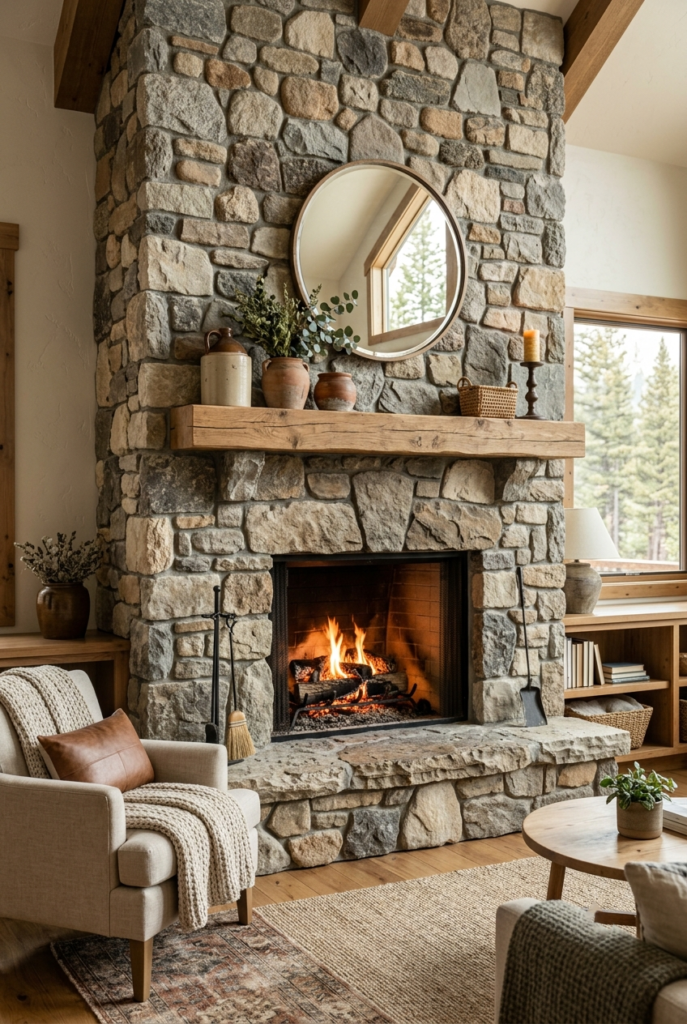
Real stone rarely comes in one perfectly consistent color. Slight variations often make the fireplace feel more authentic and less predictable.
9. Stone Fireplace With Built In Shelving :
Built in shelves around a stone fireplace can make the entire wall more functional.
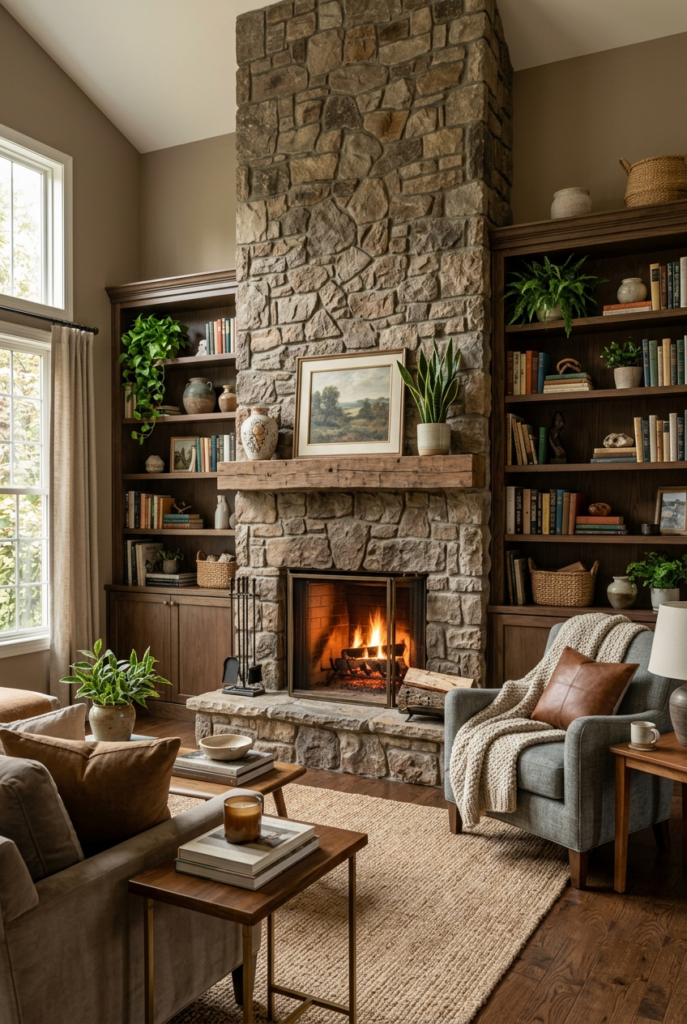
Books, plants, and everyday objects help the fireplace feel connected to the room instead of standing alone as a decorative feature.
10. Minimalist Stone Fireplace :
Not every stone fireplace needs a large mantel or dramatic details.
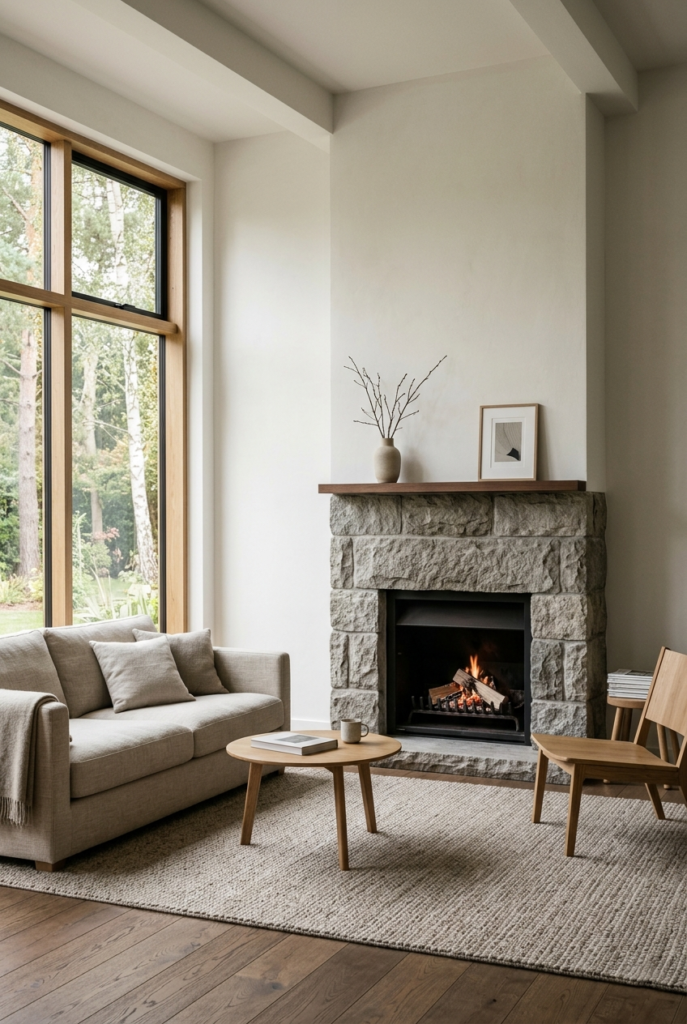
Some of the most attractive designs are surprisingly simple. Clean lines and minimal decoration allow the stone itself to become the focus.
11. Gray Stone Fireplace :
Gray stone has become increasingly popular because it works with many decorating styles.
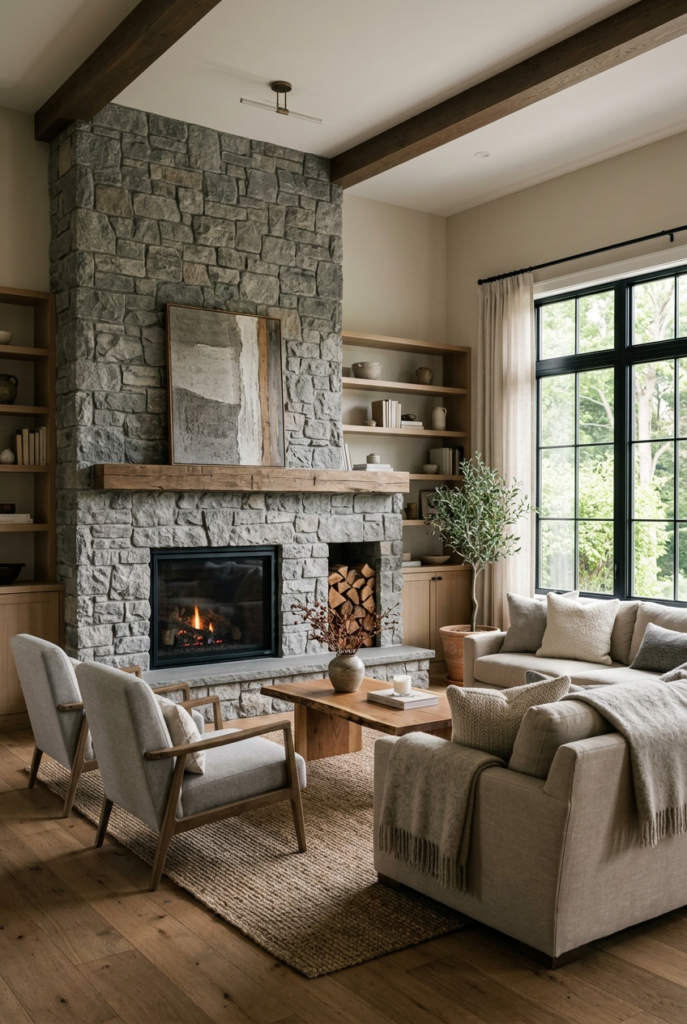
It pairs well with wood, metal, neutral furniture, and even colorful accents. One advantage is that it rarely feels tied to a specific trend.
12. Corner Stone Fireplace :
Corner fireplaces can be challenging at first.
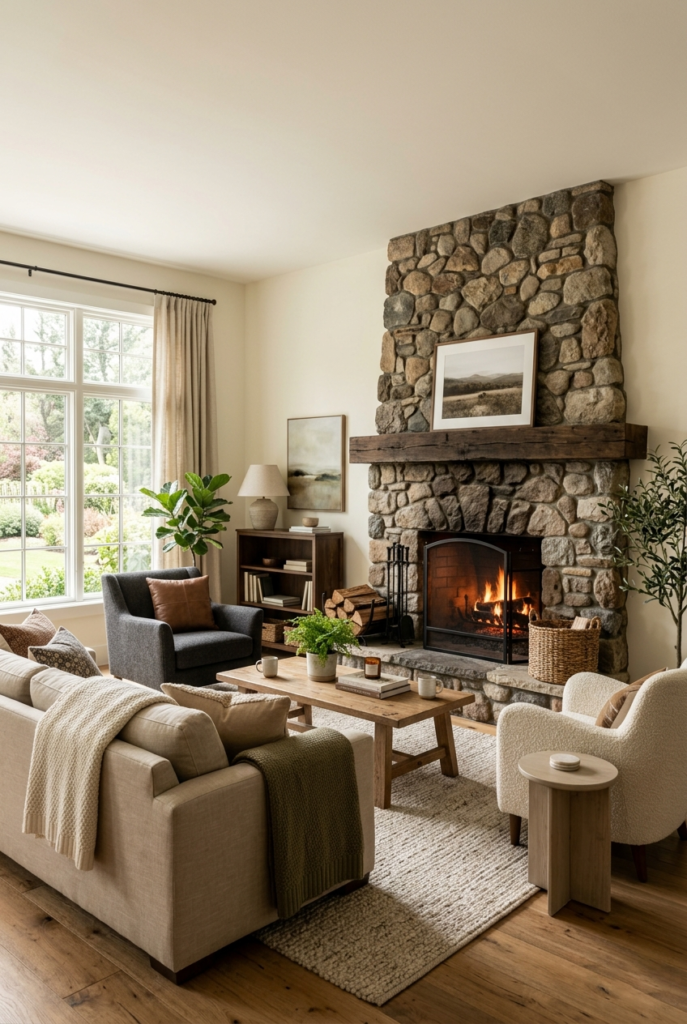
I used to think they limited furniture placement, but I’ve seen some layouts where a corner stone fireplace actually improved the room flow. It often depends on the room’s shape and size.
13. Fireplace With Reclaimed Wood Details :
Reclaimed wood introduces character that newer materials sometimes lack.
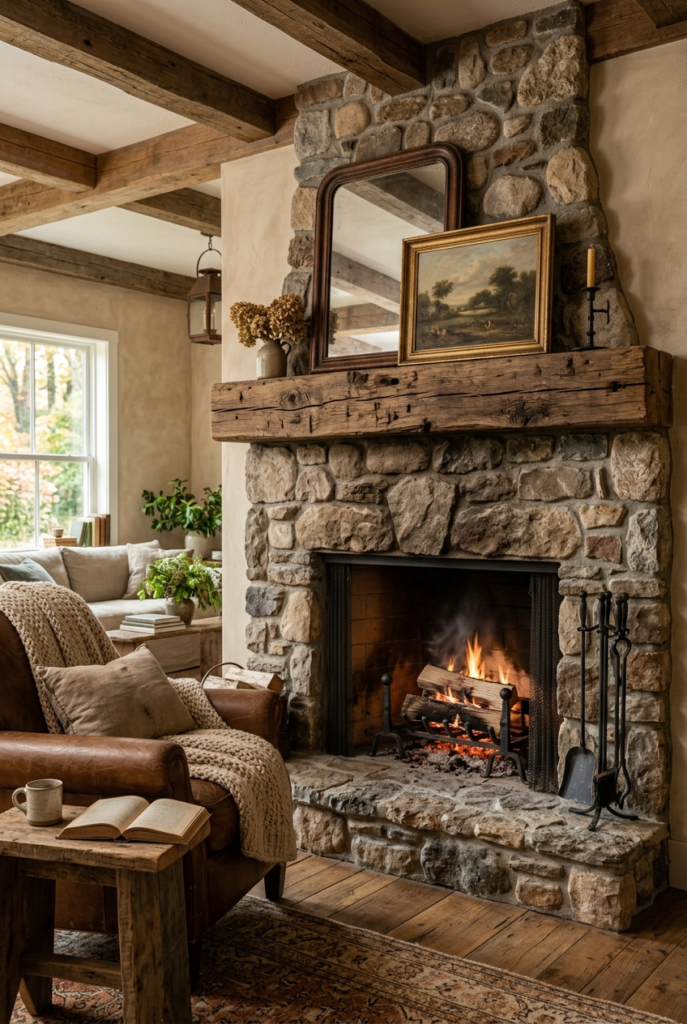
Small marks, knots, and imperfections help create a more lived in appearance. The contrast between aged wood and stone often feels natural.
14. River Rock Stone Fireplace :
River rock creates a softer and more organic look compared to flat stone.
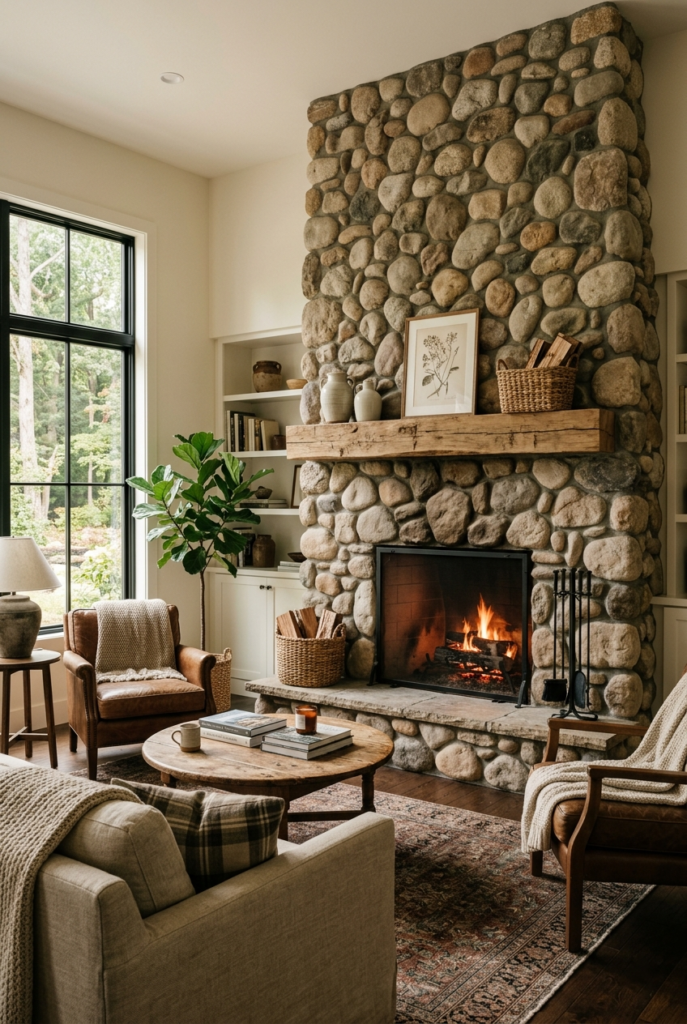
The rounded shapes make the fireplace feel slightly less formal. This style can work particularly well in casual family rooms.
15. Tall Stone Fireplace in an Open Living Room :
Open concept spaces sometimes need a strong focal point.
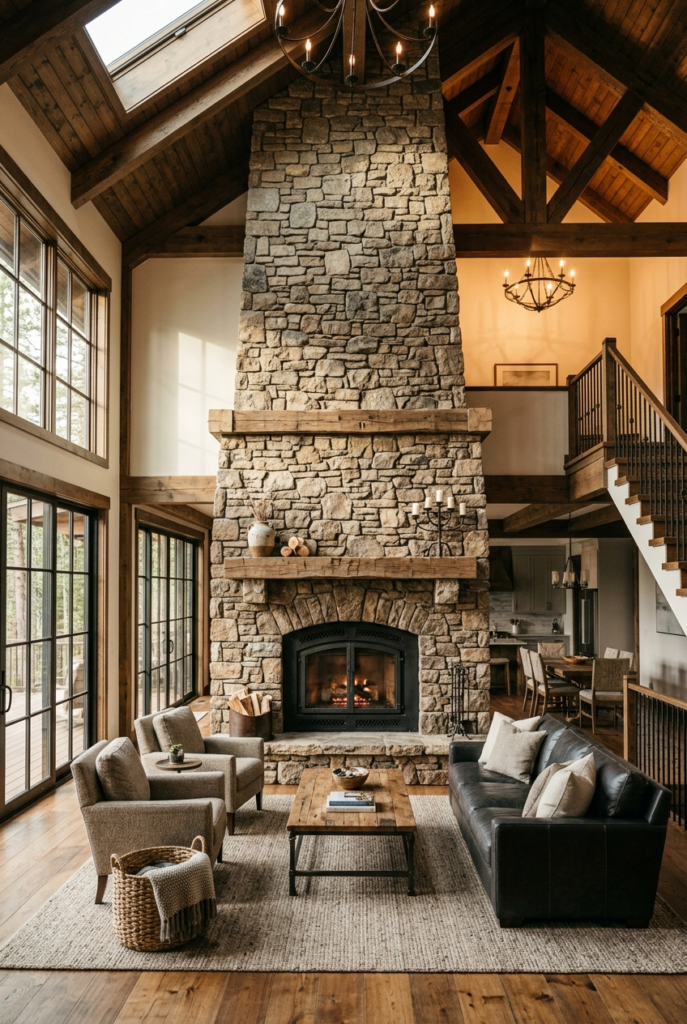
A tall stone fireplace helps anchor the room visually. Without it, large open spaces can occasionally feel a little unfinished.
16. Stone Fireplace With Black Accents :
Black fireplace doors, lighting, or hardware create contrast against lighter stone.
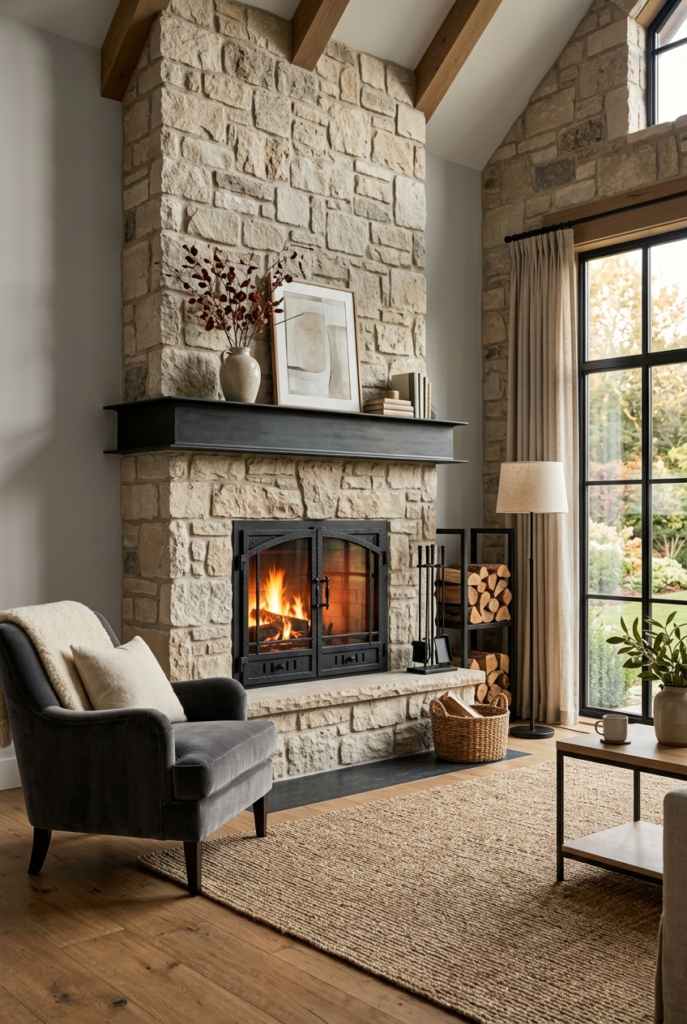
The balance is important, though. Too many dark elements can start pulling attention away from the stone itself.
17. Traditional Fieldstone Fireplace :
Fieldstone fireplaces have a classic appearance that never seems to disappear completely from design trends.
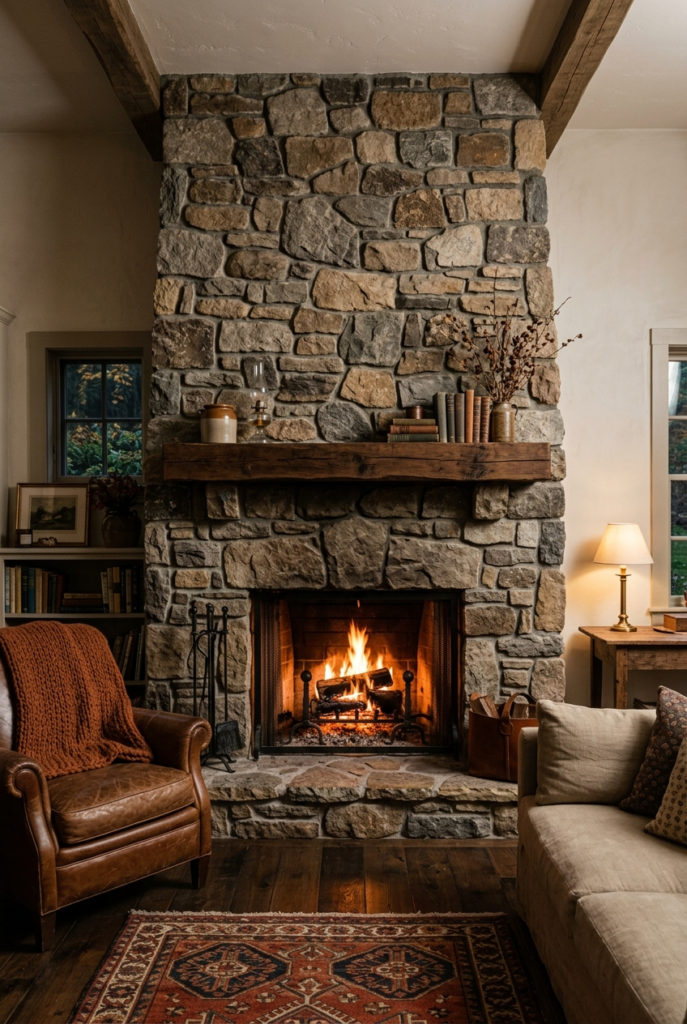
The irregular shapes create texture and depth naturally. Every fieldstone fireplace seems to have its own character because the stones vary so much.
18. Stone Fireplace With Simple Decor :
One mistake I made years ago was decorating every inch of the mantel.
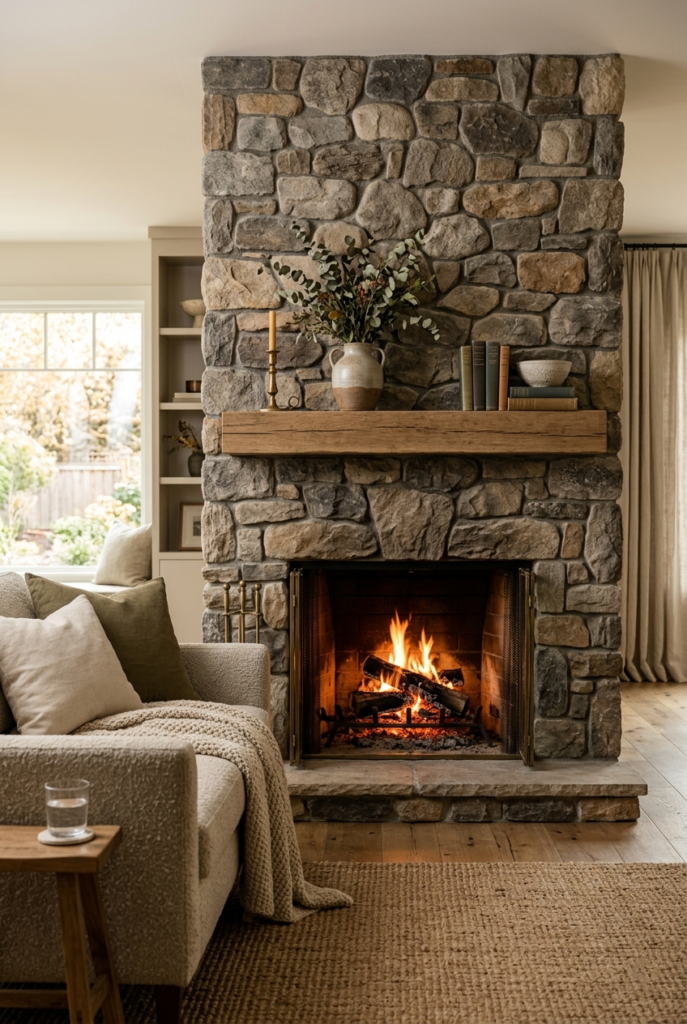
The fireplace looked crowded almost immediately. Stone already provides visual texture, so it often needs fewer decorative items than a plain wall. Sometimes a few carefully chosen pieces are enough.
19. Blending Modern Furniture With Stone :
A stone fireplace does not automatically mean rustic furniture.
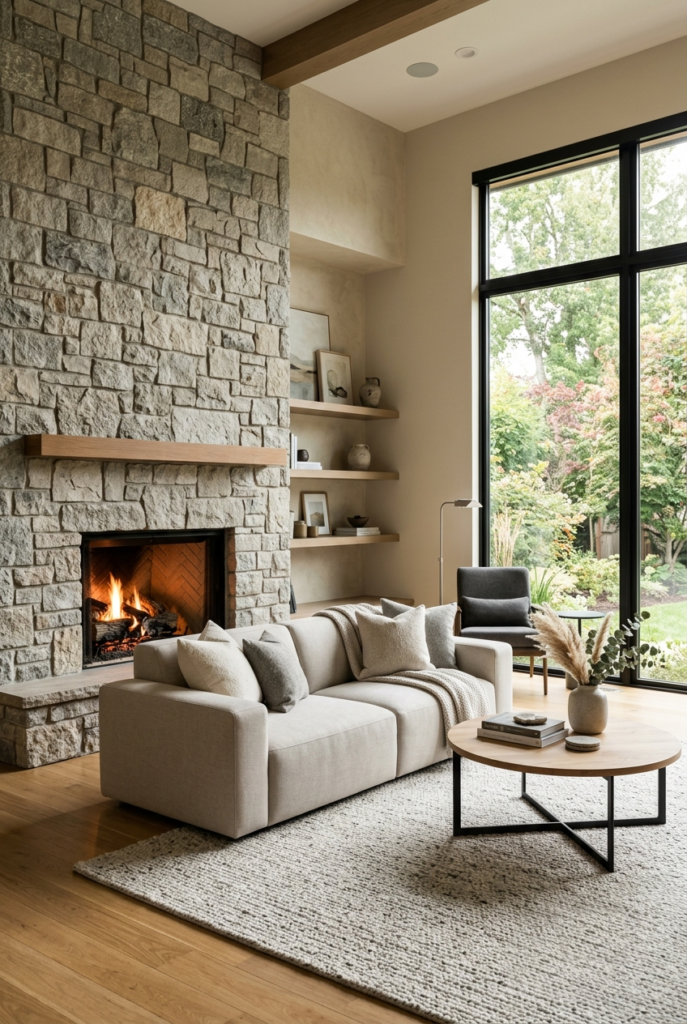
One of my favorite combinations is a stone fireplace paired with simple modern furniture. The contrast keeps the room from feeling too themed. Modern pieces help balance the natural texture of the stone, while the fireplace prevents the room from feeling overly sleek.
Conclusion :
A stone fireplace brings something unique to a living room that is difficult to replicate with other materials. It has texture, character, and a sense of permanence that often improves with time rather than fading.
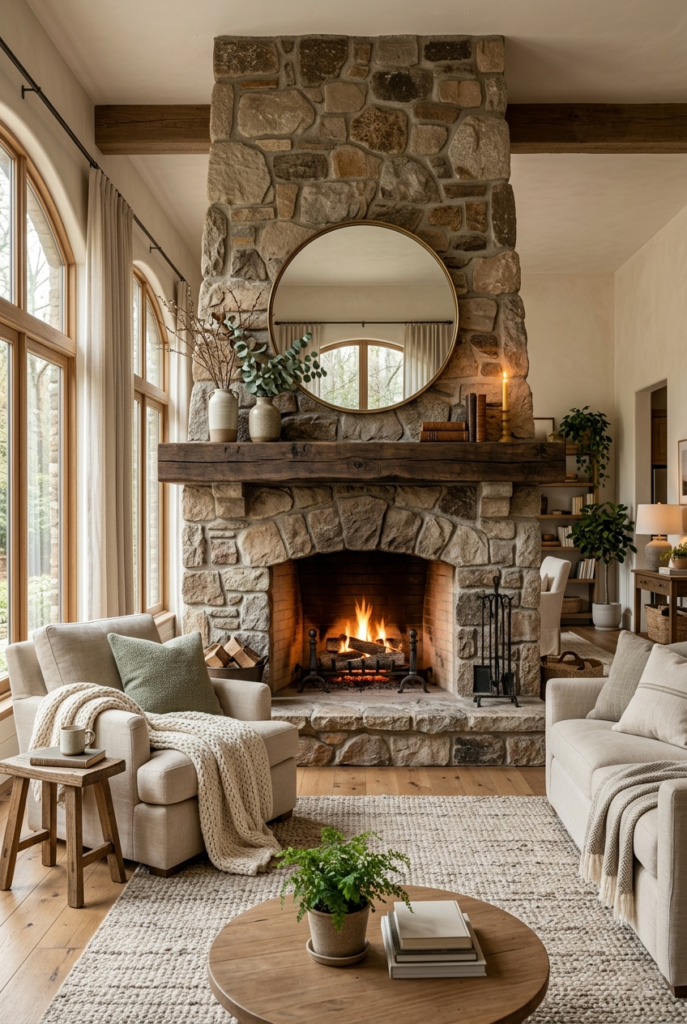
What I appreciate most is that a stone fireplace does not need constant updating. Furniture trends change, wall colors come and go, and decorative styles shift every few years. Stone tends to stay relevant because it feels connected to natural materials rather than passing trends.
Whether you prefer a rustic fieldstone design, a sleek stacked stone feature, or something in between, the best stone fireplace is the one that fits naturally into your daily life. A fireplace should feel like part of the room, not a display piece that nobody actually uses. When that balance is right, it becomes one of the most enjoyable parts of the home.