
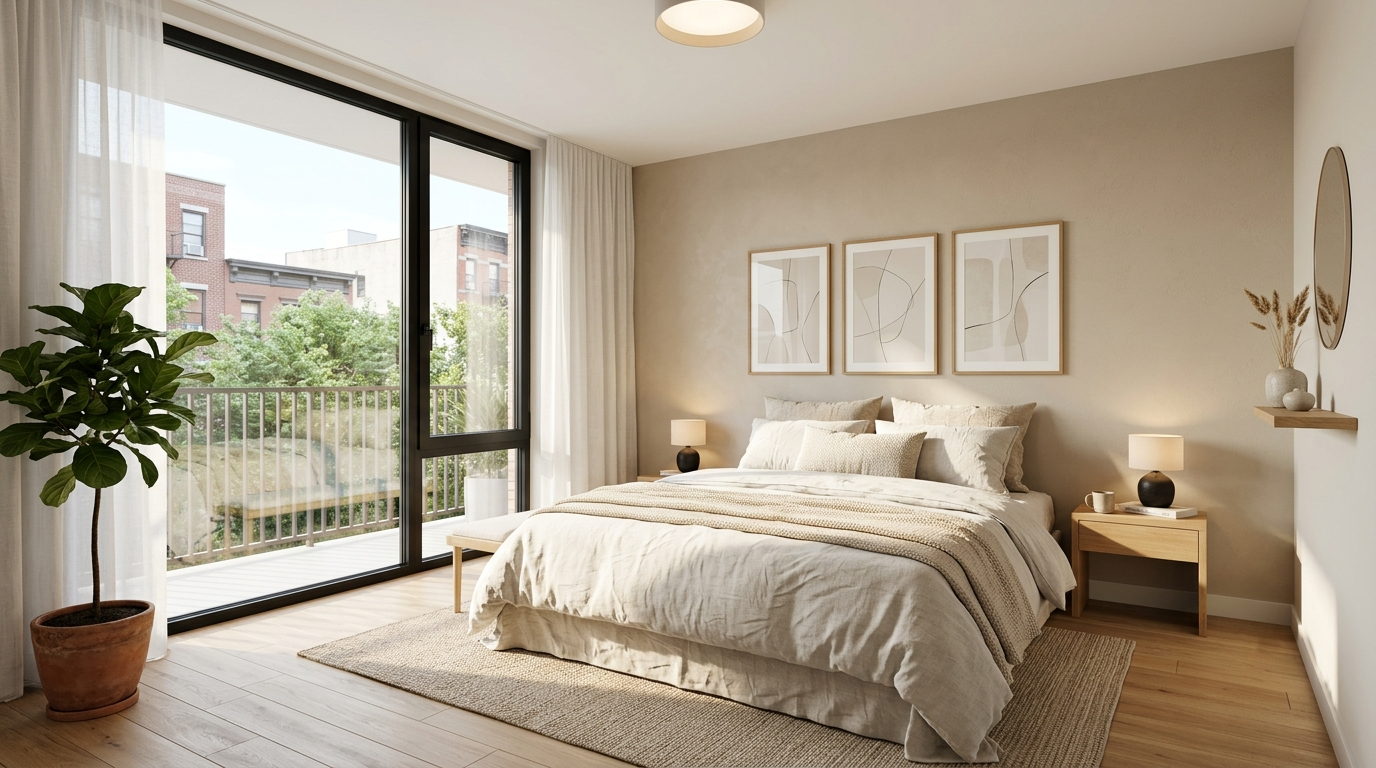
For a long time, I assumed every bedroom needed a headboard. It seemed like one of those pieces that automatically came with a complete bed setup. Then I moved into a smaller room and lived with a bed without headboard for several months. What started as a temporary solution ended up changing how I looked at bedroom design.
Without a headboard, the room felt more open and less crowded. It also forced me to think differently about the wall behind the bed. Instead of relying on a large piece of furniture, I started paying attention to paint colors, artwork, lighting, and textures.
A bed without headboard doesn’t have to look unfinished. In many modern bedrooms, it can actually feel cleaner and more intentional. Here are some ideas that help create a finished look while keeping the simplicity of a headboard free bed.
1. Create a Painted Accent Wall
A painted wall behind the bed can easily become the focal point of the room.
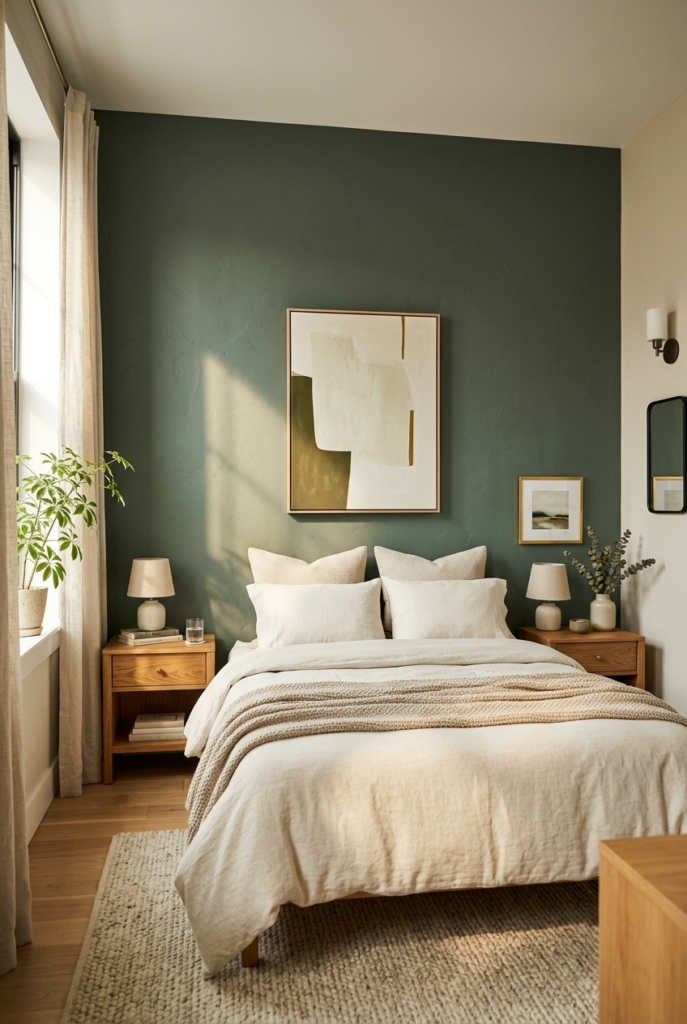
This is one of the first things I tried when removing a headboard. The bed suddenly felt anchored instead of floating awkwardly against a blank wall. Deep colors, soft neutrals, or even subtle earth tones can work depending on the style of the room.
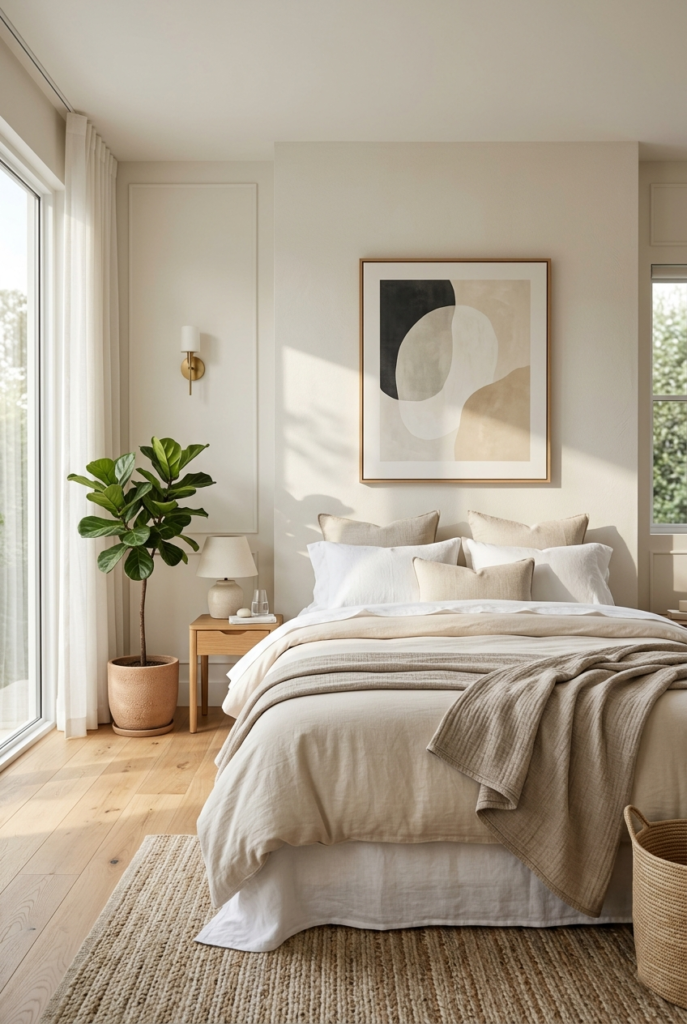
2. Hang Oversized Artwork
Large artwork can fill the visual space that a headboard would normally occupy.
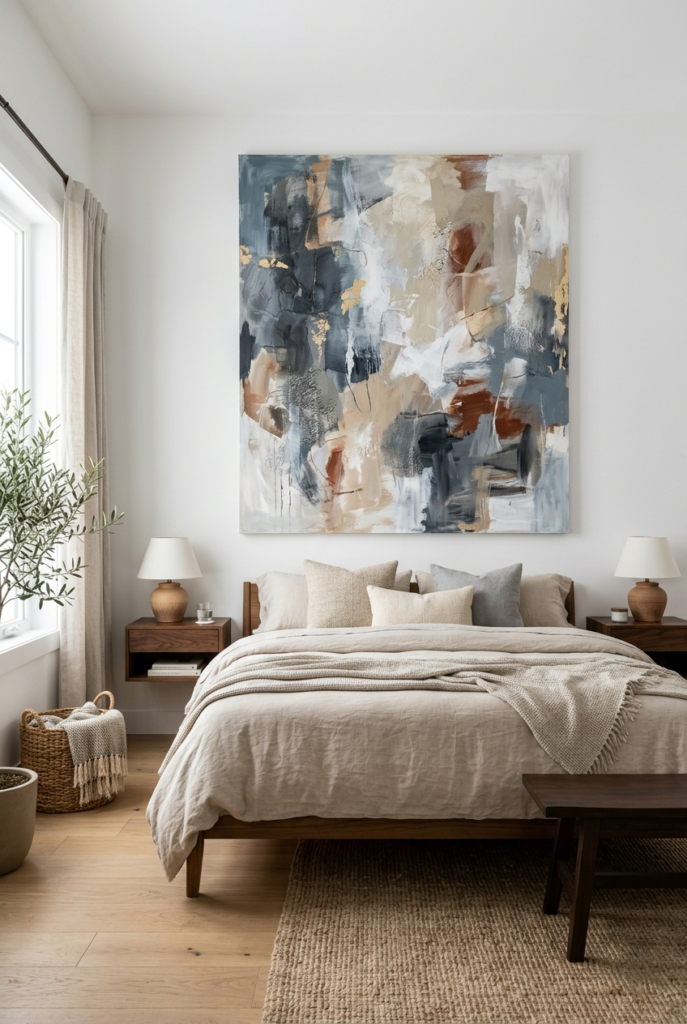
One oversized piece often looks better than several small frames. I learned that grouping too many small prints behind a bed can start to feel busy, especially in compact bedrooms.
3. Use Wall Mounted Sconces
Wall sconces create structure around a bed without headboard while also freeing up space on bedside tables.
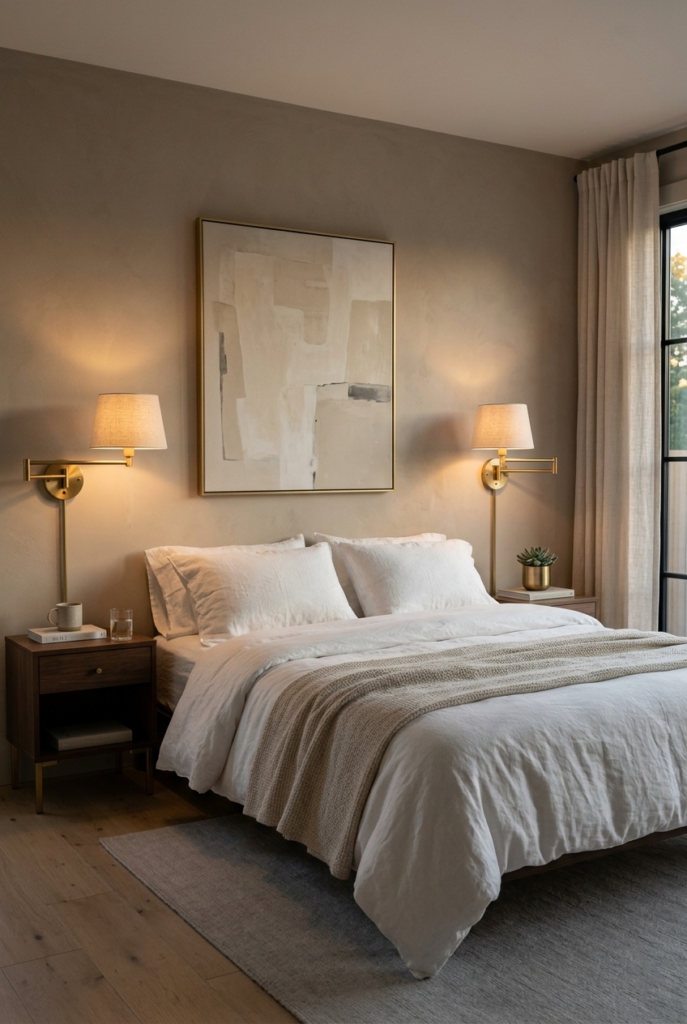
The symmetry of matching lights on both sides naturally frames the bed and makes the setup look intentional rather than unfinished.
4. Lean Large Framed Art Against the Wall
Not everything has to be mounted.
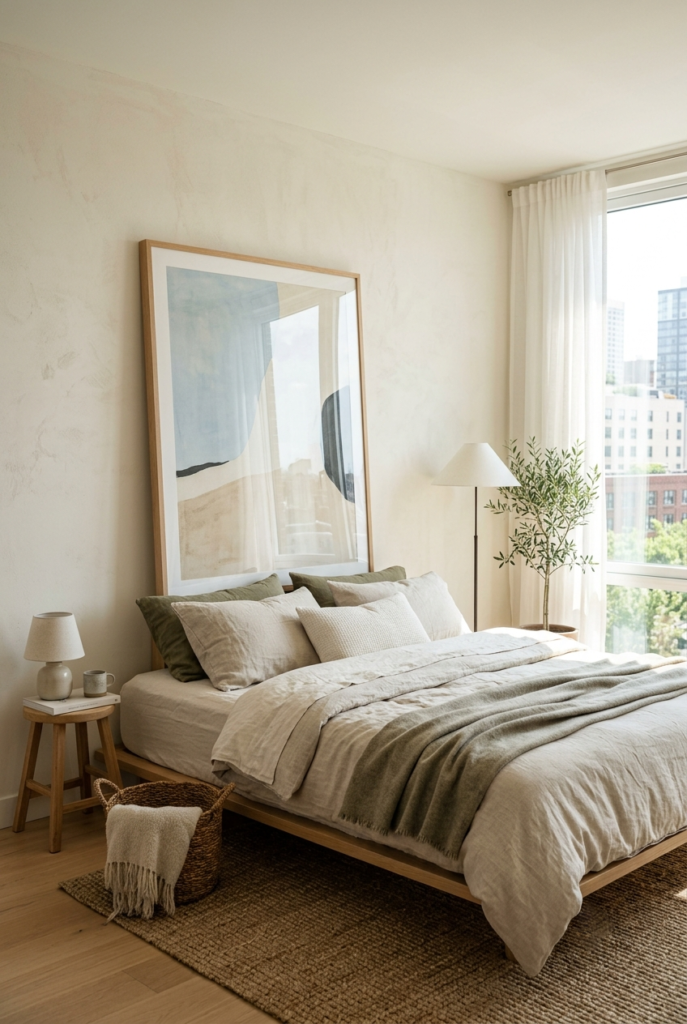
A large frame leaning casually against the wall behind the bed creates a relaxed look that feels less formal. It also makes rearranging easier if you like changing things around from time to time.
5. Add Vertical Wood Slats
Wood slats behind the bed can create the visual effect of a headboard without actually using one.
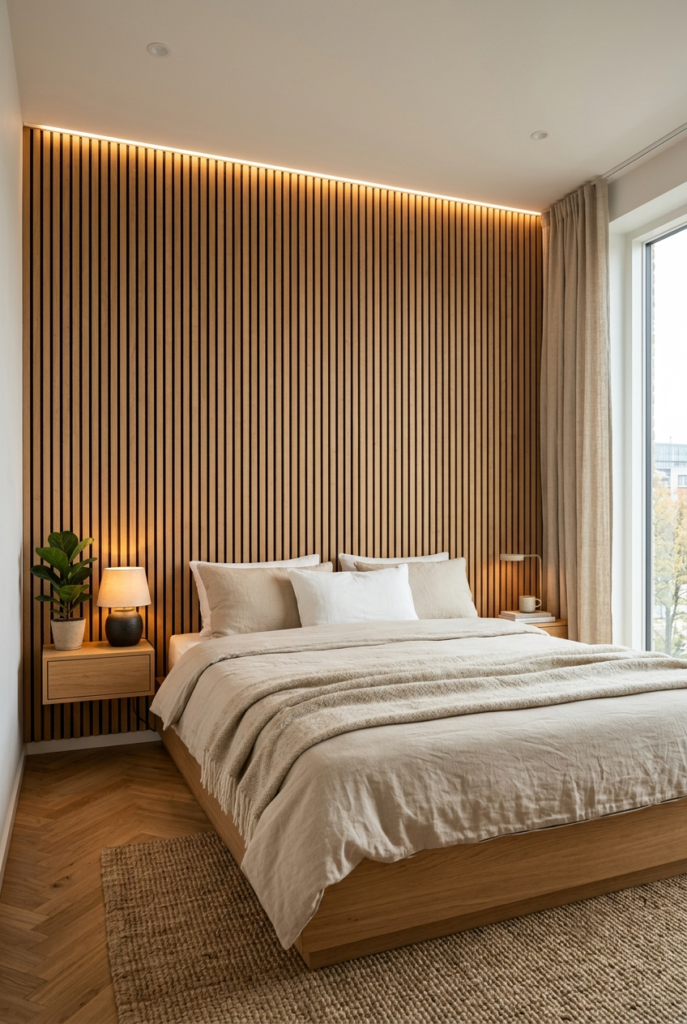
This approach works especially well in modern bedrooms. The wall becomes part of the furniture, which creates a more integrated look.
6. Layer Pillows for Height
Sometimes a simple pile of pillows can do more than expected.
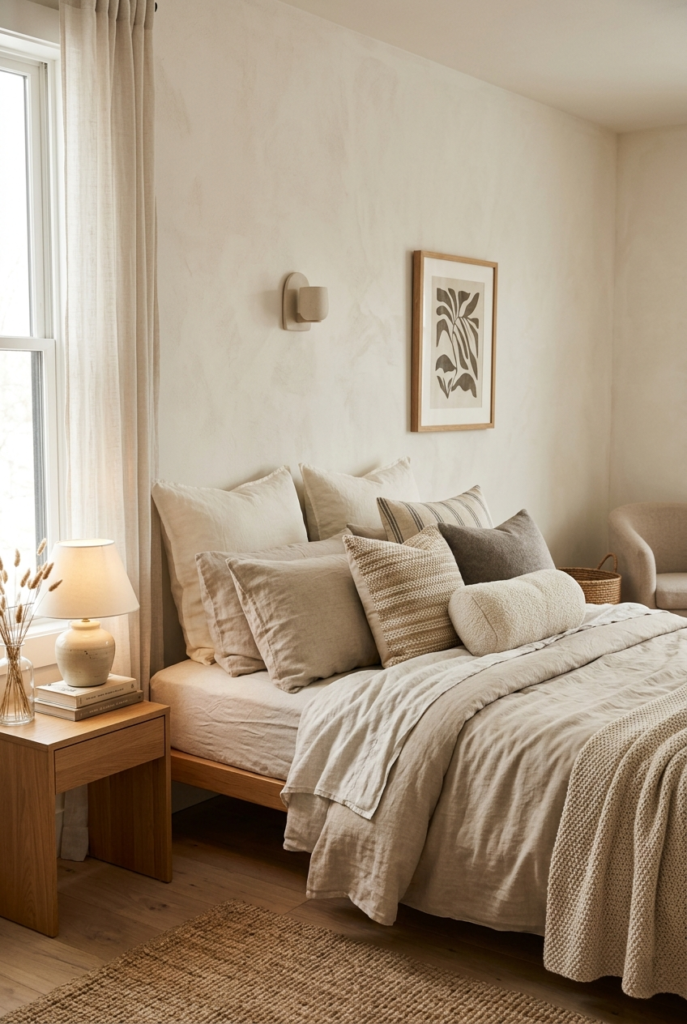
A mix of sleeping pillows and decorative cushions creates enough height to make the bed feel complete. The trick is not going overboard. I’ve seen beds with so many pillows that they become a daily annoyance.
7. Install a Picture Ledge
A narrow picture ledge above the bed provides a place for artwork, photos, and small decorative objects.
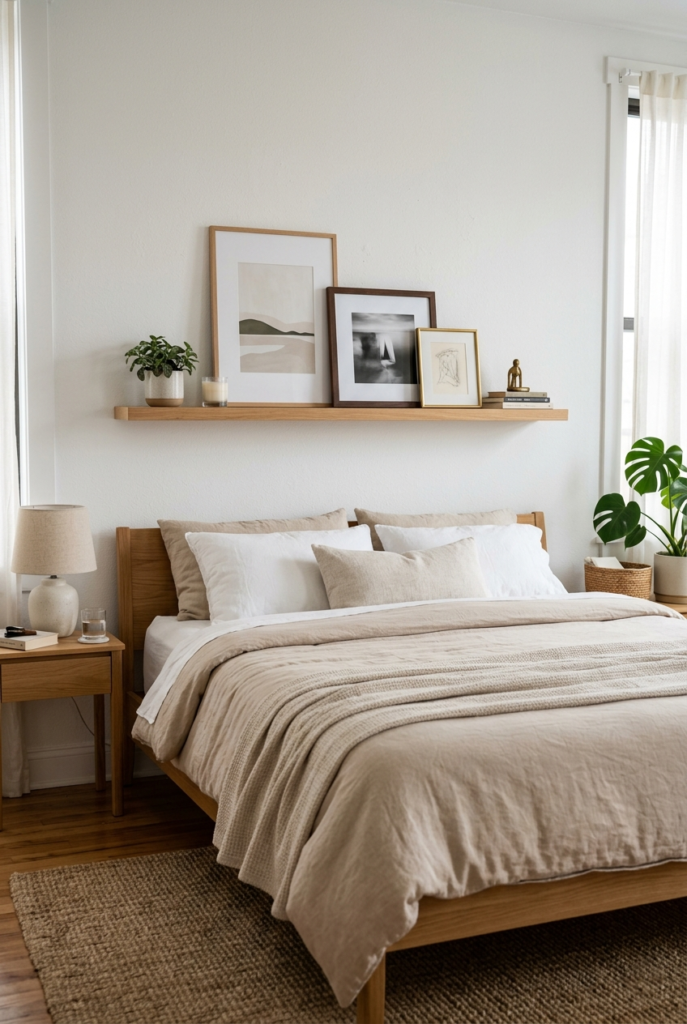
Unlike a traditional gallery wall, pieces can be swapped out easily without making new holes in the wall.
8. Try a Textured Wall Finish
Texture can make a blank wall far more interesting than furniture.
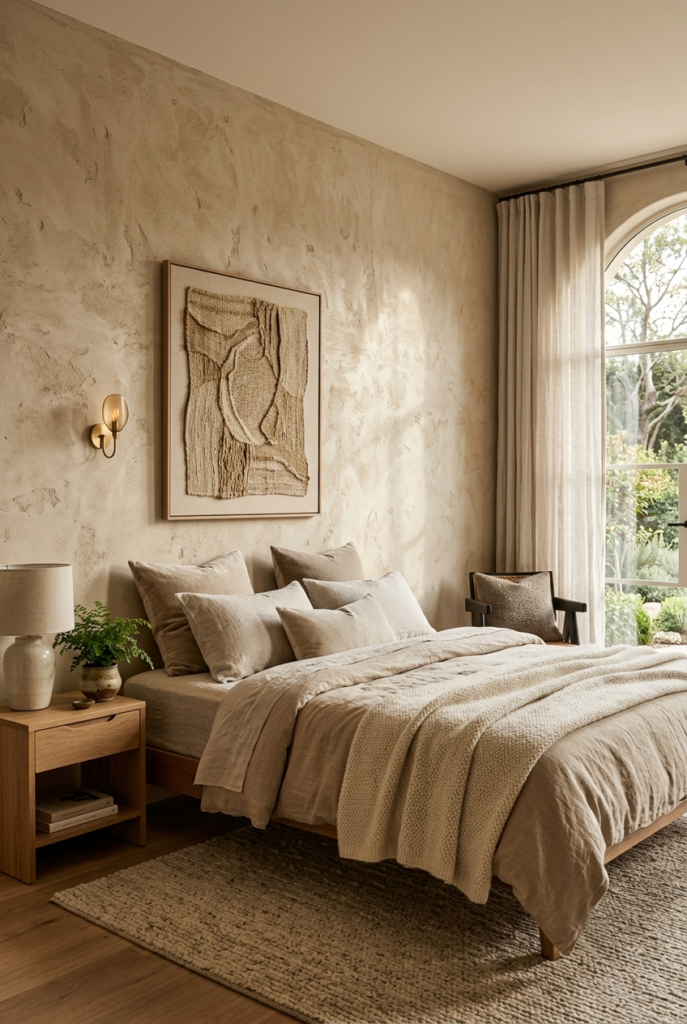
Plaster finishes, wood paneling, or subtle wall treatments create depth behind a bed without headboard. Even simple texture can completely change how the room feels.
9. Position the Bed Under a Large Window
If the room layout allows it, a window can become the natural focal point.
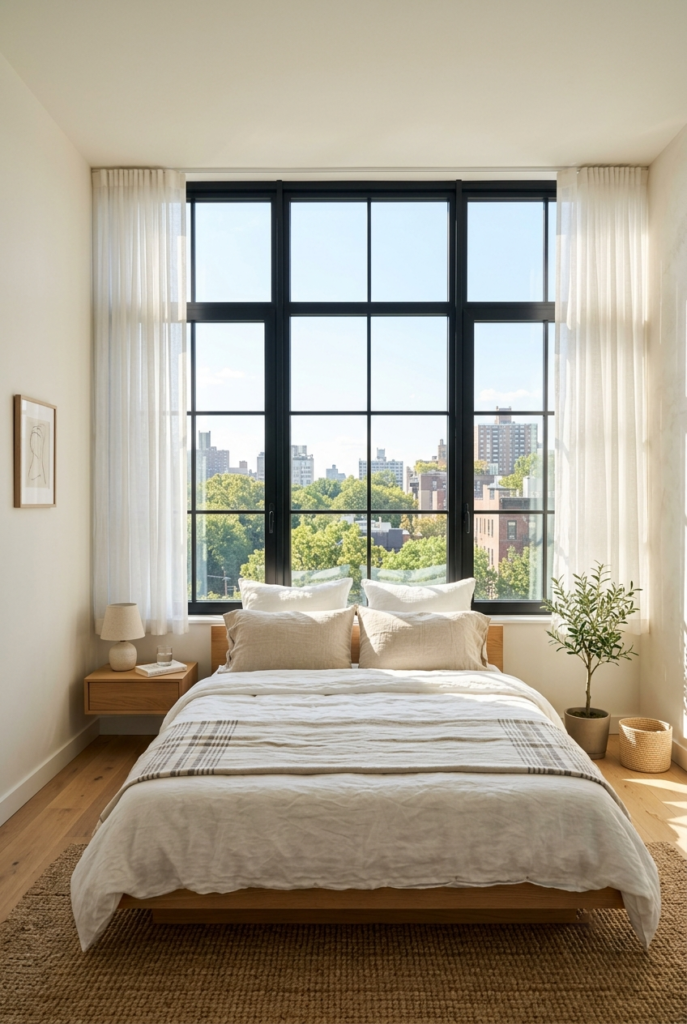
The view, natural light, and window trim often provide enough visual interest that a headboard doesn’t feel necessary. This setup worked surprisingly well in a previous apartment where there simply wasn’t enough wall space for a traditional bed arrangement.
10. Use Floor Length Curtains as a Backdrop
Curtains aren’t only for windows.
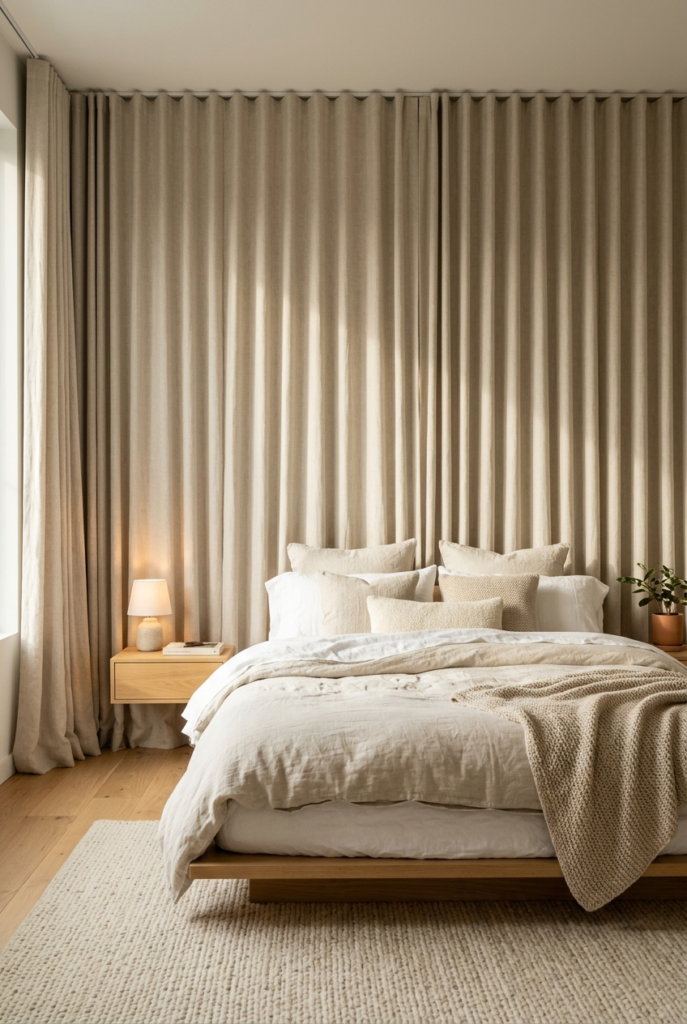
A full wall of fabric behind the bed can create softness and visual height. The effect is quite different from a traditional headboard and works particularly well in minimalist spaces.
11. Add Floating Shelves
Floating shelves can help define the bed area while offering practical storage.
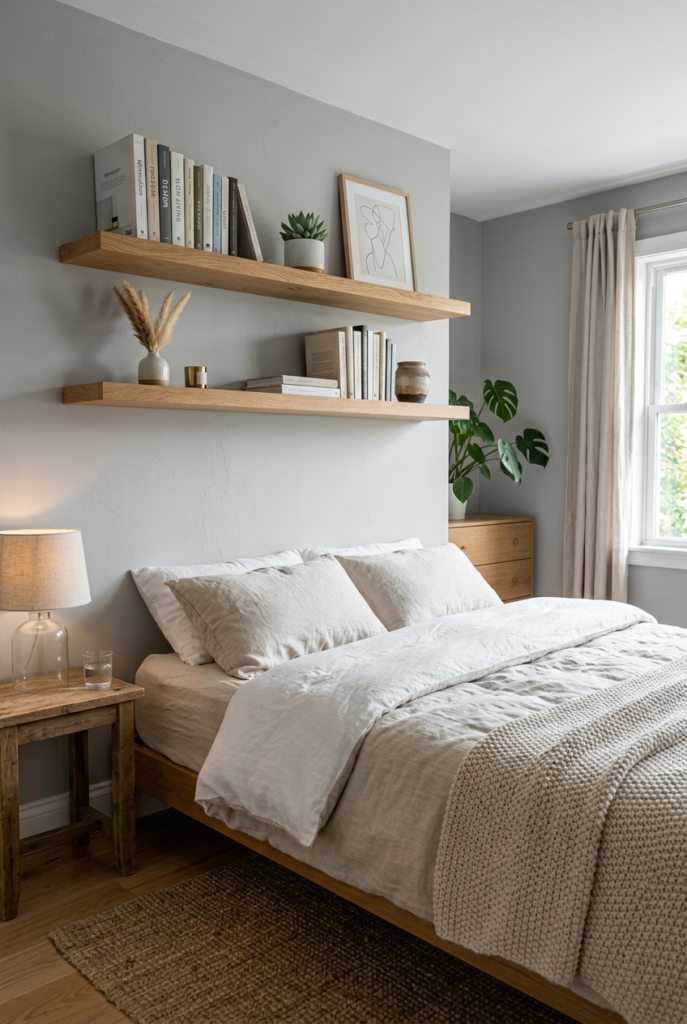
Books, small plants, framed photos, and decorative objects can all live above the bed without making the room feel crowded.
12. Create a Gallery Wall
A gallery wall gives the eye something to focus on immediately.
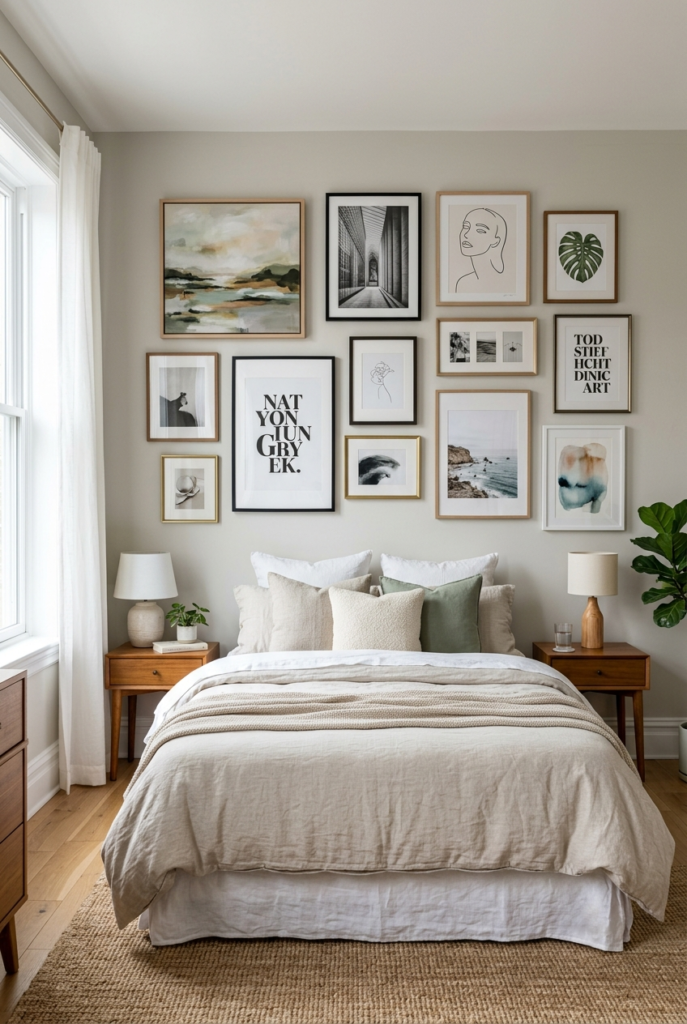
The key is keeping the arrangement somewhat organized. I’ve experimented with very random layouts before and they ended up looking more chaotic than creative.
13. Choose a Statement Bed Frame
When there’s no headboard, the bed frame itself becomes more noticeable.
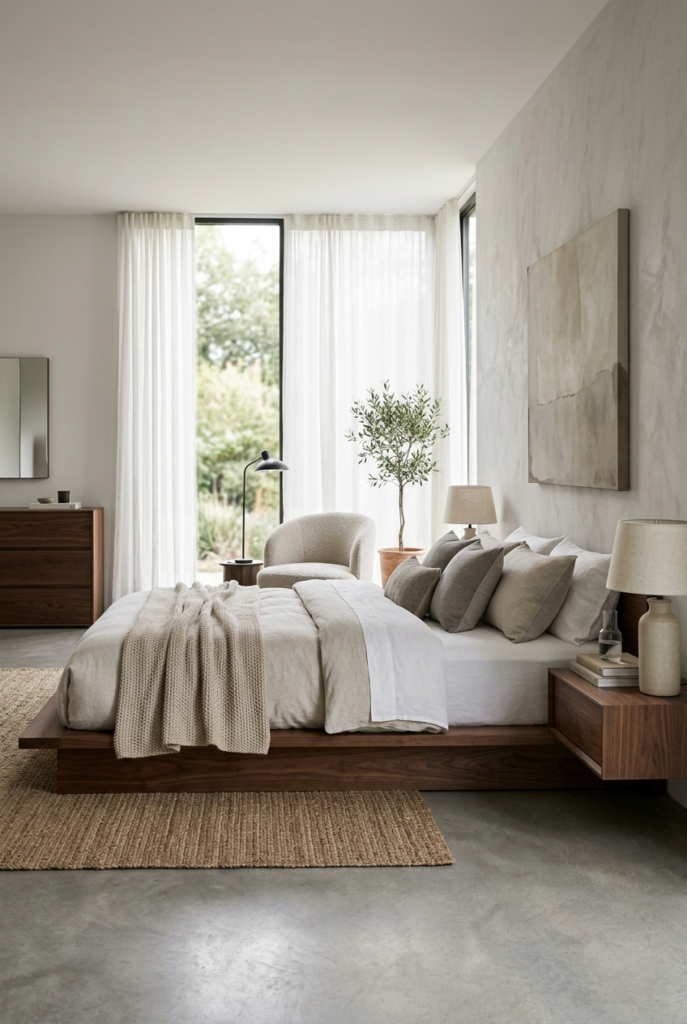
Low platform beds work particularly well in modern bedrooms because their clean lines don’t depend on a large headboard for visual balance.
For readers who enjoy simple modern bedroom styles, 20 Modern Men’s Bedroom Ideas and Inspiration offers some great examples of streamlined furniture choices.
14. Use Wallpaper Behind the Bed
Wallpaper can define the sleeping area without adding physical bulk.
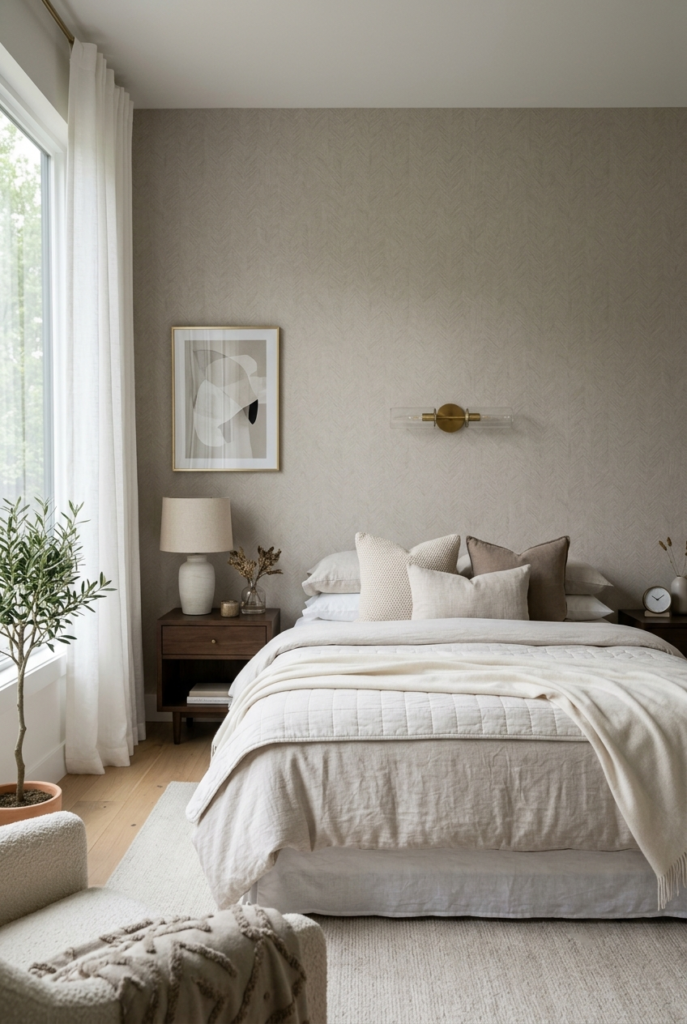
A subtle pattern often works better than something extremely bold. What looks exciting on a sample sheet can sometimes feel overwhelming once it covers an entire wall.
15. Place a Bench at the Foot of the Bed
A bench doesn’t replace a headboard directly, but it helps balance the room.
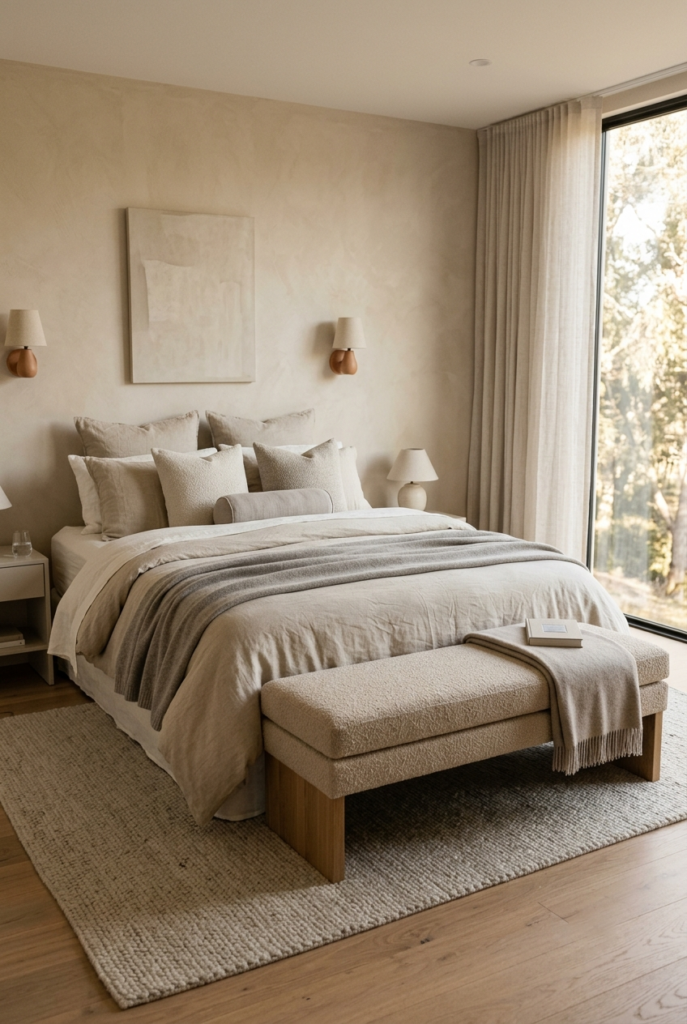
Without a headboard, bedrooms can occasionally feel visually weighted toward one side. A bench helps distribute attention across the entire bed setup.
16. Keep Everything Minimal
Some rooms don’t need extra decoration at all.
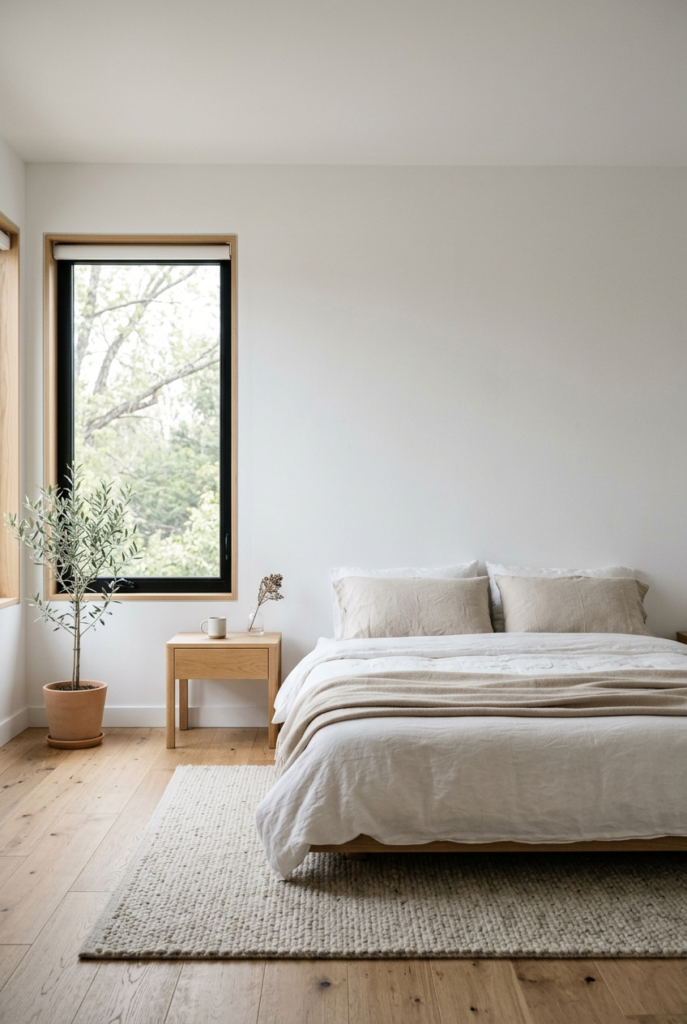
A bed without headboard paired with simple bedding, clean walls, and minimal furniture can feel surprisingly complete. Modern design often relies on restraint rather than adding more elements.
17. Use Large Indoor Plants Nearby
Plants can help soften the area around the bed.
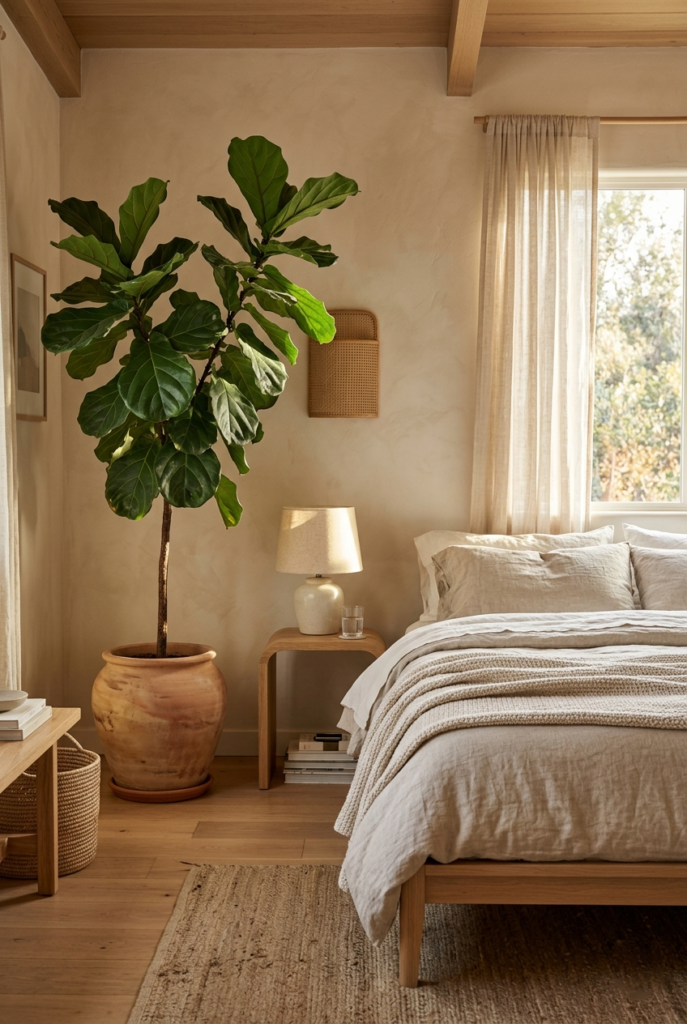
A tall plant positioned near one corner creates height and draws attention upward. Just be realistic about maintenance. I’ve managed to forget about watering schedules more than once.
18. Add Architectural Details
Wall molding, paneling, or built in features can create a finished backdrop for a bed without headboard.
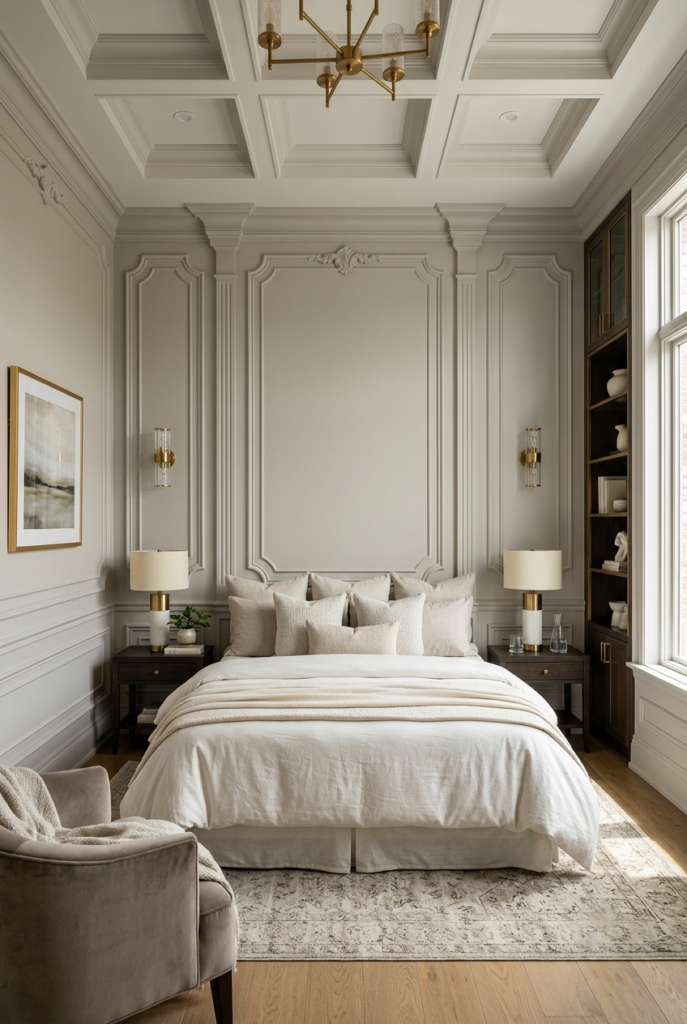
In some cases, these architectural details look more expensive and intentional than a standard furniture headboard.
If you’re interested in creating more depth through color and room design, you might also enjoy 20 Cozy Moody Bedroom Ideas for a Relaxing Vibe.
19. Let the Bedding Take Center Stage
Sometimes the bedding itself becomes the design feature.
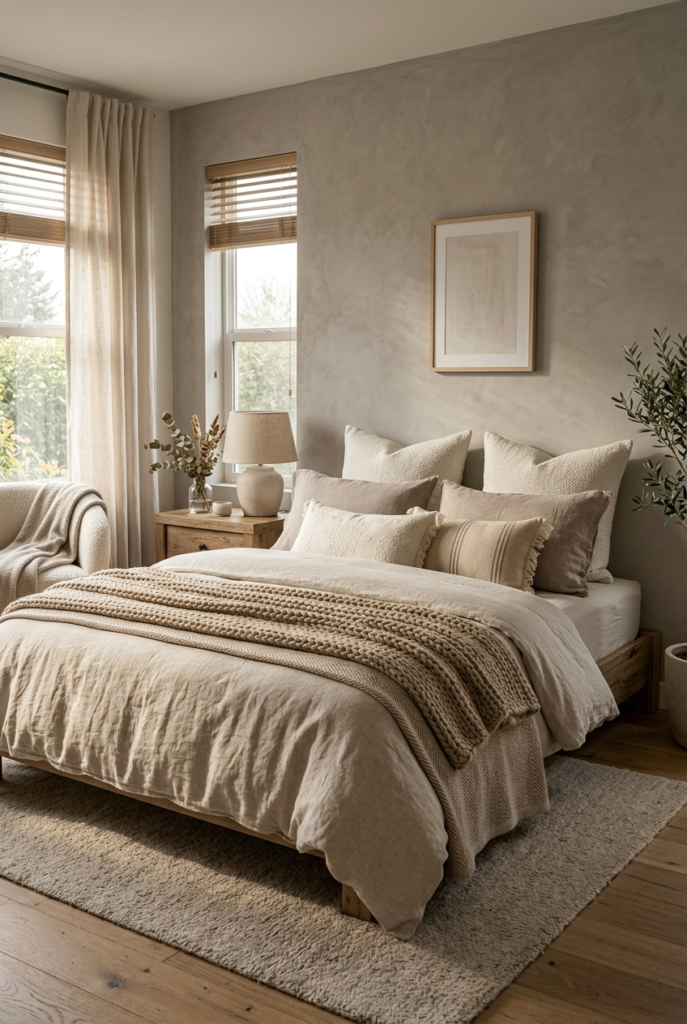
Layered linens, textured quilts, and thoughtfully chosen colors can make the bed stand out without needing anything attached behind it. This approach feels especially natural because the focus remains on comfort rather than decoration.
I’ve noticed that when the bedding is well chosen, people rarely even notice the absence of a headboard.
Conclusion
A bed without headboard can feel modern, simple, and surprisingly complete when the surrounding elements are thoughtfully arranged. The empty wall behind the bed isn’t really empty at all. It’s an opportunity to use artwork, lighting, texture, color, or architecture in ways that a traditional headboard might actually cover up.
After living with both styles, I’ve come to appreciate how flexible a headboard free setup can be. It often feels lighter, easier to update, and less dependent on a single piece of furniture. In many modern bedrooms, skipping the headboard isn’t a compromise. It’s a design choice that can make the room feel more open and personal over time.