
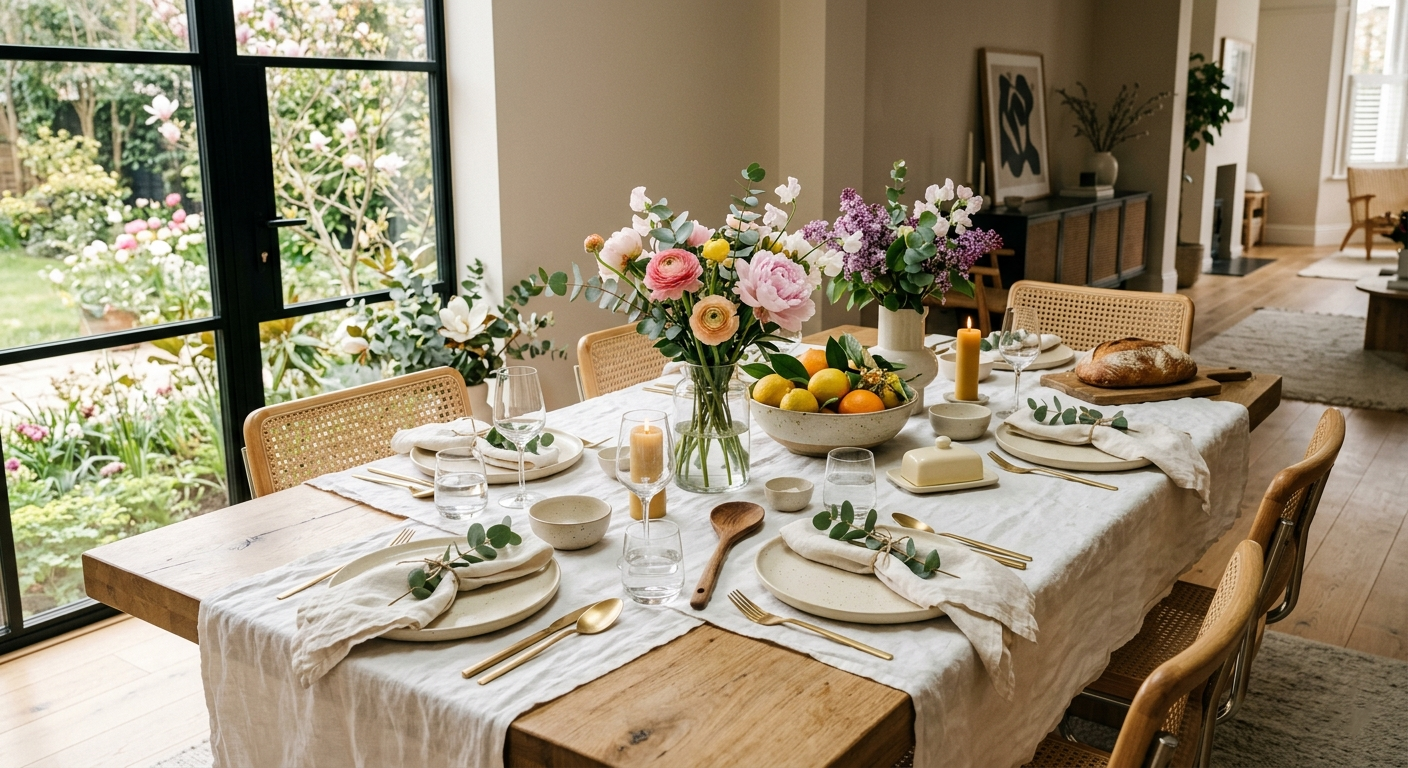
Spring always makes me pay more attention to the table, even when nothing special is happening. During winter I usually leave things simple because everything already feels heavy and crowded indoors. But once the weather changes a bit, I start moving things around without even planning to. A lighter table somehow changes the mood of the whole room.
What I like about spring tablescapes is that they do not need to look expensive or overly designed. Some of the setups I ended up loving most were actually the ones that came together slowly with things I already had. A few flowers from outside, wrinkled linen napkins, old glass bowls, or plates that did not fully match somehow worked better than the perfect versions I saw online.
These ideas are not about making the table look staged for photos. They are more about creating something bright, relaxed, and easy to live with for a while.
1. Soft White Linen With Simple Flowers :
One of the easiest spring tablescapes starts with a plain white linen tablecloth. Not a perfectly ironed one either. Slight wrinkles honestly make it look more natural. I tried using stiff formal tablecloths once and the table ended up feeling too serious.
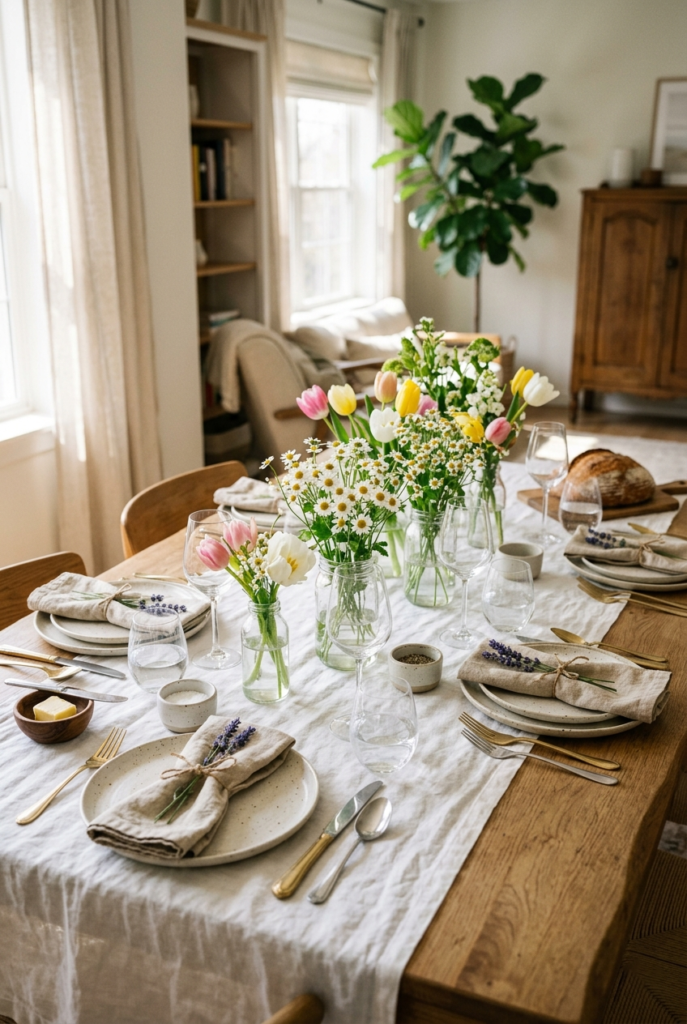
A few simple flowers in short glass jars work well here. Nothing huge. Daisies and tulips usually look enough on their own.
2. Pale Green Plates and Clear Glassware :
Pale green dishes feel very spring without trying too hard. They also look calmer than bright seasonal colors. I used dark green plates one year thinking they would look rich, but the table felt heavier than I wanted.
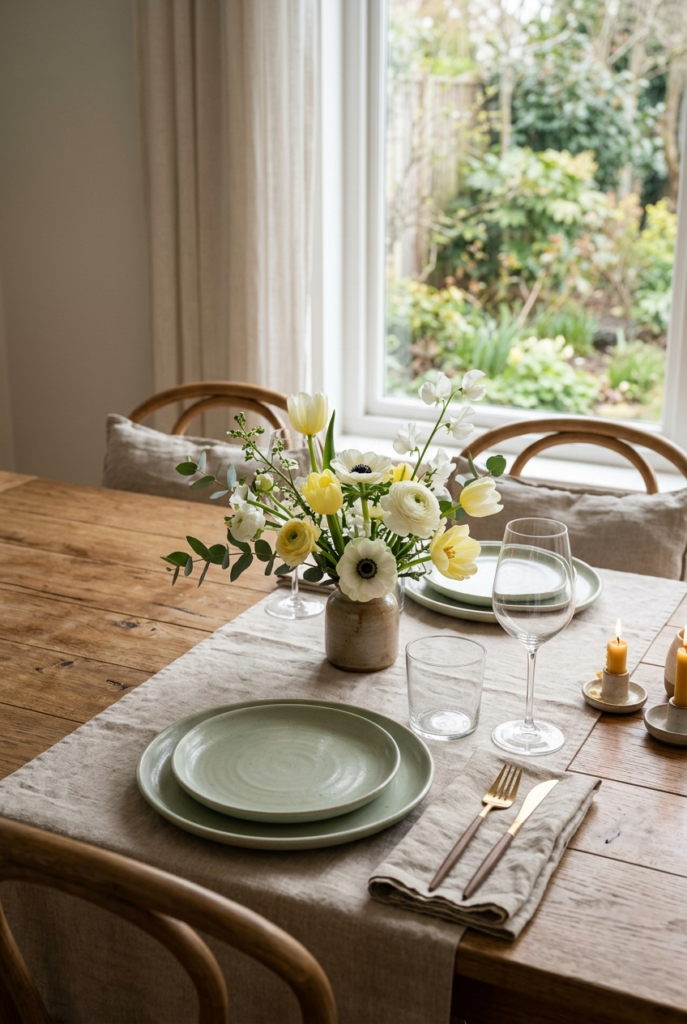
Clear drinking glasses keep everything lighter and cleaner looking.
3. A Bowl of Citrus as the Centerpiece :
This sounds almost too simple, but it actually works. Lemons or oranges in a large bowl can brighten the whole table fast.
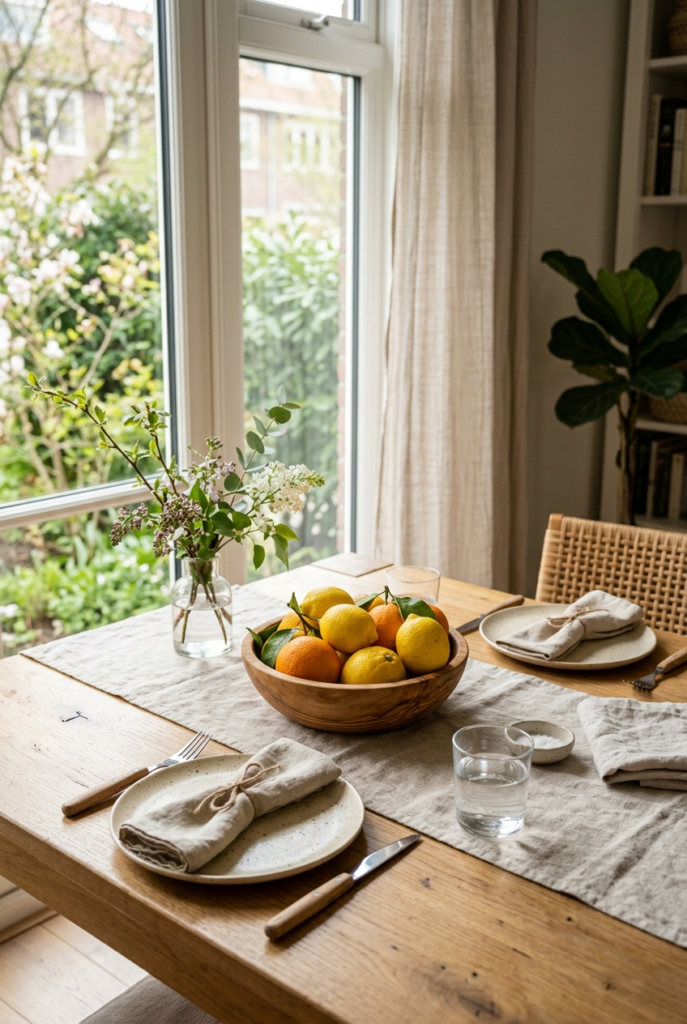
I once bought flowers for a dinner and forgot about the centerpiece completely. A bowl of lemons ended up saving the setup and people mentioned it more than the flowers.
4. Layered Neutral Textures :
Spring tablescapes do not always need color everywhere. Mixing soft beige, cream, light gray, and natural wood can still feel fresh.
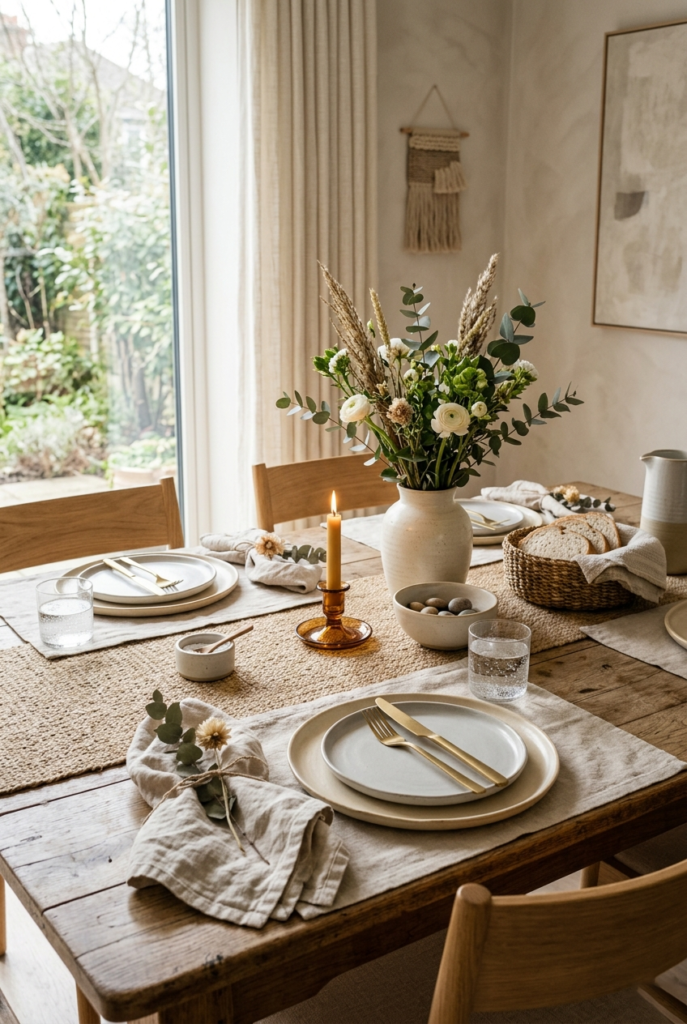
Linen napkins, woven placemats, ceramic plates, and unfinished wood create enough variation without making the table busy.
5. Small Wildflower Arrangements :
Perfect flower arrangements sometimes feel too polished for spring. Tiny uneven bunches placed across the table feel more relaxed.
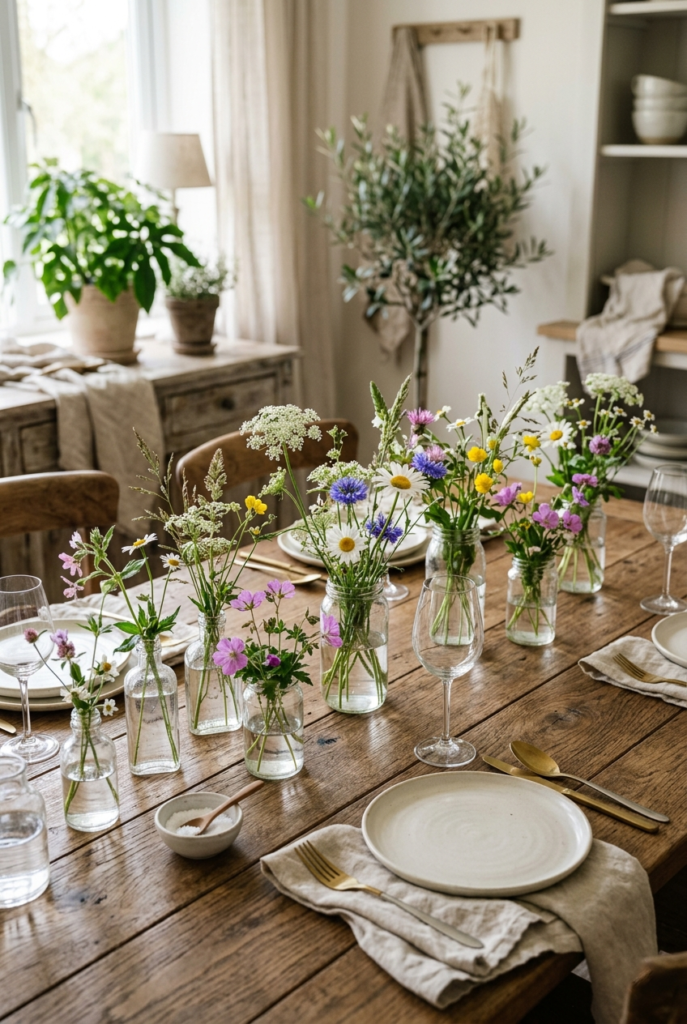
I tried copying a large floral centerpiece once and it blocked half the conversation during dinner. Smaller arrangements ended up looking better and were less annoying.
6. Light Blue Details :
A little light blue mixed into spring tablescapes gives the table a cooler and cleaner look.
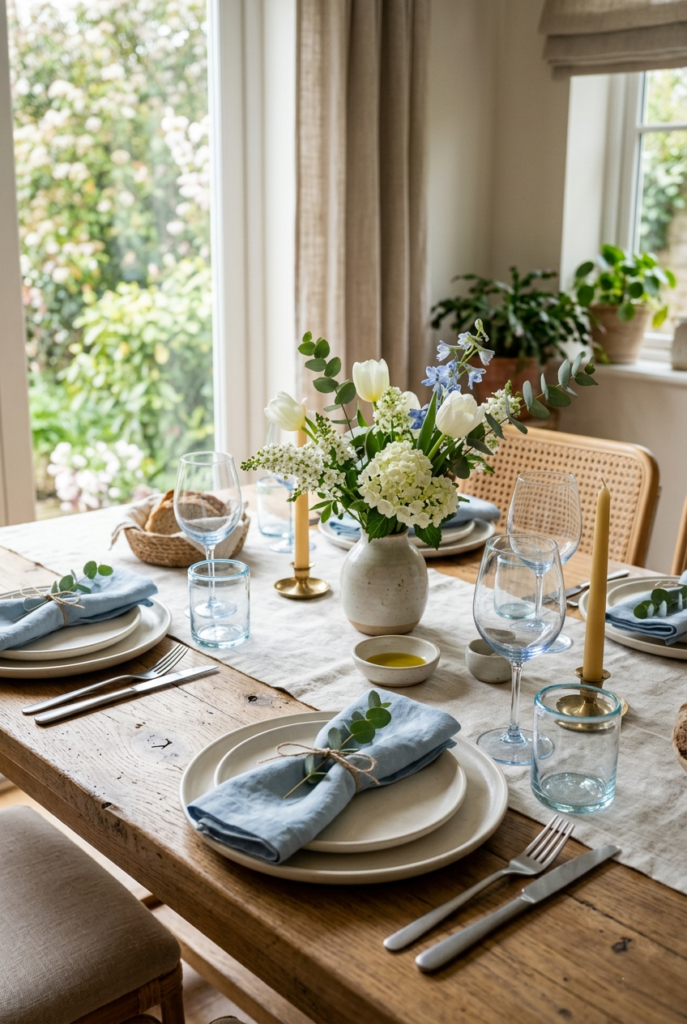
This can be done with napkins, drinking glasses, or even candles. Too much blue can start feeling coastal though, so I usually keep it limited to one or two pieces.
7. Mismatched Vintage Plates :
This setup works especially well for casual lunches or family dinners. Plates do not need to match perfectly if the colors stay somewhat connected.
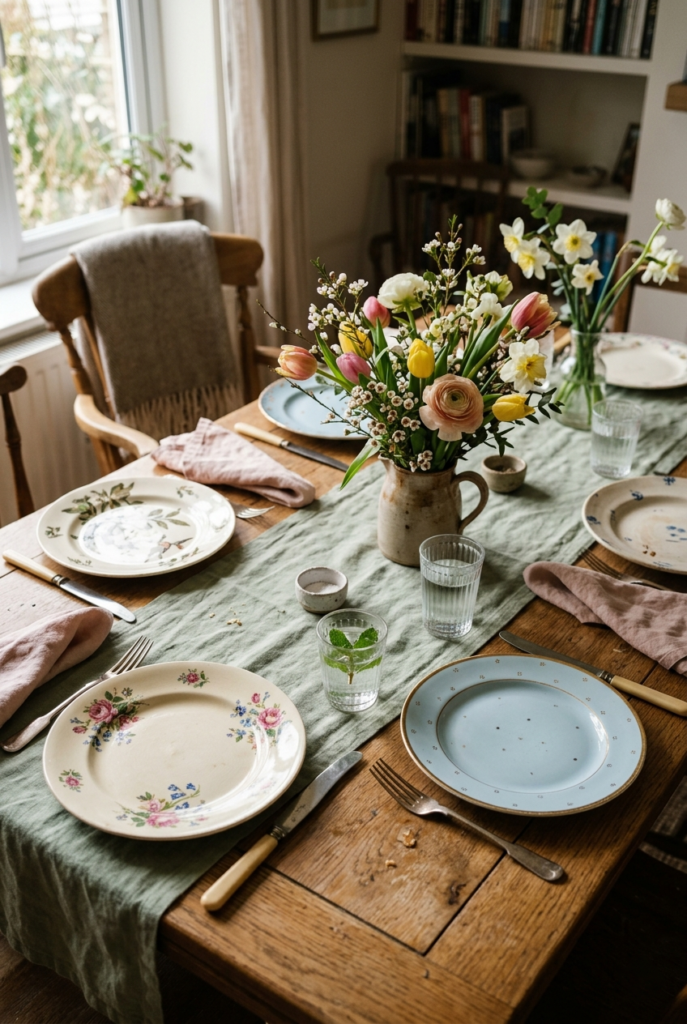
I used to think mismatched dishes would look messy, but slight differences actually make the table feel less stiff.
8. Fresh Herbs on the Table :
Instead of flowers, small pots of herbs can look surprisingly nice. Basil, rosemary, and mint all work well.
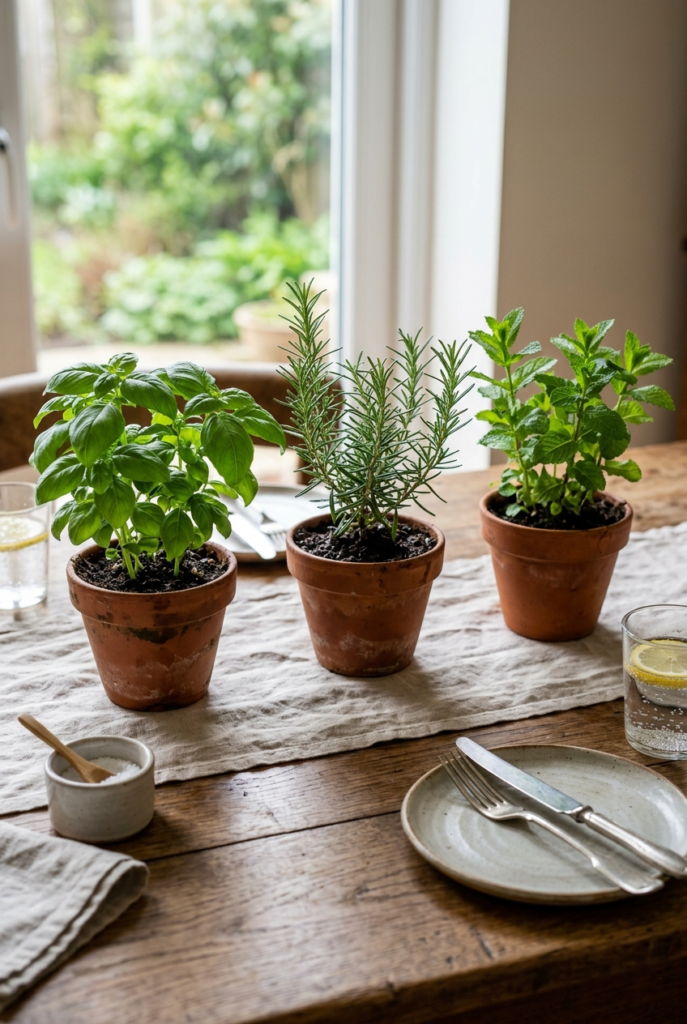
The table smells fresh naturally and the herbs still look good even after a few days. Flowers sometimes start looking tired faster than expected.
9. Candles During Daytime Meals :
I avoided candles during daytime for years because it felt unnecessary. Then I tried thin white candles on a spring brunch table and the setup instantly looked softer.
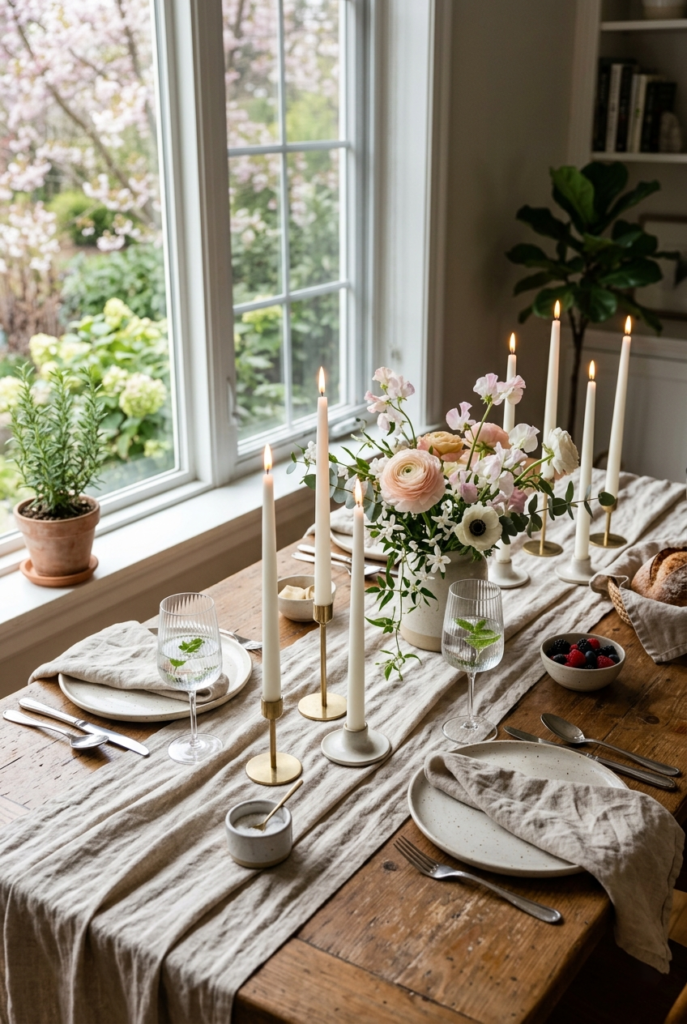
You do not even need to light all of them.
10. Light Wood and White Ceramics :
This combination always feels calm and clean. White ceramic dishes against natural wood have a simple look that works almost anywhere.
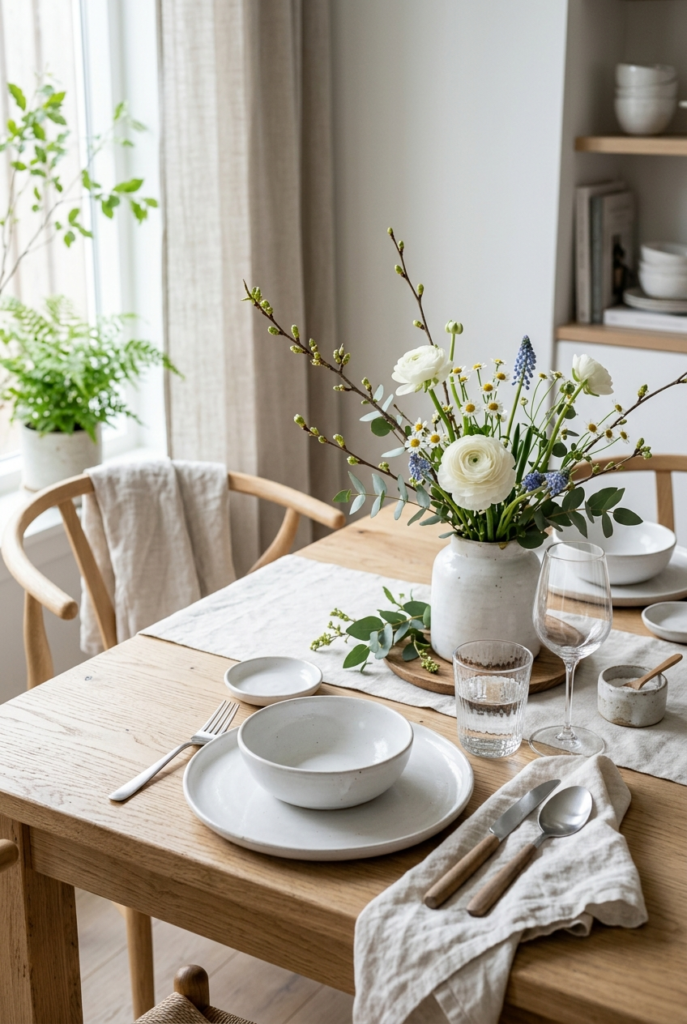
The best part is that nothing has to match perfectly. Small scratches and worn textures actually fit this style.
11. Floral Napkins Instead of Floral Everything :
Some spring tablescapes become overwhelming when every piece has flowers on it.
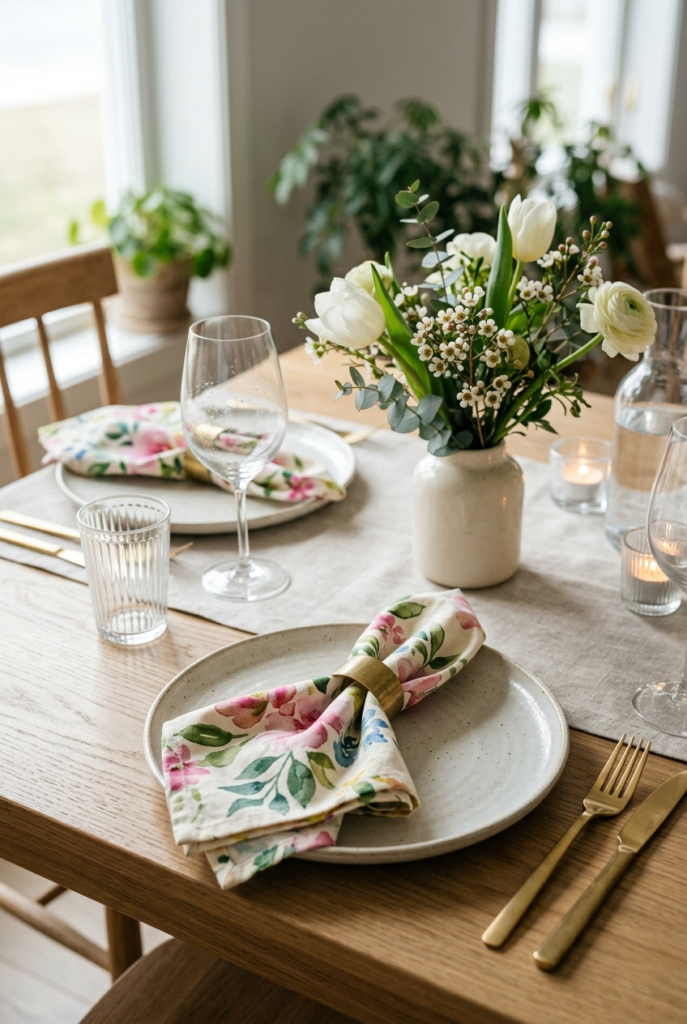
I prefer keeping florals in one area only, like napkins or small plates. The rest of the table can stay neutral so things do not start competing with each other.
12. Tall Branches in a Simple Vase :
Branches with tiny leaves or blossoms can make a table feel seasonal without needing many decorations.
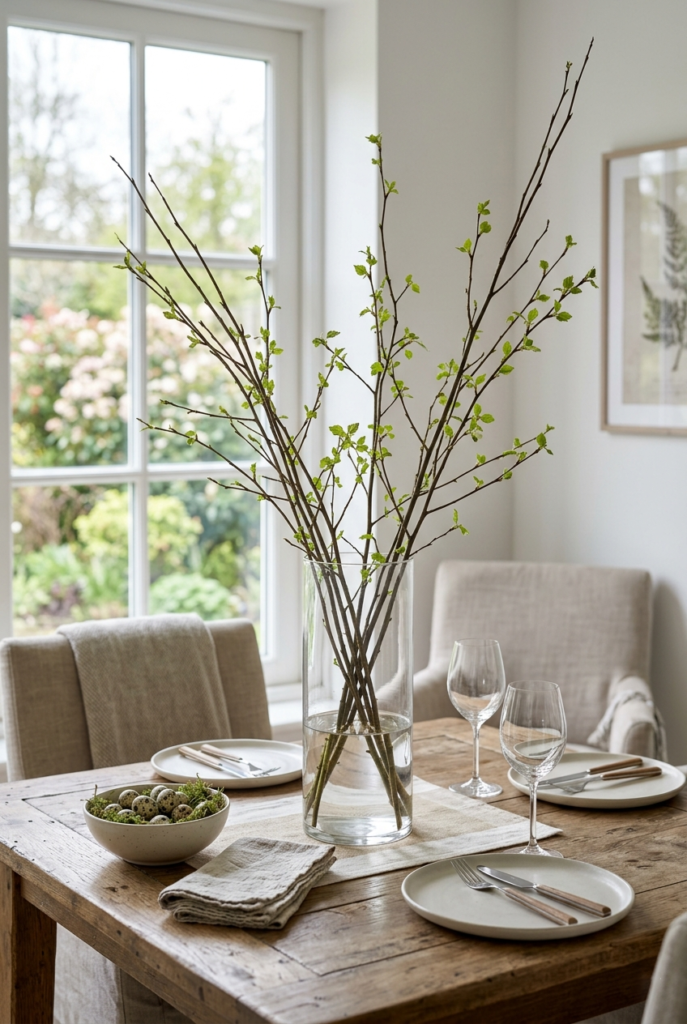
The first time I tried this, I made the mistake of choosing branches that were too wide. People had to lean around them during dinner. Keeping them tall and narrow works much better.
13. A Relaxed Breakfast Style Table :
Not every spring table needs to look formal. Some of my favorite spring tablescapes were honestly just casual breakfast setups with soft sunlight and simple dishes.
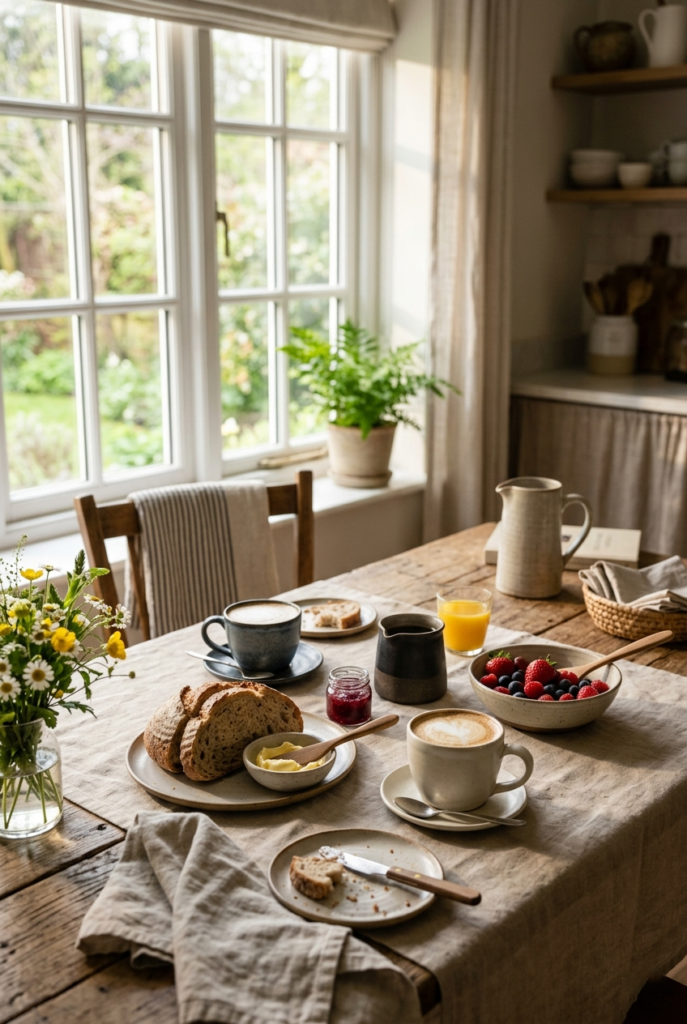
Fresh bread, fruit, coffee cups, and a small vase are sometimes enough.
14. Pale Yellow Accents :
Pale yellow works nicely for spring because it feels cheerful without looking too loud.
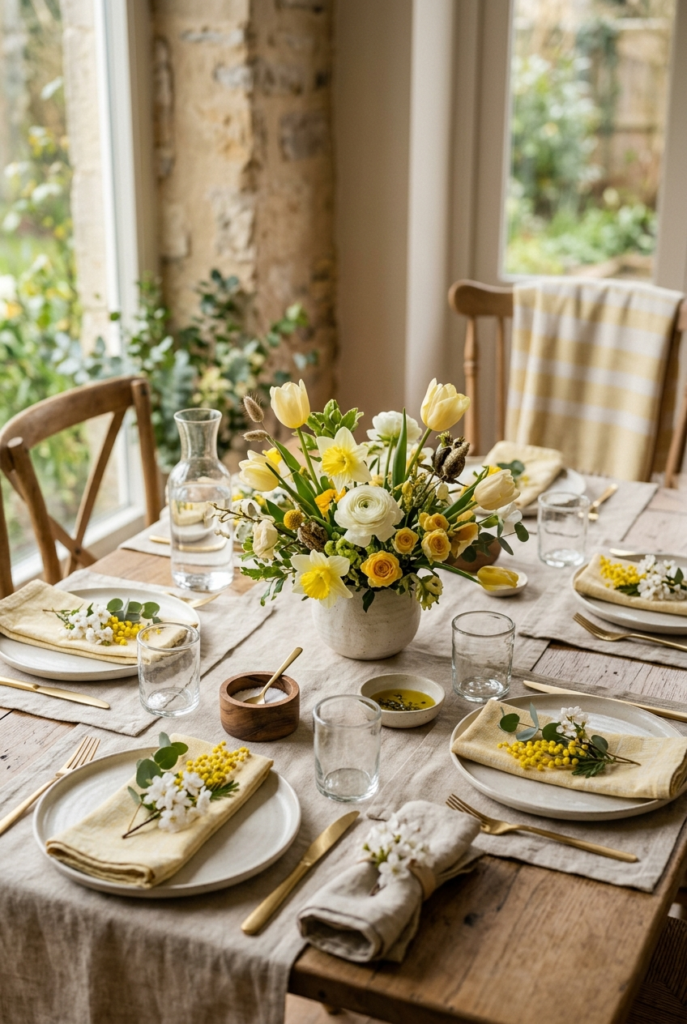
I once bought bright yellow napkins thinking they would look sunny and fun, but they completely took over the table. Softer shades are much easier to live with.
15. Clear Vases With Floating Flowers :
Floating flower heads in shallow glass bowls look elegant but still relaxed.
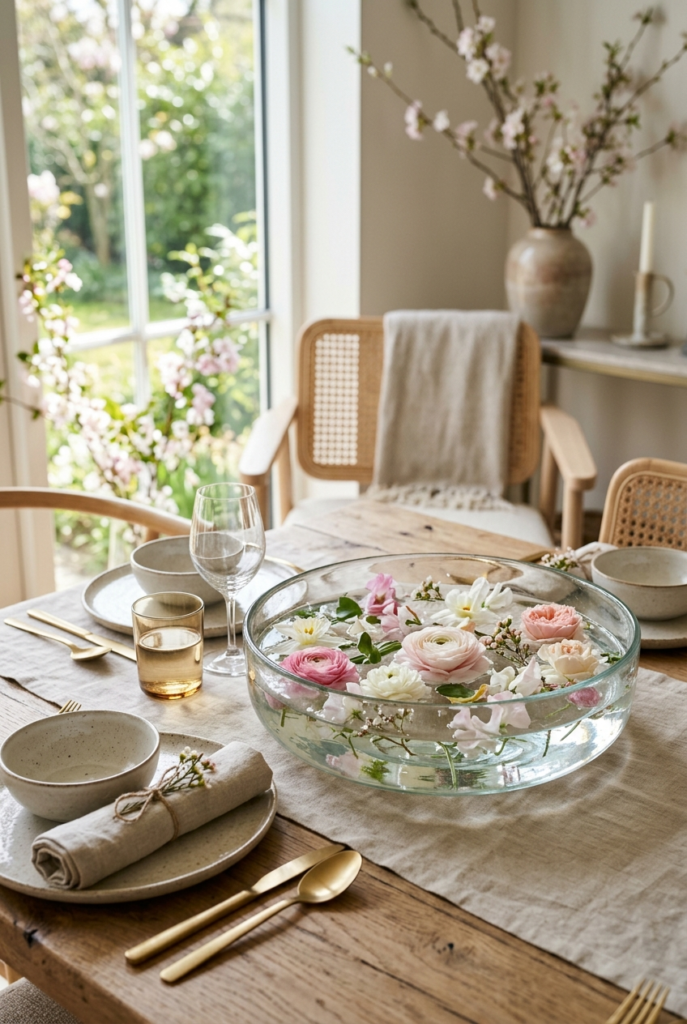
This idea is especially useful when flower stems are too short or uneven. I ended up doing this by accident after trimming flowers too much one afternoon.
16. Woven Chargers for Texture :
Woven chargers or placemats add texture without needing extra decorations.
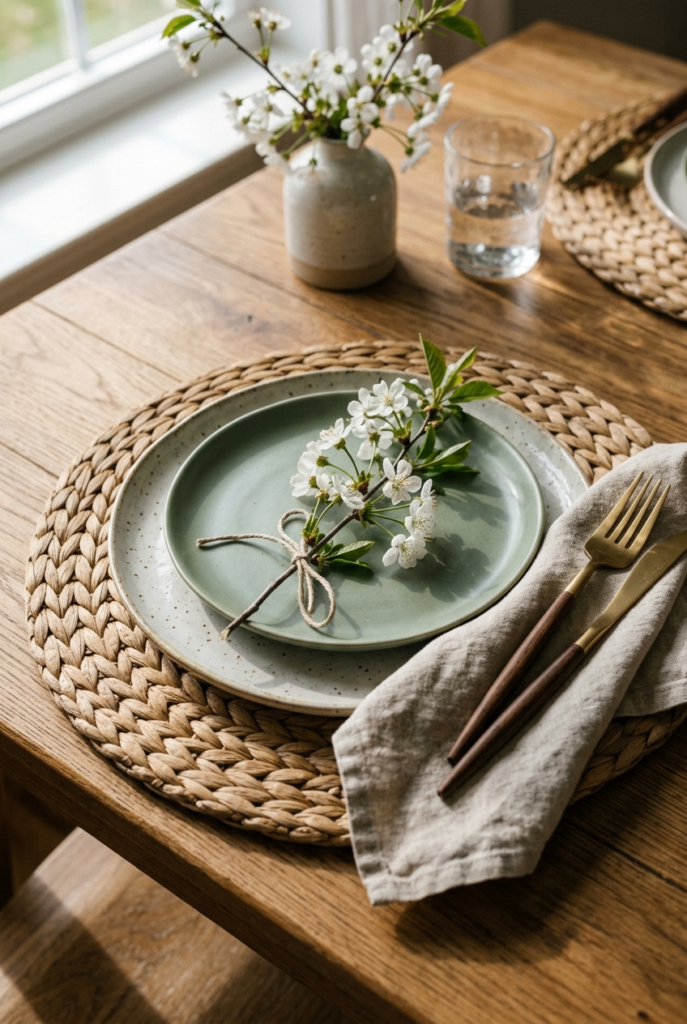
They work especially well when the rest of the table is simple. Too many textured pieces together can start looking cluttered though.
17. A Long Runner Instead of a Full Cloth :
Sometimes full tablecloths feel too formal for everyday spring tablescapes.
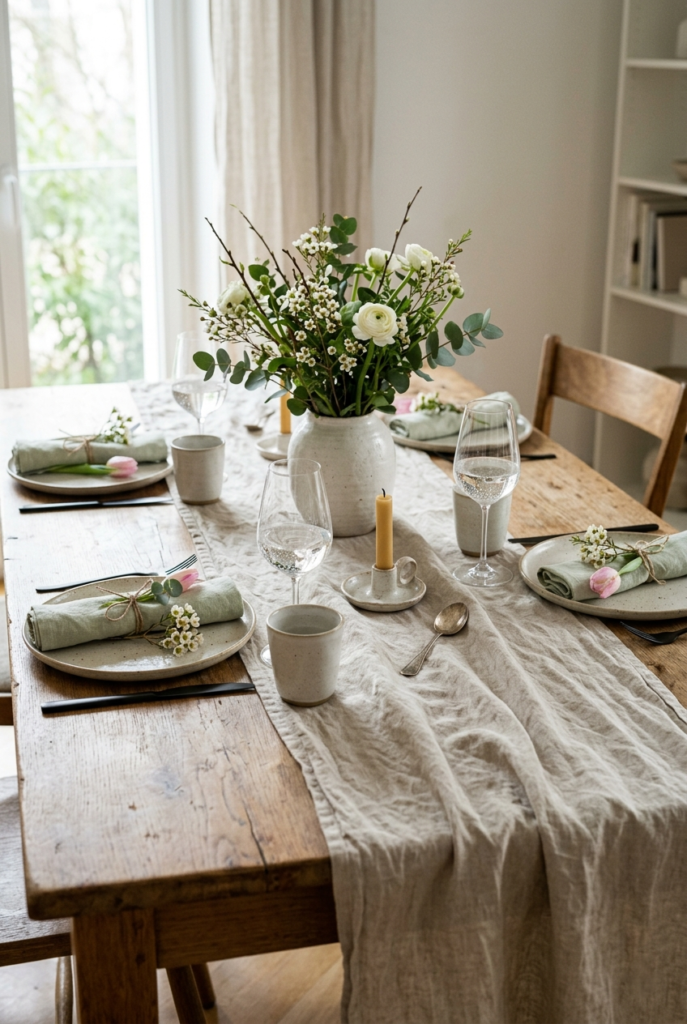
A long runner keeps the table lighter while still adding softness. I usually prefer linen runners because small creases blend in naturally.
18. Mixing Glass and Ceramic Pieces :
Combining clear glass items with heavier ceramic dishes creates a nice balance.
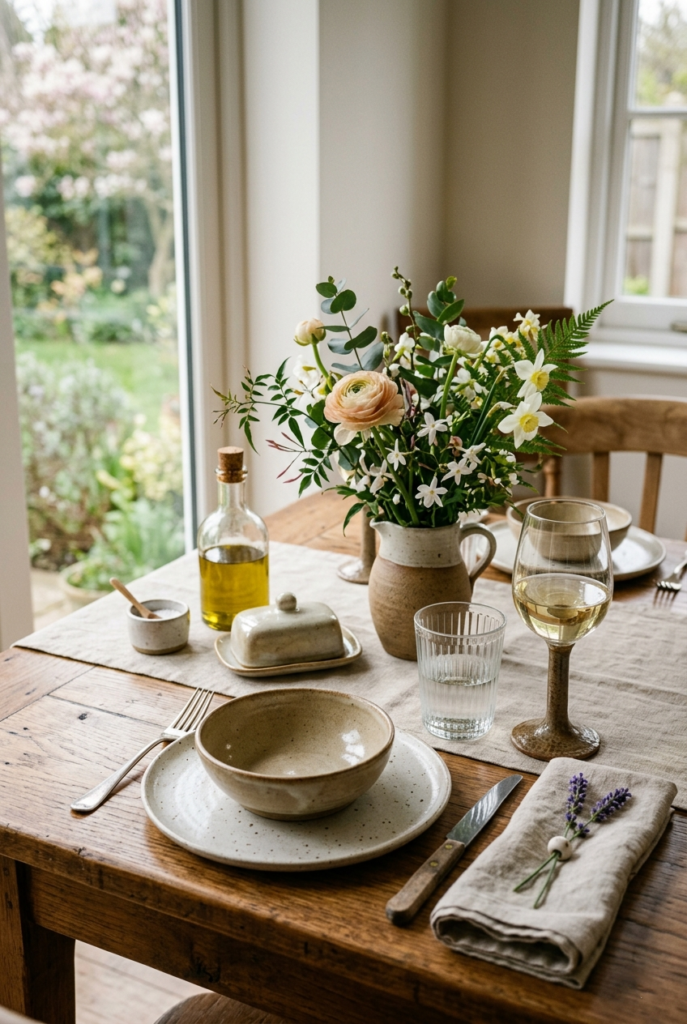
If everything on the table is ceramic, the setup can start feeling visually heavy. A few glass elements help break that up.
19. Soft Pink Touches :
Soft pink can work beautifully in spring tablescapes when it is used carefully.
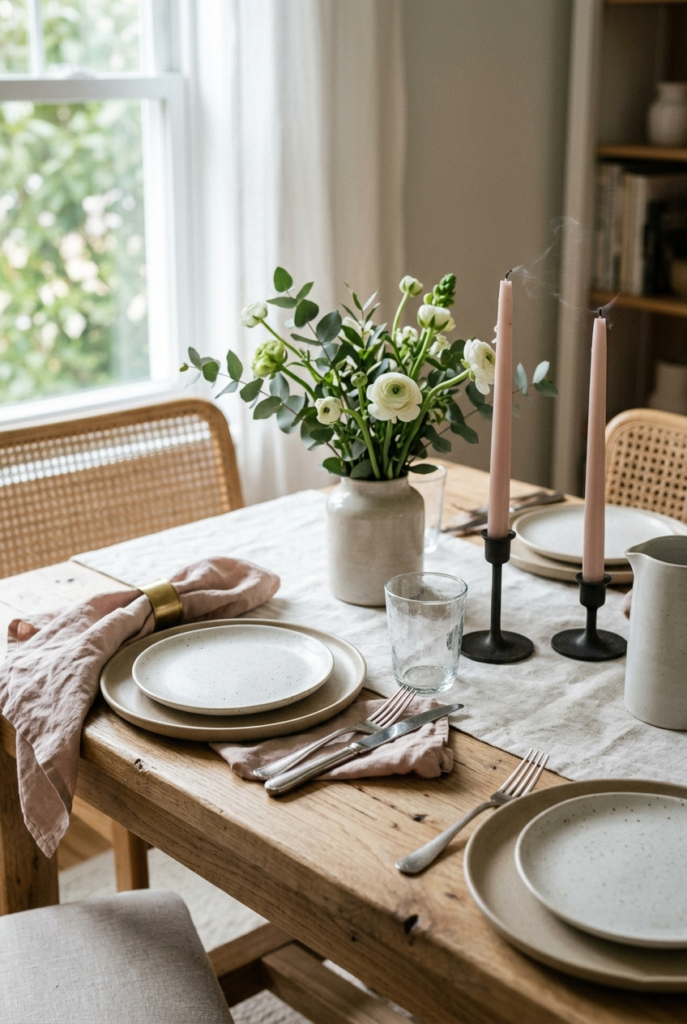
A pale pink candle or napkin looks subtle and fresh. Too much pink at once can quickly start looking themed instead of natural.
20. Minimal Centerpieces :
Not every table needs a large arrangement in the middle.
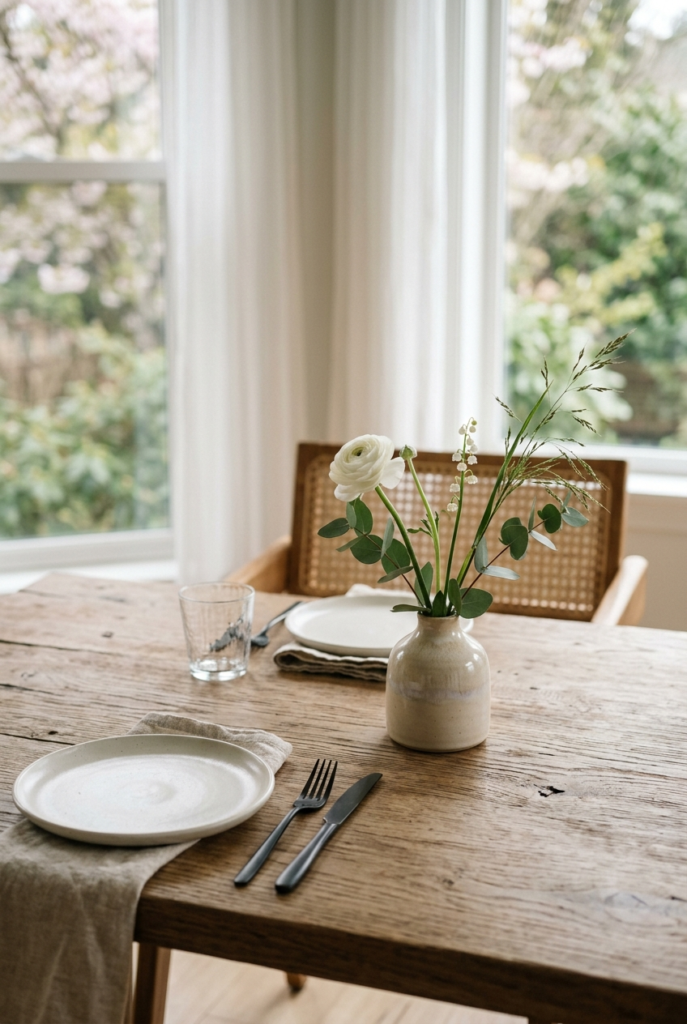
Some of the prettiest tables I have seen only had one small vase or bowl placed slightly off center. Empty space is not always a bad thing.
21. Layered Plates for Special Dinners :
For slightly more formal spring dinners, layering plates can make the table feel complete without adding extra decorations.
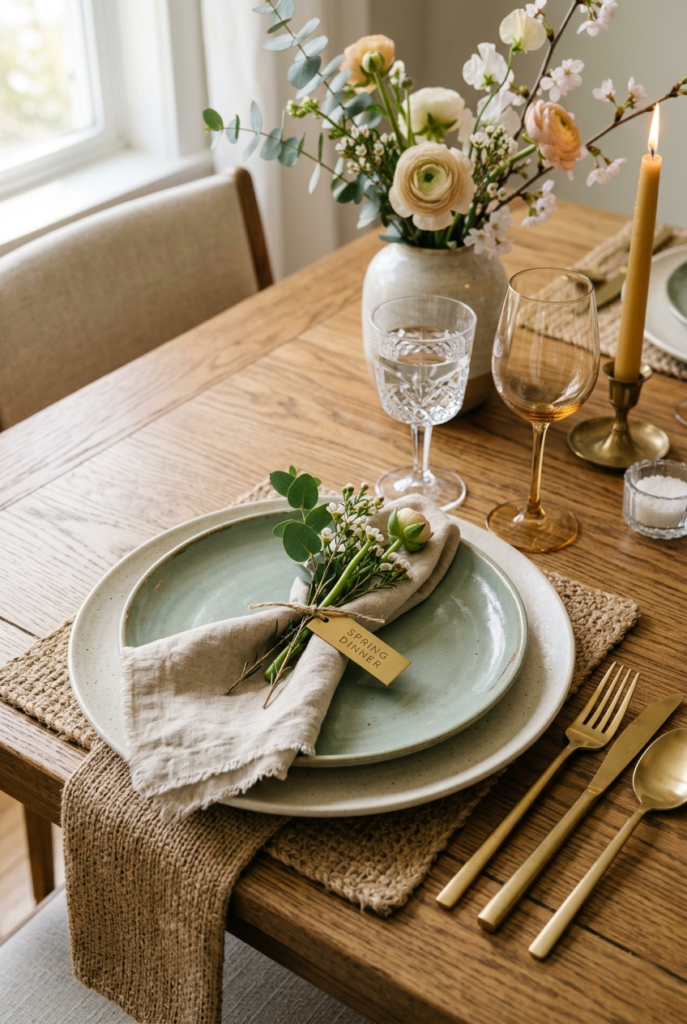
A neutral base plate with a smaller pastel salad plate on top usually looks enough. More than three layers starts feeling unnecessary pretty quickly.
22. Simple Glass Bottles as Vases :
Old glass bottles work surprisingly well for flowers.
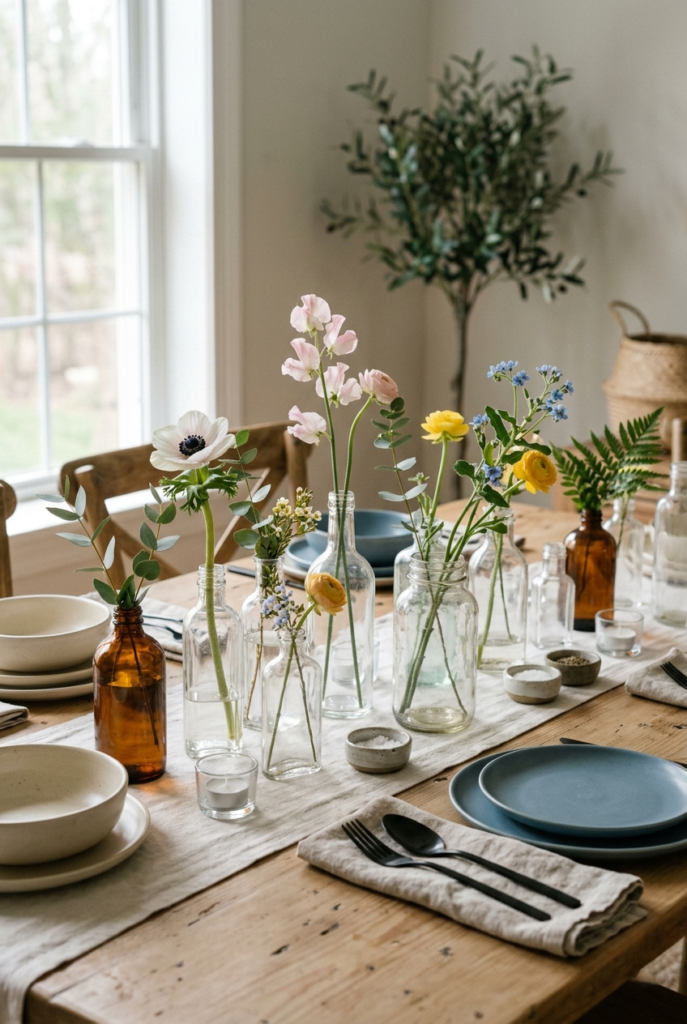
I used to spend too much time searching for matching vases until I realized mixed bottles looked more relaxed anyway. Small imperfections actually suit spring better than perfect symmetry.
23. Fresh Fruit Mixed With Flowers :
Fruit and flowers together can make the table feel colorful without relying on decorations alone.
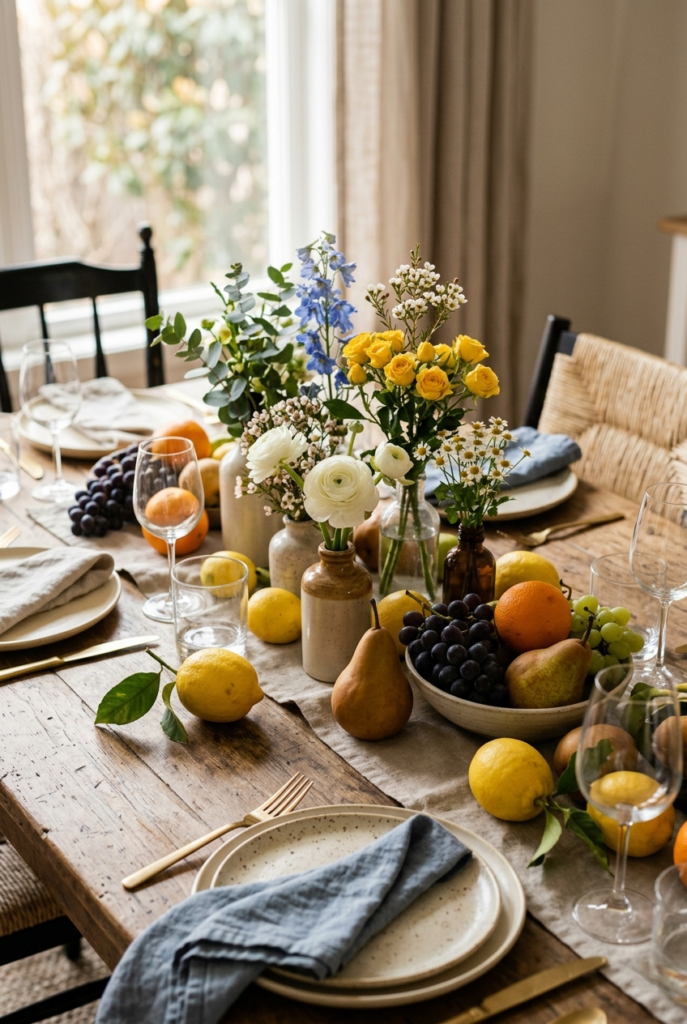
Pears, lemons, grapes, or peaches placed loosely around small flower arrangements look casual in a good way. The setup also feels less fragile and easier to maintain.
24. Keeping the Table Slightly Imperfect :
This may honestly be the biggest thing I learned from trying different spring tablescapes.
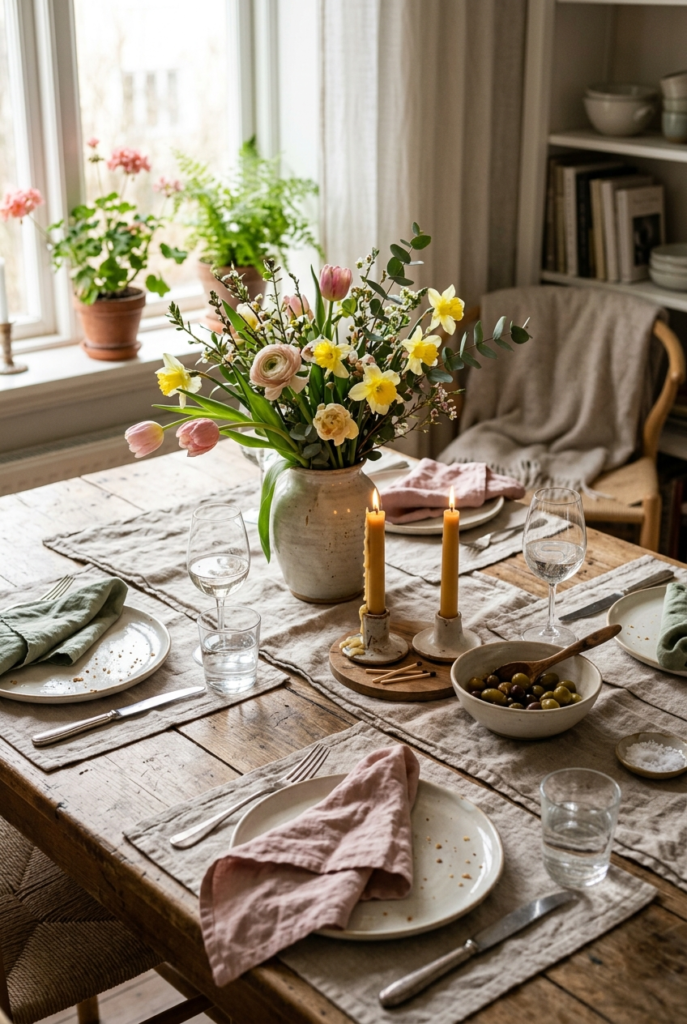
Tables usually look better when they feel lived in instead of perfectly arranged. Napkins shift around. Flowers lean to one side. Candles drip a little. Sometimes a setup I spent only ten minutes on ended up looking more natural than the ones I planned too carefully.
I stopped trying to make every table look photo ready because real meals never stay perfect anyway.
Conclusion :
Spring tablescapes do not need complicated styling or expensive pieces to feel beautiful. Most of the time, the nicest tables are the ones that feel comfortable enough to actually use every day.
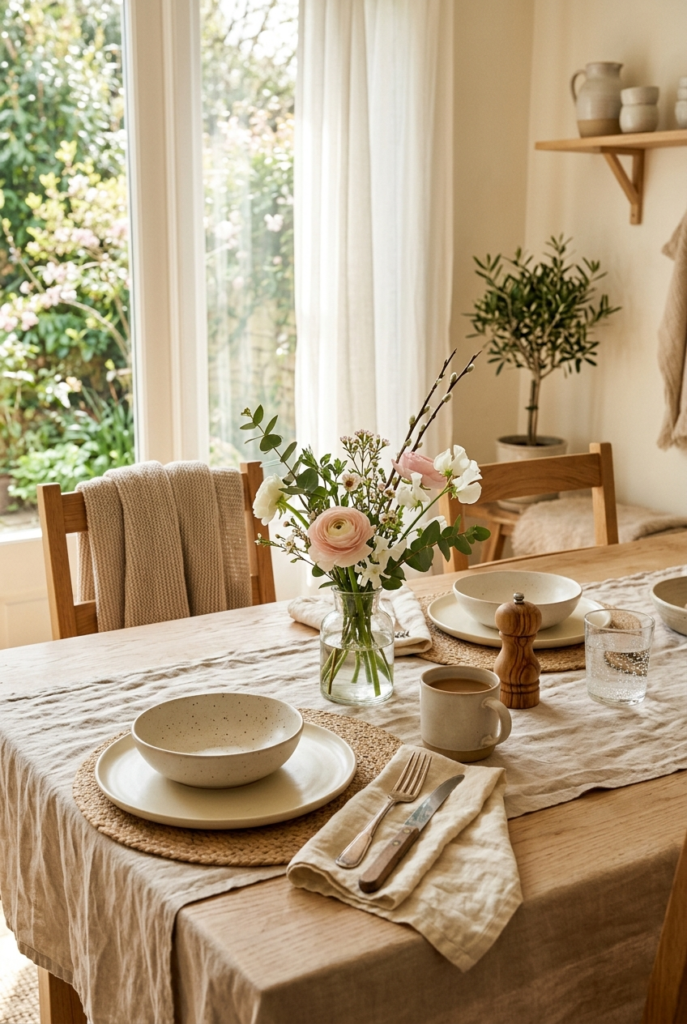
A simple cloth, a few flowers, soft colors, and natural textures usually go further than trying to fill every corner with decoration. Some ideas will work immediately while others might feel different once everything is placed together. That is honestly part of the process.
I still change things around constantly. Sometimes I remove half the decorations right before people arrive because the table suddenly feels crowded. Other times the smallest detail ends up making the biggest difference.
The good thing about spring tablescapes is that they do not have to stay perfect for long. They just need to feel fresh, relaxed, and pleasant enough to gather around for a while.